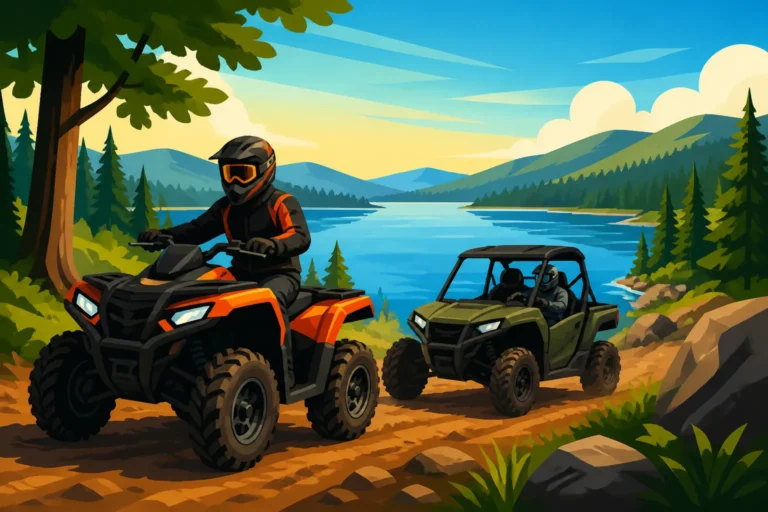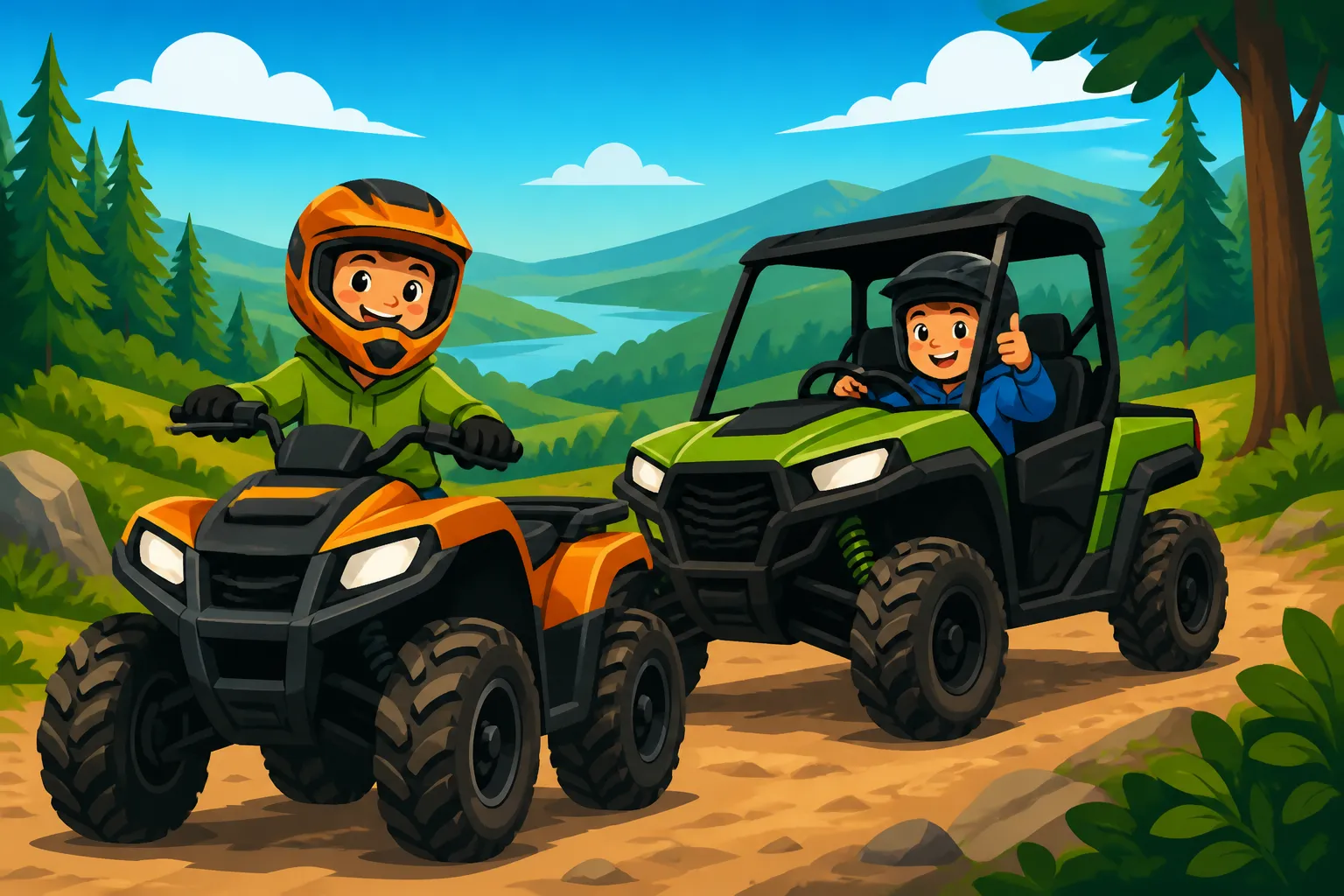
New York Trails Good for Kids
A family ride can go sideways quickly when a trail is rougher, longer, or busier than expected—or when a child’s machine is not allowed on the route. This guide explains how to choose kid-friendlier New York riding areas, what to check before unloading, and how to plan a shorter, safer outing without assuming every trail is suitable for young riders.
What makes a New York ATV trail suitable for kids
Look for manageable terrain and an easy way to turn back
A kid-friendly ride is not necessarily a smooth, flat trail from start to finish. It is a route where the terrain, distance, and pace fit the least experienced rider in your group. Wide, predictable sections and gentle grades are usually easier for children to navigate than steep climbs, deep ruts, loose rock, or muddy stretches that demand steady throttle and confident steering.
Think about the whole outing, not just the first few minutes. A trail that looks easy near a staging area may become more demanding farther in, and turning around can be difficult on a narrow route with a group behind you. For a first family trip, choose a short loop or out-and-back with clear stopping points. Check the route length in advance, then agree on a turnaround point before anyone starts riding.
It also helps to plan for the child who becomes tired or overwhelmed first. Kids may be excited at the trailhead and lose focus later, especially after a bumpy ride or a long wait at crossings. Keeping the first outing brief gives everyone a chance to learn how the child handles the machine and the trail before you plan a longer day. [New York Trails for Beginners] offers useful ideas for choosing a less demanding ride.
Match the route to the child and the machine
“Kid-friendly” depends on more than age. A child who has practiced on a similar machine may feel comfortable on terrain that would be intimidating to a beginner. Height, strength, attention, experience, and the ability to control the ATV matter too. A child should be able to reach and use the controls properly, sit securely, and follow instructions without being rushed.
The machine matters just as much. A youth ATV that is appropriate for a child may not have the power, ground clearance, or tires to handle every adult trail. On the other hand, putting a child on an oversized machine because it seems capable can create a different set of risks. Choose a route for the rider and machine you actually have, rather than expecting a young rider to keep up with adults on larger, faster machines.
Before setting out, check the route’s width and surface as well. Some New York routes are too narrow or uneven for certain machines, while a wide utility vehicle may not be eligible for registration under the state’s ATV rules. If you are riding with a side-by-side, do not assume that every route open to a registered ATV is also open to that vehicle. Review [New York ATV Trails for a Narrow Machine] and [Why Most Side-by-Sides Cannot Be Registered in New York] before choosing a route or buying a machine for trail use.
Treat legal eligibility as part of trail selection
A route that appears appropriate for a child may still be off-limits to that child under the applicable rules. New York has age-related requirements for ATV operation, including rules involving safety certificates and adult supervision. Those requirements can depend on the rider’s age and where the machine is being operated, so check the details before traveling rather than relying on what another family does.
Start with [New York ATV Safety Certificate Requirements] and [New York Trail Access for Riders Under 16]. Confirm what applies to your child’s age, the riding area, and the type of machine. If a child will ride as a passenger rather than operate a machine, review [New York Rules for a Child Passenger] and make sure the ATV is designed and equipped for a passenger. A child should never be carried on a machine that has only one seat.
New York’s riding rules also include requirements such as helmets and, in some situations, insurance and registration. Do not treat a private park, a club trail, or a family outing as an automatic exception. Check the rules for the place you intend to ride, and bring the required documents and protective equipment. Sorting this out at home is much easier than discovering a problem in the parking area.
New York riding areas to consider with children
Lewis County and the Tug Hill region
Lewis County is known for an extensive network of ATV trails, including routes around the Tug Hill region. That can make it attractive for families who want to build a ride around a trail system rather than a single short track. But a large network does not mean every trail is equally easy, open, or appropriate for a child. Routes may vary in surface, length, traffic, and access conditions.
For a family visit, narrow the plan to a specific trail area and confirm what is open before you leave. Start with the county’s official trail information, including maps and notices, then choose a short section rather than attempting a long-distance ride simply because the network is extensive. [New York Trail Maps From a County] is a useful reminder that local maps and current notices should guide route planning. A mapping app such as onX Offroad can help you prepare and orient yourself, but it should not replace official access information or posted signs.
Tug Hill conditions can change the character of a route. Rain, spring thaw, and other seasonal conditions may leave trails muddy, rutted, or temporarily closed. A trail that felt manageable during a dry visit may be much harder after wet weather. Check [New York Trail Conditions Before You Ride] and be willing to change plans if the route is soft, damaged, or closed. For a child’s first outing, avoiding a difficult day is often the best decision.
Oswego County club trails
Oswego County has club-associated trail riding, but access can depend on local arrangements, trail status, and the requirements of the relevant organization. A county name on a map does not mean every trail in the county is public or open to every rider. Some routes may cross private land or have membership, permit, or seasonal conditions.
Before bringing children, check which routes are available to your group and whether a permit or club membership is needed. Ask about the trail’s typical surface and whether there are short sections suitable for newer riders. Local clubs may know which routes are less demanding, but follow the rules they provide and pay attention to signs on the ground. [New York Club Trail Rules] explains why access conditions matter even when a route appears on a riding map.
Families can also use a map to plan a modest outing rather than trying to cover a whole system. Mark the parking or staging location, likely stopping points, and a route back. onX Offroad can be one planning aid for understanding the general layout, but confirm trail access, closures, and permit requirements with the county or club. If the route’s status is unclear, ask before riding; do not assume that a line shown on a map grants permission to use it.
Tall Pines ATV Park near Andover
Tall Pines ATV Park near Andover in Allegany County is a private riding destination that families may consider when they want a defined park setting. A park can be easier to plan than a large, spread-out trail network, but “park” does not automatically mean a route is suitable for every child or machine. Terrain and difficulty can still vary, and a young rider’s experience should guide the choice.
Before making the drive, contact the park or check its own visitor information for current access rules. Ask which routes are appropriate for a beginner, whether children may operate their machines there, what machine types are allowed, and what equipment or documents are required. Confirm whether the park offers a suitable short loop, whether a parent can ride alongside a child, and whether the route has any steep, rocky, or muddy sections.
A park outing may also involve different practical details from a county trail ride. Find out where to park, whether you can bring your own machine, what the check-in process involves, and whether food, fuel, or restrooms are available. Bring a backup plan in case the route is too challenging once you see it. A relaxed half-day on a suitable trail is a better family memory than pushing a tired child through a ride that has become too much.
| Riding option | Why families may consider it | What to confirm before going |
|---|---|---|
| Lewis County and Tug Hill area | A broad trail network can offer options for different ride lengths | Exact open routes, permits, seasonal conditions, and route difficulty |
| Oswego County club trails | Local clubs may provide information about trail access and conditions | Membership or permit rules, landowner access, closures, and beginner suitability |
| Tall Pines near Andover | A private park setting may make planning more straightforward | Child and machine rules, route difficulty, park access details, and required equipment |
Plan a family ride from the driveway to the trailhead
Check access, permits, and maps before loading
The most frustrating trail problem is discovering at the staging area that your intended route is closed, requires a permit you do not have, or does not allow your machine. Check access details before loading the trailer. New York does not have one universal trail pass that covers every riding area, so requirements can differ by county, club, or private park.
Start with the official county or trail-system information. Use a map to understand where the route begins and ends, but verify that it is open to your machine and your group. onX Offroad can help you get oriented while planning, especially when you want to see how a route may connect to nearby roads or trail segments. Still, the official county map, club notice, park rules, and posted signs determine where you may ride.
Make sure your plan includes a practical stopping point and a clear way back. Download or save the map information you will need before leaving, since cell service can be unreliable in rural areas and wooded riding regions. Share the route plan with everyone in the group, including the child. A young rider is more comfortable when they know where the ride is going, where the group will stop, and what to do if they fall behind.
Pack for comfort, safety, and a shorter day
Children often need more breaks than adults expect. Pack water, suitable layers, snacks, and any personal items your child needs. Weather can feel different while riding than it does in the parking lot, and a child who becomes cold, overheated, or thirsty may lose focus quickly. Build in pauses before anyone is worn out rather than waiting for a child to ask.
Use properly fitting protective gear, including a helmet that stays secure and does not obstruct vision. Check the machine before leaving: tires, brakes, throttle response, lights where required, and any loose parts deserve attention. Make sure the child knows the signals you will use for stopping, slowing, or pulling over. Keep the group small enough that an adult can supervise effectively and avoid pressuring a young rider to match a faster pace.
For a first outing, set a time limit as well as a distance limit. You might decide to ride one short section, stop for a snack, and return to the staging area while the child is still enjoying the experience. That leaves room to try again another day and lets you adjust the next trip based on what worked. A family ride does not need to be long to be worthwhile.
Be prepared to change the plan
Trail conditions and access can change, sometimes after you have already started the drive. A recent downpour may make a route much harder; logging, maintenance, or a landowner issue may close a section; and a crowded staging area can make a nervous young rider feel overwhelmed. Check official notices close to departure and make sure you have a backup option if the original plan is unavailable.
At the trailhead, take a moment to reassess. Look at the surface, signs, traffic, and the child’s confidence. If the route feels too rough or busy, choose a shorter section or skip the ride. Do not let the time spent driving or preparing persuade you to continue when conditions are not right. The same goes for a child who is tired or anxious: stopping early is a sensible decision, not a failed outing.
If you use onX Offroad while planning, treat it as one piece of the picture rather than proof that a trail is open. Cross-check the route against official information and signs, and keep the group together. A flexible plan helps families enjoy New York riding areas without turning a day outdoors into a test of endurance.
A simple checklist before riding with kids
Confirm the child, machine, and route are a good fit
Before departure, confirm that the child may legally operate or ride as a passenger on that specific outing, and that the machine is appropriate for their size and experience. Review the relevant certificate, supervision, passenger, registration, insurance, and equipment requirements. Do not rely on a seller’s description or a friend’s recollection if you have not checked the rules yourself.
Then compare the route with the machine and the rider. Consider trail width, surface, hills, expected ride length, and whether there is an easy turnaround point. A challenging route may be appropriate for an experienced teen on a suitable machine but not for a younger beginner. Choose the least demanding option that still gives the family a pleasant ride.
Verify the place is open and bring a backup plan
Check the official map and current trail notices, then confirm any county, club, or park requirements. Make sure your route does not depend on an unverified connection across private land. If you are uncertain about access, contact the organization responsible for the trail before you go.
Finally, decide in advance what will make you turn around: worsening weather, muddy or damaged ground, fatigue, discomfort, or a child who no longer feels confident. Agreeing on that plan makes it easier to stop without an argument once you are on the trail. A good family ride is one where the route fits the children who came along—not one where everyone has to finish the longest loop.
Disclaimer
This article is for general informational purposes only and does not constitute professional advice. Laws, prices and regulations vary by location and change over time. Consult a qualified professional for guidance on your specific situation.