Volunteer Clubs That Cut Oswego Trail
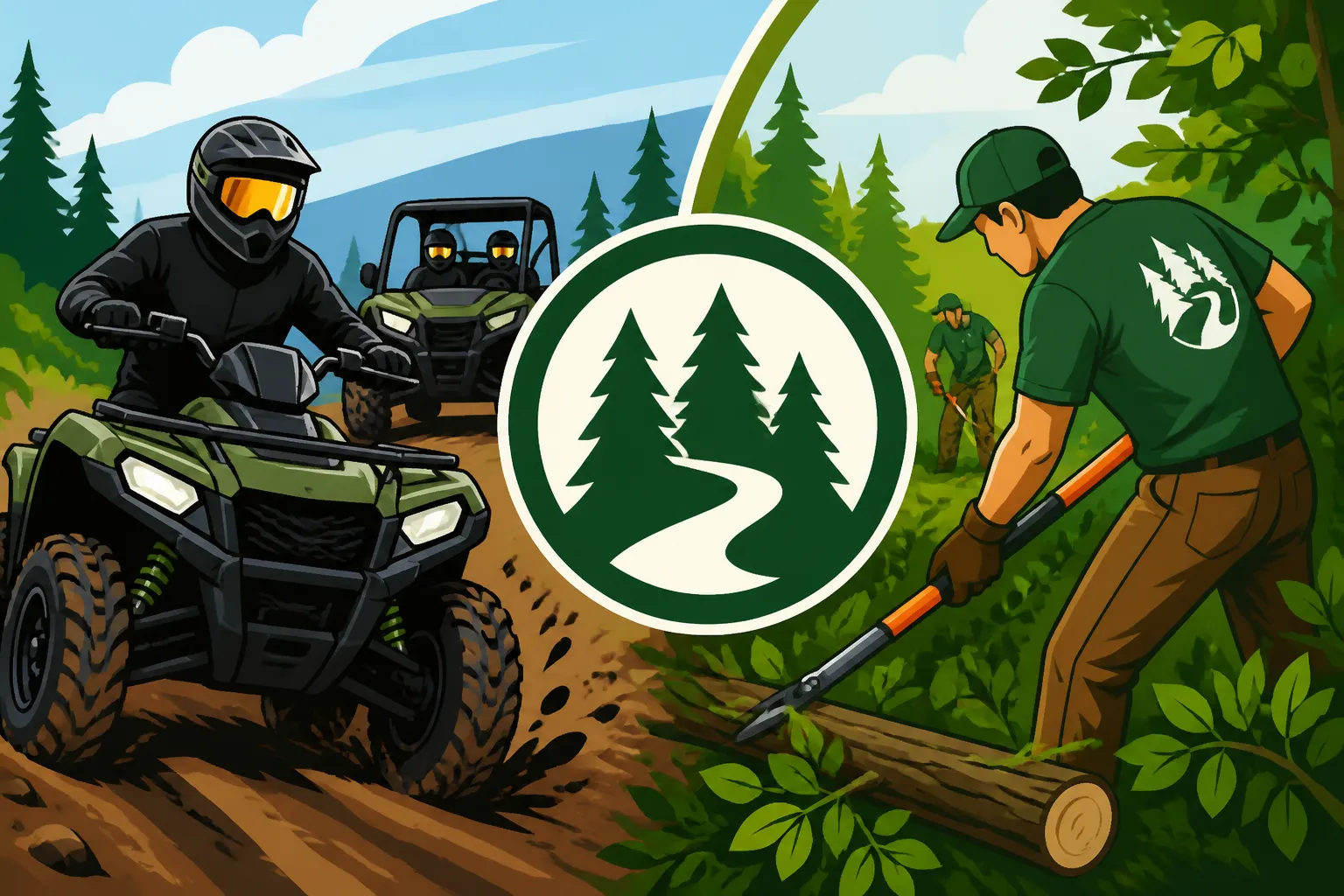
A freshly cleared trail can make an Oswego County ride feel effortless, but that smooth passage often comes from hours of volunteer work with saws, loppers, and hand tools. If you’re wondering who maintains these routes, what a trail workday involves, or how riders can help without damaging land or creating safety problems, this guide explains how the work fits together.
How volunteer trail work supports Oswego County riding
What riders mean when they talk about cutting a trail
“Cutting trail” can sound like volunteers are carving a new route wherever they choose. In a responsible trail system, the work is more controlled: volunteers clear brush and fallen limbs from an approved corridor, improve visibility, and help keep an established route usable. They do not automatically have permission to create a new path, widen a trail, or change where it runs.
That distinction matters in Oswego County, where riding routes can pass through a mix of woods, farm country, and privately owned land. A short detour around a muddy patch might look harmless to a rider, but it can move traffic onto property that was never included in the trail agreement. Even a well-intentioned new cut can create a serious problem for the club and landowner.
For more background on the local network and its club-managed routes, see [Oswego County's Club Trails]. The exact route available to riders can depend on landowner permission, trail conditions, local rules, and seasonal openings. A route that was open last season should not be assumed open today.
Why clubs organize the work
Volunteer clubs help turn a collection of possible routes into a more organized riding system. Members may inspect corridors, report storm damage, clear brush, maintain signs, and coordinate work with landowners or local partners. The work is often practical and repetitive: a branch that takes seconds to remove can be replaced by another after the next windy night.
This behind-the-scenes effort helps make trail use more predictable. Riders are more likely to stay on the intended route when markings are visible, problem spots are reported, and obstructions are dealt with promptly. Maintenance can also help protect the land by discouraging people from making their own bypasses or widening a narrow section.
Volunteer work does not mean every trail is maintained to the same standard or available whenever riders want it. A landowner may temporarily close a corridor, a club may not have enough volunteers for a section, or wet conditions may make a trail unsuitable. For more on the role of local clubs, see [How Clubs Keep Landowners Willing to Host Trails].
What happens before and during a trail workday
Planning the route before anyone picks up a saw
A useful workday starts with knowing where volunteers are allowed to work. Clubs need to identify the approved corridor, confirm access, and understand what kind of maintenance is appropriate there. If the work involves a new crossing, a reroute, or a substantial change to the trail, volunteers should not treat a casual conversation as permission to proceed.
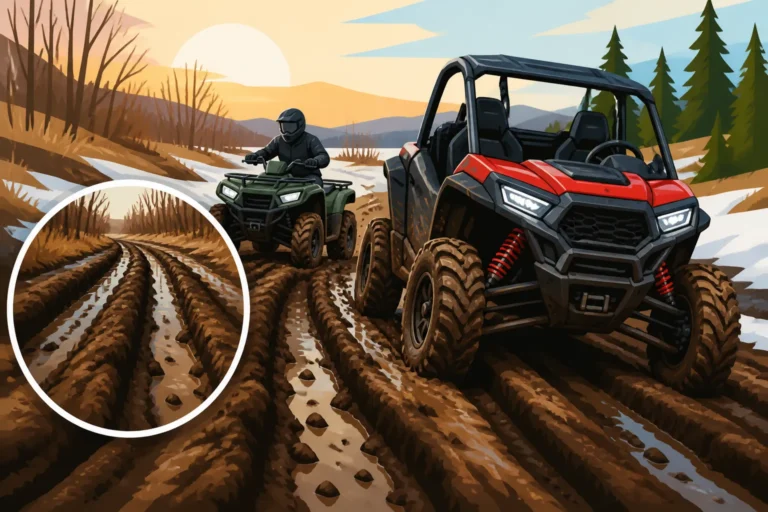
The work plan should also account for the condition of the ground. In the spring, thawing soil and standing water can make a route vulnerable to deep ruts. In other seasons, windfall, overgrown vegetation, or storm damage may be the main concern. A route that looks dry at the trailhead can still be soft in a shaded low spot.
A rider interested in helping can ask a local club what projects are approved and what a first-time volunteer should bring. That is much safer than arriving with equipment and choosing a section independently. Clubs may already have a list of trouble spots, a designated meeting place, and a plan for dividing volunteers into small teams.
Clearing brush and handling hazards
Routine trail clearing may involve cutting back branches that block sightlines, removing smaller fallen limbs, and making signs easier to see. Volunteers should work within the corridor and avoid turning a narrow route into a broad opening. Preserving the intended width helps keep the trail’s character and reduces unnecessary disturbance to nearby land.
Larger trees, unstable limbs, damaged bridges, and washouts call for more caution. A volunteer should not assume that a chainsaw or a strong winch makes every obstruction a do-it-yourself job. The hazard may require trained operators, permission from the landowner, or a different response altogether. If a section appears unsafe, reporting it and keeping others away may be the right contribution.
It also helps to remember that trail work is not a riding event. A machine may be useful for transporting tools where authorized, but active work zones need space and clear communication. Riders should slow down, follow directions, and avoid passing through a crew’s work area unless volunteers say it is safe.
| Trail issue | Why it matters | Sensible response |
|---|---|---|
| Small branches growing into the corridor | Can obstruct sightlines or strike riders | Clear only within the approved work area |
| Large fallen tree | May require specialized equipment or training | Report it and follow the club’s plan |
| Deep mud or standing water | Detours can damage land or leave the approved route | Do not create a bypass; report the condition |
| Missing or unclear marker | Riders may turn onto the wrong route | Notify the club and follow existing signs |
| Damaged bridge or crossing | Could create a serious safety hazard | Keep clear and report it promptly |
How riders can volunteer responsibly
Finding a club and asking the right questions
A good first step is to look for a local club that works on routes you actually ride. Ask whether it holds trail workdays, how volunteers sign up, and whether new members can join a crew before taking on a larger role. The right group can explain local expectations, including where work is permitted and how the club communicates closures.
It is worth asking what to bring rather than guessing. Some workdays may call for gloves, eye protection, sturdy boots, water, and weather-appropriate clothing. Other tasks may be assigned only to people with relevant training or experience. If power equipment is involved, follow the club’s safety rules and do not operate tools beyond your skill level.
Membership and trail access are separate questions to clarify. Some systems may have club-specific access rules, permit requirements, or other conditions. Don’t assume that volunteering automatically grants access to every route, or that a membership in one organization applies across all of Oswego County. [Joining an Oswego Club for the Season] and [Buying a Day Pass in Oswego County] can help you understand the kinds of access questions to check before you ride.
Making the workday safer for everyone
Trail work can involve sharp tools, uneven ground, hidden roots, wet leaves, and people working within earshot of one another. Keep a safe distance from anyone using cutting equipment, and make sure the crew knows where you are before you move through the work area. If you’re unsure whether a section is active, stop and ask instead of riding in.
A useful volunteer is not necessarily the person who takes on the biggest job. Someone can help by carrying supplies, spotting hazards, recording where signs are missing, or reporting a blocked section. For a new volunteer, observing how an experienced crew approaches the corridor can be a better start than bringing unfamiliar equipment and improvising.
Let the person coordinating the work know if you need to leave early or move to another task. That small courtesy matters when crews are spread out along a trail and people are relying on one another to keep track of equipment and hazards. A workday goes more smoothly when everyone knows who is working in each area and what has been completed.
How trail maintenance affects the riding experience
Why staying on the marked route matters
A trail corridor is more than a line riders follow. It reflects where access has been arranged and where travel is intended to occur. When riders go around a puddle by cutting through brush, the shortcut can become a second route. More riders may follow it, gradually widening the disturbance and making it harder for a club to protect the original corridor.
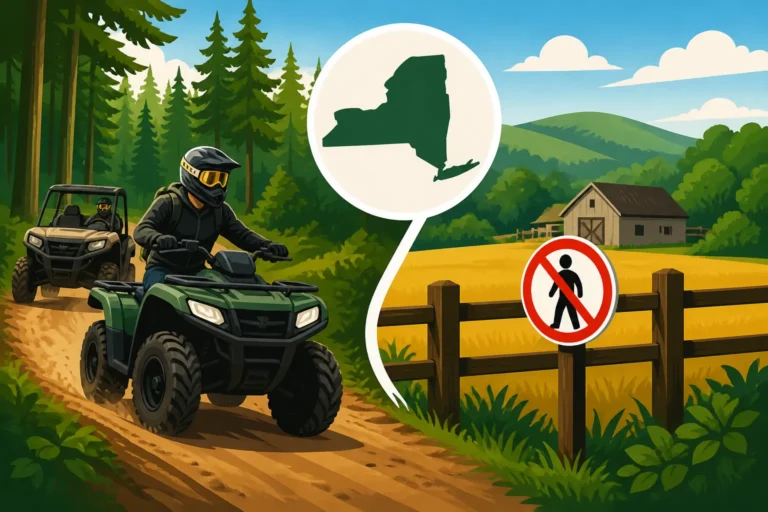
Staying on the marked route also helps prevent accidental trespass. In farm and woodland areas, a turn that seems obvious from the seat of a machine may lead toward a field, yard, logging area, or private access road. Follow posted signs and trail markers rather than relying on a memory of last year’s route. [Following County Trail Markers] offers more detail on reading a marked system.
If a marker is missing or a route looks different from what you remember, don’t guess. Stop somewhere safe, check the information available from the responsible club or county, and ask for clarification. A navigation app such as onX Offroad can be useful for orientation and route planning, but it should not replace official trail information or permission to ride on a particular parcel.
Conditions change faster than a map
A map can help riders plan, but conditions on the ground are not fixed. A heavy rain can turn a low section into a mud hole, and spring thaw can make a trail too soft for use even when nearby roads are dry. Storms can drop limbs across a route, while maintenance work or a landowner request may lead to a temporary closure.
Before loading a machine, check the latest information from the club or county that manages the route. A general map or an app may show where a trail usually runs, but it may not reflect a closure that happened after the map was prepared. For a broader checklist, see [New York Trail Conditions Before You Ride].
This matters especially when planning a longer ride across areas near Central Square, Sandy Pond, or toward Hastings and the Tug Hill region. Route connections and openings can vary, so confirm the sections you intend to use rather than assuming that one open trail means the whole network is open. The broader local system is discussed in [Oswego County's 100 Miles of New York Trail], but the number of routes in a network does not guarantee that every segment is open on a given day.
Landowner relationships and rider etiquette
Permission is the foundation of an open trail
Many trail corridors depend on agreements with landowners. Those relationships can be affected by how riders behave: staying on the route, respecting gates and signs, keeping speeds appropriate, and not leaving litter all help show that access is being taken seriously. A single shortcut across a field or a machine driven around a closed gate can create concerns that affect more than one rider.
Volunteers have a role in protecting those relationships, too. If a rider reports damage, a blocked route, or a confusing sign respectfully and through the right channel, the club can address it without placing a landowner in the middle of a roadside disagreement. Volunteers should not promise access, change a route, or speak on behalf of a landowner unless they are authorized to do so.
Landowner permission can change. A property may be sold, a farm operation may need access, or a landowner may decide that a route should close. [Landowner Agreements That Keep Trails Open] explains why these arrangements matter. Riders should treat a closure as a real boundary, not as an invitation to find a way around it.
Be a rider the community wants back
A considerate rider makes the trail easier to share with neighbors, workers, and other trail users. Slow down when approaching people, animals, farm equipment, or a work crew. Follow posted directions, avoid unnecessary noise near homes, and leave enough room for others to pass safely where the trail allows it.
If you see volunteer work underway, do not assume the crew can pause immediately so you can get through. Stop at a safe distance, make eye contact, and wait for a clear signal. A few minutes of patience is a small price to pay for a trail that remains cared for and available to riders.
Clubs also benefit when riders communicate clearly. Report a problem with the location and a plain description rather than posting an uncertain claim that a whole trail system is closed. If a route is blocked, don’t move signs or clear a new path on your own. The club can determine what is authorized and what response makes sense.
Planning an Oswego County ride around volunteer work
Check access details before you leave home
Before heading out, confirm which trails are open, whether a permit or membership applies, and whether any temporary restrictions affect your planned route. If your ride depends on connecting two areas, verify each section separately. A staging area may be accessible even when a nearby trail segment is not.
A navigation tool can help you keep track of where you are, especially when roads and wooded corridors meet or the route has several turns. onX Offroad may be useful as a planning aid, but compare what you see with current information from the club or county. Treat any route line as a guide to investigate, not proof that you have permission to ride there.
Bring the practical basics: appropriate riding gear, water, a charged phone, and the information you need to identify your machine and planned route. If you are riding with a group, agree on where to stop if someone gets separated. In areas with patchy service, don’t count on being able to settle a navigation question with a quick call once you are already deep into the ride.
Support the trail system beyond the workday
You can support volunteer trail maintenance even if you cannot attend a workday. Join or contact a local club, follow its updates, respect closures, and report hazards through the appropriate channel. A membership or donation may help a club’s work, but ask what it supports and what it does—and does not—provide in return.
Sharing accurate information is another practical contribution. If a trail is closed, avoid reposting an old map or telling friends that it is “probably fine.” If you’re unsure, point riders toward the local club or county’s current guidance. A planning tool such as onX Offroad can help keep a route organized, but the most useful information still comes from the people responsible for access and maintenance.
And when you do ride, leave the corridor as you found it. Don’t move a sign because it seems inconvenient, widen a route to get around a wet spot, or assume a trail is public just because it appears on a map. Those small choices help protect the work volunteers have already done—and make it more likely that Oswego County trails remain available for the next ride.
Disclaimer
This article is for general informational purposes only and does not constitute professional advice. Laws, prices and regulations vary by location and change over time. Consult a qualified professional for guidance on your specific situation.