Riding a Plowed Town Road in January
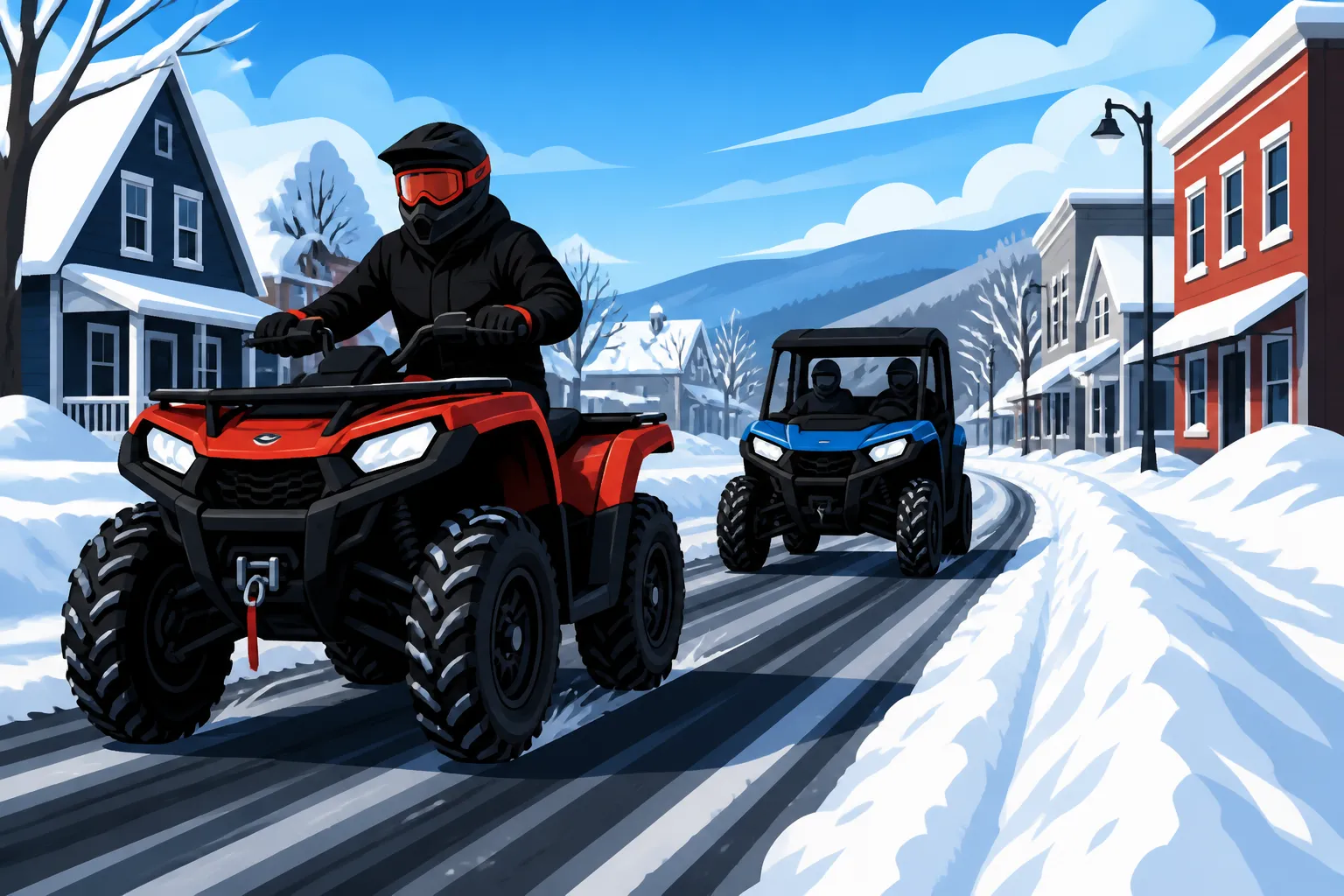
That crisp, cold air in January, with a fresh blanket of snow stretching out across the landscape, can make any ATV rider in New York dream of hitting the trails. It's incredibly tempting to look at a freshly plowed town road, clear of deep snow, and think, "What a perfect shortcut!" or "This would be an easy way to get some winter riding in." However, the reality of New York's laws regarding ATV use on public roadways, especially during the winter months, is often a source of real frustration and confusion. This guide is here to untangle those complexities, explaining exactly why riding a plowed town road in January is almost always a no-go, and what legal, safer alternatives you have for enjoying your ATV when the snow flies.
The Harsh Reality of Riding Plowed Town Roads in New York
Let's get right to it: the idea of freely riding your ATV down a plowed town road in New York during January is, for the vast majority of us, a pipe dream. It feels counterintuitive, especially if the road is clear, safe, and seems like a logical connection. You might see tracks and assume it's okay, but those tracks often belong to someone who's either unaware of the rules or simply choosing to disregard them. The state's regulations are quite strict, and they make very little exception for the convenience of a clear, snow-free surface.
The General Prohibition: Why It's Often a No-Go
In New York, ATVs are generally not considered street legal vehicles. This isn't just a suggestion; it's a fundamental aspect of the law. While you might drive your car down that plowed town road, your ATV operates under an entirely different set of rules. The vehicle and traffic law classifies ATVs, setting them apart from cars, trucks, and even snowmobiles in terms of permissible road use. The primary purpose of an ATV, in the eyes of New York law, is for off-road recreational use, or for specific utility tasks on private property. This distinction is crucial. [Street Legal ATVs in New York: The Short Answer] offers more insight into this broad prohibition.
You might argue, "But it's just a little town road, and it's plowed! What's the harm?" The harm, legally speaking, is that you're operating a vehicle in a place it's not permitted, exposing yourself to significant fines, potential impoundment of your machine, and liability issues if an accident occurs. This isn't just about safety; it's about the law's definition of where these machines belong. The law doesn't care if the road is perfectly clear and you're just trying to get to a friend's house a quarter-mile down the road. The rule is simply that ATVs are prohibited on public highways unless very specific conditions are met.
The 'Plowed' Distinction: More Than Just Snow Depth
You'd think a plowed road would be safer, maybe even more permissible, than a road buried under a foot of snow. Logically, it makes sense. However, for ATV law in New York, whether a road is plowed or not often makes no difference to its legal status for ATV use. The term "plowed" means it's still being maintained as a public highway for conventional vehicle traffic. This distinction is vital because some areas might permit snowmobiles on certain unplowed roads or shoulders when they are effectively acting as snow trails. But once that grader comes through, clearing the pavement, it reinforces its status as a road for cars, not ATVs.
Think of it this way: a plowed road is a functional road for cars and trucks, regardless of how much snow is on the side. The fact that it's plowed means the municipality is actively maintaining it for traditional vehicular use, and ATVs typically don't fall into that category. The law doesn't grant ATVs special permission on plowed roads just because they're easier to traverse in winter. This can be particularly frustrating when you're looking for an easy way to connect to a trail or just explore, but it's a key part of New York's approach to regulating these powerful machines. This reality often leads to confusion, especially for riders who come from states with different regulations, or those new to the complexities of [New York ATV Registration and Insurance Proof].
Understanding New York's ATV Laws on Public Roads
Navigating the legal landscape of ATV riding in New York can feel like deciphering ancient texts, especially when it comes to roads. The general prohibition is clear, but there are a couple of very narrow exceptions that are often misunderstood. It’s crucial to know these distinctions not just to avoid a ticket, but to truly understand where your machine is legally allowed to operate.
Designated and Posted Roads: The Only Exception
The single, most important exception to the general prohibition against ATVs on public roads in New York revolves around "designated and posted" roads. This isn't a blanket statement; it means that a specific town, village, or county must have taken formal action to declare certain roads or portions of roads open to ATV traffic. Furthermore, these roads must then be clearly marked with signs indicating their designation for ATVs. Without both the formal designation and the visible posting, that road is off-limits. You cannot assume a road is open just because you've seen other riders on it.
This process is usually undertaken by local municipalities that have considered the impact on public safety, noise, and environmental concerns. They don't just open every road; they pick specific ones, often to connect existing trail systems or provide access to popular riding areas. A plowed town road in January is only legal for your ATV if it has gone through this rigorous process and is explicitly designated and posted. This means checking local ordinances and looking for official signage before you ever put a tire on the pavement. Without that official posting, you're riding illegally, even if the road appears to be a logical extension of a trail. For deeper information on how a municipality might do this, look into [How a New York Town Designates a Road].
The Crossing Rule: A Momentary Reprieve
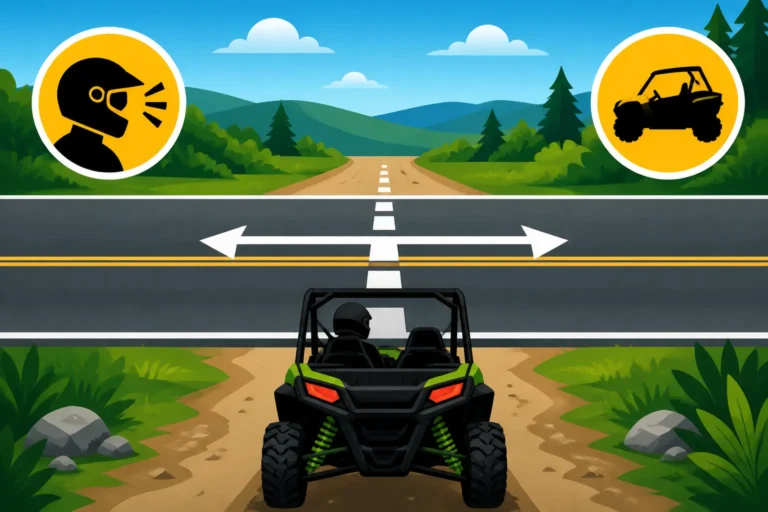
While riding on a public road is almost always prohibited, New York law does provide a narrow exception for crossing a public road. This is a critical distinction. You might need to cross a paved road to get from one section of a trail to another, or to access private property. The law allows this, but under very strict conditions. You must cross at a right angle (90 degrees) to the road, and you must come to a complete stop before entering the roadway. You must yield to all traffic on the public road, and the crossing must be the most direct route possible. It's not an invitation to drive down the shoulder for a bit, or to angle across for a more convenient path. It is strictly about getting from one side to the other.
Moreover, when crossing, your ATV must be properly registered with the New York DMV and you must have the required liability insurance. [New York ATV Registration and Insurance Proof] explains these requirements in detail. And, of course, you must wear an approved helmet. Even if you're just making a quick hop across a quiet road, these rules apply. An officer observing an improper crossing can still issue a ticket. The crossing rule is designed as a practical necessity for connecting off-road routes, not a loophole for road travel.
The Role of Local Ordinances: When Towns Go Stricter
It's important to understand that while New York State sets the general framework for ATV operation, individual towns, villages, and counties have the authority to enact their own, stricter ordinances. This means that even if the state law might allow something in a very specific scenario, your local municipality could have a local law that prohibits it. This is why it's absolutely vital to check with the local town clerk or police department in any area you plan to ride. [New York Rules for Riding a Town Road] further clarifies these local powers.
For instance, a town might decide that even if a state law could theoretically allow ATVs on a certain designated road, they want to ban them entirely on all public ways within their jurisdiction due to noise complaints or safety concerns. They have the power to do this. So, a plowed town road in January might seem inviting, but without knowing the specific local ordinances, you could easily find yourself in violation. Ignorance of the law is never an excuse, and local laws can change, so always do your homework before you head out.
Practical Considerations and Alternatives for Winter Riding
So, if plowed town roads are largely off-limits, what's a New York ATV enthusiast to do when the snow flies and the urge to ride hits? The good news is that winter riding is absolutely possible and incredibly rewarding, but it requires a shift in mindset from casual road use to focused, legal off-road or designated trail riding.
Snowmobile Trails: A Different Set of Rules
This is where a lot of confusion comes in. Many people see snowmobile trails crisscrossing the New York landscape in winter and assume, naturally, that ATVs can use them too. After all, they're both snow machines, right? Not exactly. New York's laws treat snowmobiles and ATVs as distinct categories, with different rules for trail access. While there are some multi-use trails, it is generally illegal to ride an ATV on a designated snowmobile trail unless that trail is explicitly marked and designated for ATV use as well. This is particularly true for groomed snowmobile trails, where ATV tires can cause significant damage to the snow base. [Sharing a Trail With Snowmobilers] highlights the importance of respecting these distinctions.
The primary reason for this separation is the differing impact on the trail. Snowmobiles are designed to glide over snow, compacting it for other sleds. ATV tires, even snow tires, churn and dig, potentially ruining the surface for snowmobiles and creating dangerous ruts that can freeze solid. This isn't just a matter of courtesy; it's often enshrined in law and trail system regulations. Always verify if a specific trail system is open to ATVs in winter. The Lewis County ATV Trail System, for example, is famous for its extensive network, but always check their specific winter use policies.
Private Land: Your Best Bet for Winter Fun
For many New York ATV riders, private land becomes the absolute best and most reliable option for winter riding. If you own your own property, or have explicit, written permission from a landowner, you can enjoy the snow without worrying about state or local road regulations. This offers the freedom to plow your own paths, create your own loops, and truly experience winter riding on your terms. [Riding Your Own Property Under New York Law] goes into more detail about the freedoms and responsibilities that come with riding on private land.
When riding on private land, remember that while state road laws often don't apply, you still have responsibilities. Always ride safely, wear your helmet, and respect the land. If you're riding on someone else's property, make sure you understand the terms of their permission and stick to designated areas. This is also a great opportunity to explore the utility side of your ATV, perhaps using it for snow removal around your property or helping a neighbor. Just be mindful that even if you're clearing a neighbor's driveway, riding on a public road to get there would still likely be illegal without specific designation. [Snow Removal on Private Property] provides more context.
Gear Up for Winter: Essential Prep for Cold Rides
Regardless of where you end up riding your ATV in January, preparing your machine and yourself for the cold is paramount. Winter riding is a completely different beast than summer cruising, and neglecting proper preparation can lead to uncomfortable, unsafe, or even dangerous situations.
Here’s a quick overview of what you should consider:
| Category | Winter Riding Considerations | Importance |
|---|---|---|
| Machine Prep | Tires: Consider specific snow or studded tires for better grip. | High: Significantly impacts traction and safety on ice/snow. |
| Fluids: Check coolant levels, ensure proper antifreeze mixture. | High: Prevents engine damage in freezing temperatures. | |
| Battery: Cold weather drains batteries faster; ensure it's in top condition. | High: Prevents being stranded with a dead battery. | |
| Winch: A working winch is vital for self-recovery from snowdrifts or mud. | High: Essential for getting unstuck in challenging winter conditions. | |
| Muffler/Spark Arrester: Ensure it meets [New York Spark Arrester Requirement] for safety and legality. | Medium: Prevents fires and ensures legal operation. | |
| Rider Gear | Layers: Dress in multiple layers to adapt to changing temperatures and activity levels. | High: Prevents hypothermia and maintains comfort. |
| Waterproof Outerwear: Protects against snow, slush, and wind. | High: Keeps you dry and warm, critical for long rides. | |
| Insulated Helmet: A proper winter helmet or balaclava under your helmet. | High: Prevents frostbite and maintains head warmth. [New York Helmet Law for ATV Riders] is always in effect. | |
| Warm Gloves/Mitts: Essential for hand warmth and dexterity. Heated options are a plus. | High: Prevents frostbite and maintains control. | |
| Waterproof Boots: Insulated boots to keep feet dry and warm. | High: Prevents frostbite and maintains comfort. | |
| Safety & Supplies | Emergency Kit: Includes first-aid, flashlight, fire starter, knife, tow strap, small shovel. | High: Essential for unexpected breakdowns or emergencies. |
| Communication: Fully charged phone, two-way radio if riding in a group. | High: For calling for help or staying in touch. | |
| Navigation: GPS or physical map (waterproofed) of your riding area. | High: Prevents getting lost, especially in snow-covered landscapes. | |
| Extra Fuel: Winter riding can consume more fuel; carry extra if exploring remote areas. | Medium: Ensures you don't run out of gas far from home. |
Proper preparation makes all the difference for a safe and enjoyable winter ATV experience. Don't cut corners here; the cold can turn a minor mishap into a serious situation very quickly.
Navigating the rules for riding ATVs in New York, especially in winter, can be a headache. But by understanding the strict limits on plowed town roads and focusing on legal alternatives like designated trails and private land, you can still enjoy your machine responsibly and safely throughout the snowy season. Always do your homework, stay informed about local rules, and prioritize safety above all else.
Disclaimer
This article is for general informational purposes only and does not constitute professional advice. Laws, prices and regulations vary by location and change over time. Consult a qualified professional for guidance on your specific situation.