How Close to a House Can You Ride at Night?
It's a familiar scenario for many New York ATV riders: the sun is setting, the trails are quieting down, and you just want to get one last peaceful ride in before calling it a night. Maybe you're heading back to camp, or maybe you're just enjoying the crisp evening air. But then a thought creeps in – how close is too close to someone's home when I'm out here in the dark? It's a valid concern, and one that New York law specifically addresses to ensure peace for residents and clarity for riders. This guide will break down the specific rules for riding your ATV near dwellings at night in New York, helping you navigate the trails responsibly.
Understanding New York's 100-Foot Rule for Night Riding
New York State takes its residents' peace and quiet seriously, especially after dark. This isn't just about general courtesy; there's a specific law on the books designed to prevent ATV noise from disturbing people in their homes during the nighttime hours. Ignoring this rule can lead to unwanted attention from law enforcement and upset neighbors, neither of which makes for an enjoyable riding experience.
The Letter of the Law: What it Says
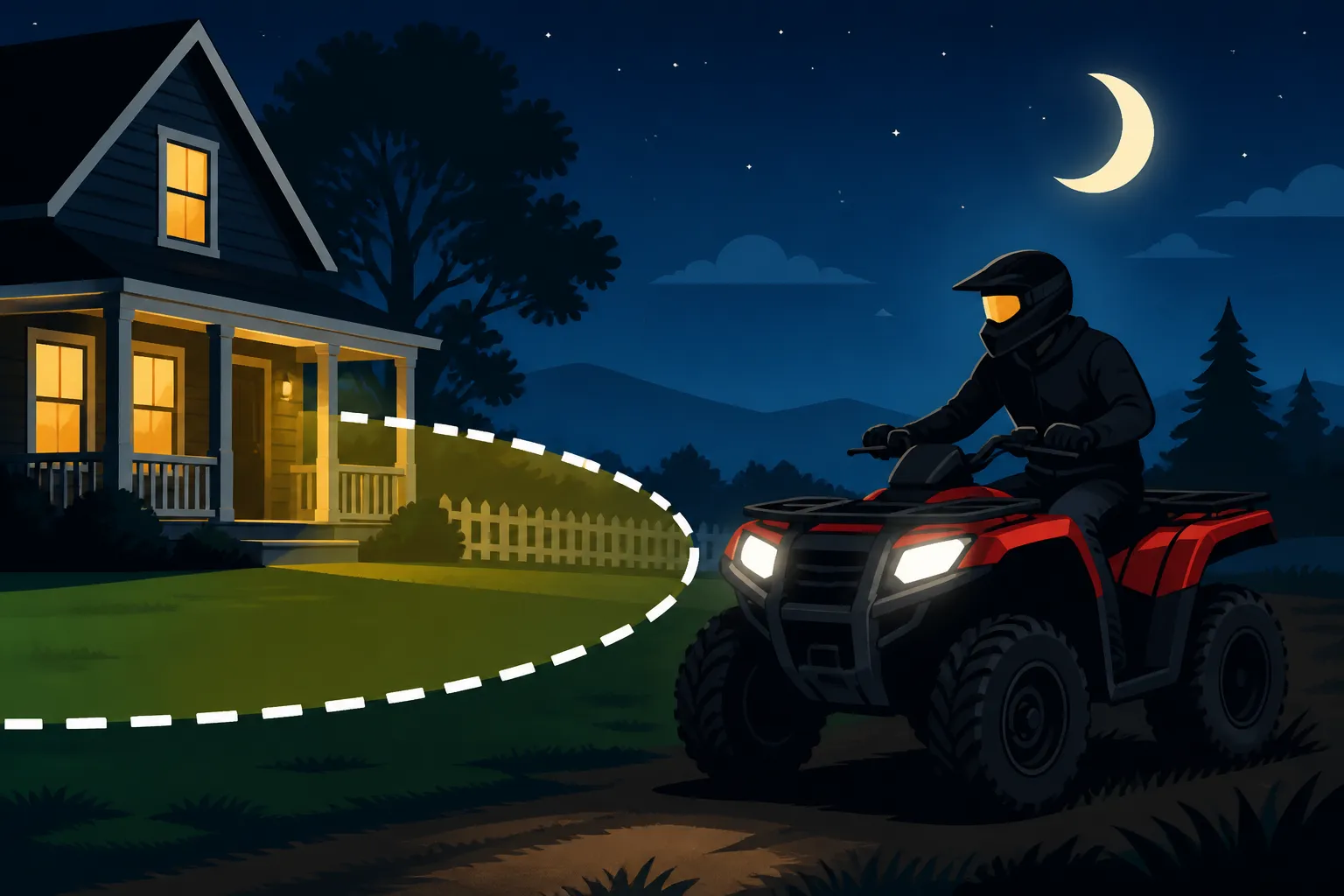
Let's get right to it. New York Vehicle and Traffic Law (VTL) Section 2406 subsection 5 lays out the prohibition clearly: "No person shall operate an all terrain vehicle … within one hundred feet of a dwelling between twelve midnight and six o'clock A.M., or between one-half hour after sunset and one-half hour before sunrise, whichever is shorter, except on lands where the operator has the written consent of the owner or occupant of the dwelling."
This means a few critical things for us riders. First, that "one hundred feet of a dwelling" is your magic number. You need to keep your machine a football field's length away from any house or permanent residence during specific times. Second, the "night" period is defined as either between midnight and 6 AM, or, more broadly, between half an hour after sunset and half an hour before sunrise. Typically, it's the latter definition that catches riders, as sunset can vary dramatically throughout the year. So, as soon as the sun dips below the horizon and those evening shadows stretch long, you need to be extra mindful of your distance from homes. The law understands that sometimes you have permission; if you're riding your own property or land where the owner of the dwelling has given you written consent, then the 100-foot rule doesn't apply to that specific dwelling. It's really important that this consent is in writing, not just a casual verbal agreement, for it to hold up. This rule is a cornerstone of responsible riding and something every New York rider should commit to memory. For more on this, check out [New York's 100-Foot Rule Near Homes at Night].
Why This Rule Exists: More Than Just Noise
You might think it's just about the roar of an engine, and while noise is certainly a huge factor, the 100-foot rule is really about ensuring a good quality of life for everyone in residential areas. Imagine trying to get your kids to sleep, or just unwind after a long day, only to have the sound of an ATV echoing through your windows. It's not just annoying; it can be genuinely disruptive and even unsettling for those who aren't used to the sound of off-road machines.
Beyond the noise, there are safety considerations. Nighttime riding inherently carries risks due to reduced visibility, not just for the rider but for anyone in the vicinity. While you'll certainly have your [Headlight and Taillight After Sunset] on, the periphery is still dark. Suddenly coming upon a residence in the dark can pose a surprise for both the rider and the residents. This rule helps create a buffer zone, minimizing potential conflicts and accidental disturbances. It also reinforces the idea that ATV riding, while fun, comes with responsibilities to the community. Properly functioning and compliant mufflers are a big part of being a good neighbor. You can learn more about state requirements regarding sound levels at [Mufflers Under the Federal Noise Standard]. After all, a quiet rider is a welcome rider, and we want to keep our access to trails positive.
Navigating the Rule: Practical Scenarios and Exceptions
The 100-foot rule might seem straightforward, but in the real world, application can get a bit nuanced. Knowing where you are, whose land it is, and what additional local regulations might be in play are all crucial for staying on the right side of the law and maintaining good relations with the community.
Public Versus Private Land: Where the Rule Applies
A common misconception is that if you're on your own private land, or land where you have permission to ride, all bets are off regarding noise or proximity to homes. Not so! The 100-foot rule applies generally. If you're on your own private property but happen to be riding within 100 feet of a neighbor's dwelling (or even your own dwelling if you haven't given yourself written consent, though that's less practical), the rule still comes into play during those specified nighttime hours. The key exception is when the dwelling's owner or occupant has provided you with written consent. This makes a huge difference. If you're riding a club trail, for example, the trail managers have often secured agreements from adjacent landowners, but you still need to be aware of any homes just off the trail corridor.
The challenge, especially in rural New York, is that property lines aren't always clear, and it can be tough to judge 100 feet in the dark, especially when you're focusing on the trail ahead. This is where good planning, careful navigation, and sometimes even a little daytime scouting can really help. Always assume there's a dwelling nearby if you're unsure, and err on the side of caution. Riding late at night in unfamiliar areas, particularly those with mixed residential and rural zones, is just asking for trouble. [Landowner Consent on New York Private Land] is essential when you're on private property, and understanding [Riding Your Own Property Under New York Law] is equally important for your own land.
Local Ordinances and Their Impact
Here's where it gets even trickier: New York State law sets a baseline, but individual towns, villages, and even some counties have the authority to enact their own, stricter ordinances regarding ATV use, including noise and operating hours. This means that while the state might say 100 feet, your local municipality could have a "quiet hours" ordinance starting at 9 PM, or an outright ban on ATV operation after a certain time, regardless of distance from a dwelling.
It's your responsibility as a rider to know not just the state laws but also the local regulations of where you're riding. A quick call or visit to the town or village clerk's office, or checking their official website, can provide this vital information. Imagine getting ticketed for riding at 10 PM, thinking you're following the state's "half an hour after sunset" rule, only to find out the village you're in has a 9 PM curfew for motorized vehicles. It's a frustrating situation that's easily avoidable with a little research. Remember, [Why a New York Town May Be Stricter] is a real possibility, and ignoring it can ruin your ride and your wallet.
Here's a quick comparison to illustrate how local rules can differ:
| Aspect | New York State Law (VTL 2406) | Potential Local Ordinance (Example) |
|---|---|---|
| Proximity to Dwelling | Within 100 feet | Within 200 feet, or outright ban on any riding near homes |
| Nighttime Hours Defined | 1/2 hour after sunset to 1/2 hour before sunrise OR 12 AM – 6 AM | 9 PM – 7 AM (standard quiet hours) |
| Requirement for Consent | Written consent from dwelling owner/occupant to ride closer | May not override local time-based bans; written consent still wise |
| Applicability | Applies broadly to all ATV operation, public or private land | May designate specific zones where ATVs are prohibited or restricted |
| Penalties | Fines for violation | Fines, impoundment, revocation of local riding permits |
This table is just an example, as local laws vary widely. Always check with the specific municipality where you plan to ride.
Consequences and Best Practices for Responsible Night Riding
Nobody wants to get into trouble while enjoying their ATV. Understanding the potential repercussions of violating these rules and adopting best practices can keep your riding experience positive and legal. Responsible riding isn't just about safety; it's also about being a good ambassador for the sport.
Penalties for Violating the 100-Foot Rule
Ignoring the 100-foot rule, or any local noise ordinances, can lead to more than just a stern talking-to. In New York, violations of the Vehicle and Traffic Law, including those pertaining to ATVs, typically result in fines. These fines can add up, especially if you're a repeat offender. While the exact amount can vary depending on the jurisdiction and the specific nature of the infraction, you can expect a hit to your wallet. You can find more detail on potential costs at [New York Fines for an ATV Violation].
Beyond monetary penalties, repeated disturbances could lead to greater scrutiny from local law enforcement, or even result in calls for stricter local regulations that impact all riders. It's not just about you; it's about the future of ATV riding in New York. Plus, if you're riding too close to a dwelling without proper permission, you could also face charges of trespassing, which comes with its own set of legal headaches. Nobody wants to deal with court dates and legal fees when all they wanted was to enjoy the outdoors. Staying clear of homes, especially at night, helps prevent these scenarios and maintains the overall positive image of our riding community. We also need to remember that laws like [Riding Impaired on Private Land in New York] apply to all riding, regardless of time or location.
Tips for Respectful and Legal Night Riding
So, how do we, as responsible riders, ensure we're respecting the rules and our neighbors while still enjoying our machines? It really comes down to a few key practices:
- Prioritize Daytime Riding: Whenever possible, plan your rides to be completed well before the sun sets. This eliminates the entire issue of night riding proximity rules. If you do ride into the evening, try to be back at your staging area or away from any dwellings before those "half an hour after sunset" rules kick in.
- Invest in Quieter Equipment: The louder your machine, the more likely it is to cause a disturbance. Many aftermarket manufacturers, including companies like SuperATV, offer exhaust systems and mufflers that are designed to be quieter than stock while still maintaining performance. While a quieter exhaust won't exempt you from the 100-foot rule, it certainly makes you a better neighbor and reduces the overall impact of your riding. Check your machine's [New York Equipment Requirements for ATVs] for proper muffler standards.
- Utilize GPS and Maps: Modern GPS units and mapping apps can be invaluable for identifying residential areas and property lines. Before heading out, especially for a night ride, review your route and identify any potential dwellings near your path. Mark these areas as no-go zones or plan your turns to ensure you maintain that 100-foot buffer. Knowledge is power, and knowing your surroundings in advance can prevent accidental violations.
- Stick to Designated Trails Away from Homes: Most established ATV trail systems are designed to route riders away from residential properties. These trails are your best bet for night riding, as the necessary permissions and routing are usually already in place. However, even on designated trails, always be mindful of homes that might have sprung up or aren't clearly visible. [New York Rules for Riding After Dark] often focus on proper lighting, but responsible riding includes being aware of your surroundings.
- Communicate with Neighbors (If Applicable): If you live in an area where you occasionally ride near neighbors' properties, a simple, friendly conversation can go a long way. Let them know you ride, assure them you're aware of the noise, and ask if there are specific times they'd prefer you not ride near their homes. While this doesn't replace written consent for the 100-foot rule, it fosters good community relations. If your muffler fails its noise standard, it can lead to problems, so it's good to know [What Happens When Your Muffler Fails the Noise Standard].
By being proactive and respectful, we can ensure that ATV riding remains a cherished pastime in New York for years to come.
Disclaimer
This article is for general informational purposes only and does not constitute professional advice. Laws, prices and regulations vary by location and change over time. Consult a qualified professional for guidance on your specific situation.