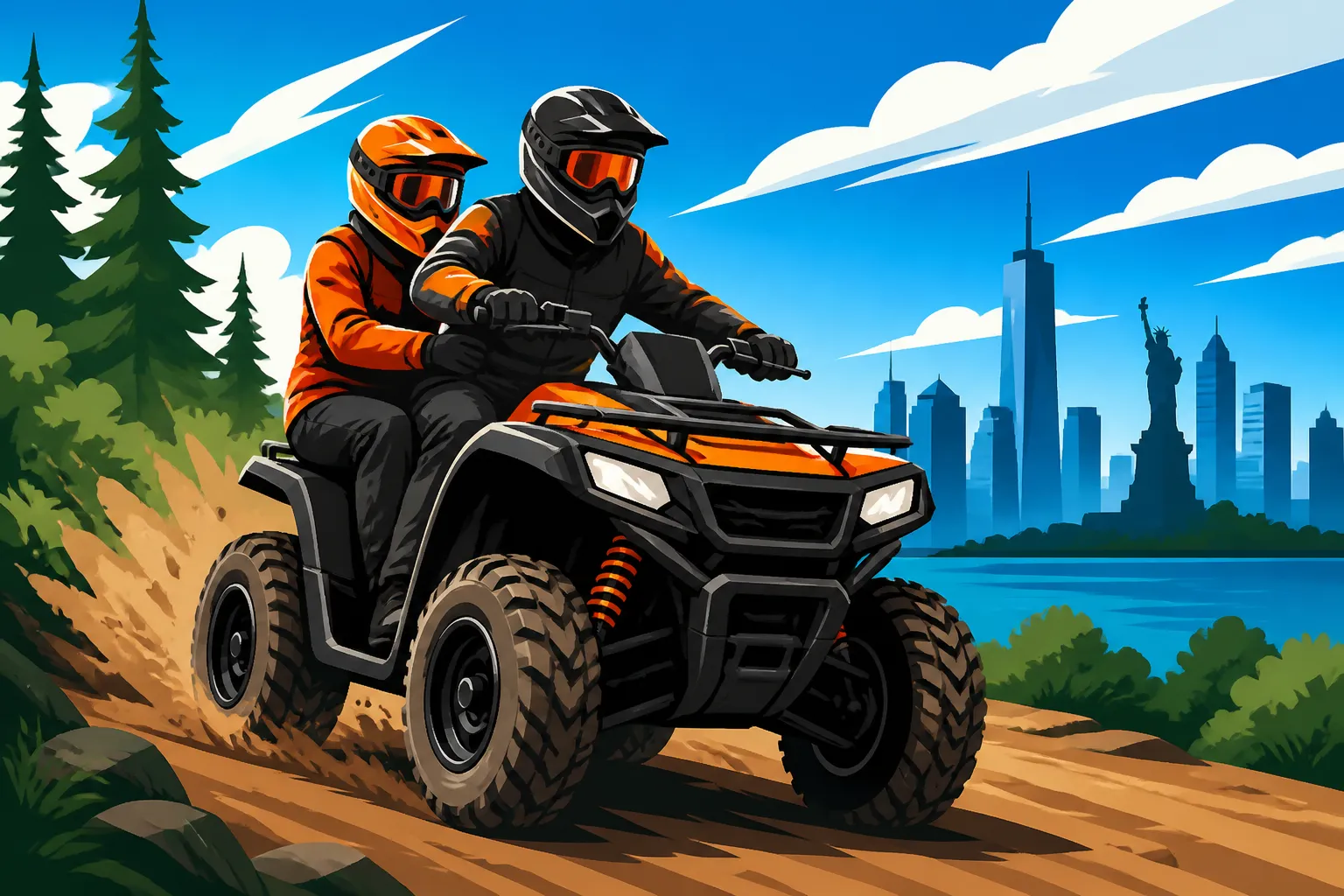
Two Riders on a One-Seat Machine
Riding an ATV in New York is an incredible way to explore the state's beautiful landscapes, but a common misconception and often frustrating point of confusion for riders, especially those with families, revolves around carrying passengers. Many folks assume that a quick hop-on for a child or another adult for a short distance is harmless, but New York State law is quite clear, and very strict, about who can ride on an ATV and where, often leading to potential legal trouble and, more importantly, significant safety risks. This guide will cut through the confusion and explain exactly why riding two on a one-seat machine is problematic, the very real dangers involved, and what your options are for enjoying the trails safely and legally in the Empire State.
The Straight Truth About Passengers on ATVs in New York
Let's get right to it, because this is where many riders get into a sticky situation without even realizing it. The rules in New York State regarding passengers on All-Terrain Vehicles (ATVs) are not just suggestions; they are explicit laws designed to keep everyone safe. It's easy to look at a quad and think, "There's plenty of room for two," but the law, and the machine itself, often disagree.
New York's Clear Stance on Passengers
In New York, an ATV is legally defined as a vehicle designed for one operator, unless it is specifically manufactured and equipped for a passenger. This means if your ATV rolled off the assembly line with a single seat, you are legally permitted to have only one person – the operator – on that machine while riding anywhere off your own private property, and often even there. I know, it can feel overly strict, especially if you're just putting a little one on the tank for a quick spin around the yard or heading down a short path to the fishing hole. You might even see others doing it. But the law doesn't make exceptions for short distances or "just kids."
The reason for this strict regulation goes beyond simply preventing accidents; it's about the fundamental design and intended use of the machine. Manufacturers design ATVs with a specific center of gravity and weight distribution in mind, optimized for a single rider. Adding a passenger, even a small one, alters this balance dramatically. This is why you'll find that the [New York Passenger Rules on an ATV] are consistently enforced. It's not about being a killjoy; it's about preventing serious injuries.
What "Factory-Fitted Seat" Actually Means
This is a crucial distinction that often trips people up. When the law refers to an ATV "equipped for a passenger," it doesn't mean you can just add a cushion, bolt on a milk crate, or have someone sit on the rear rack. It specifically means a seat that was designed and installed by the manufacturer for the express purpose of carrying a passenger, complete with dedicated passenger handholds and footrests.
Think about it this way: a single-seat ATV's rear rack is for cargo, not people. It's not designed to support dynamic human weight, nor does it offer any safety features for a passenger. You might find aftermarket seats or kits that claim to convert your single-rider ATV into a two-up, but from a legal standpoint in New York, these usually don't cut it. The law is looking for an ATV that was originally manufactured as a two-up model. These machines have an extended frame, a longer, more substantial seat, and specific ergonomic features to safely accommodate a second person, ensuring they have proper foot placement and something secure to hold onto. This distinction is vital, because without a proper [Why a Passenger Needs a Factory-Fitted Seat in New York], you're not just risking a ticket, you're risking lives.
Why New York's Law is So Strict on Passengers
It's natural to question laws that feel restrictive, especially when it comes to something as fun as ATV riding. However, New York's strict stance on carrying passengers on single-seat ATVs isn't arbitrary. It's rooted deeply in physics, engineering, and a long history of unfortunate incidents. Understanding the "why" can help put the rules into perspective and reinforce the importance of safe riding practices.
Stability and Handling Issues
An ATV is engineered for one rider. Period. Its suspension, steering geometry, and overall balance are calibrated for a single person's weight and movements. When you add a second person, you fundamentally alter this delicate balance. Imagine trying to ride a bicycle with someone sitting on your handlebars – it's unstable, hard to steer, and dangerous. An ATV is no different, perhaps even more so given its power and the terrains it traverses.
The center of gravity shifts dramatically with a second rider. This makes the machine incredibly prone to rollovers, especially when making turns, climbing hills, descending declines, or encountering unexpected obstacles like rocks or roots. The driver's ability to shift their weight, which is crucial for controlling an ATV in dynamic situations, becomes severely compromised. Even a small child can throw off the balance enough to cause a loss of control, and in an emergency braking situation, the added weight and shifted momentum can make stopping safely nearly impossible. It's not just about "being careful"; the machine itself simply isn't designed to perform safely with the extra load.
Protection and Safety Features Designed for One
Beyond stability, consider the lack of dedicated safety features for a passenger on a single-seat machine. Where does the passenger put their feet? Where do they hold on? Are they interfering with the driver's ability to operate the controls or see the path ahead? On a single-seat ATV:
- Footrests: There are typically only footrests for the operator. A passenger's feet might dangle, get caught in the wheels, or force them to awkwardly place their feet on the operator's, which is incredibly unstable and unsafe.
- Handholds: There are no proper grab handles for a passenger. They might try to hold onto the driver, the seat, or the cargo rack, none of which offer a secure, stable grip, especially during bumps or sudden movements.
- Seating Position: A passenger often sits too far back, putting them in a precarious position where they can be easily ejected. If they sit in front, they can obstruct the driver's view and prevent them from properly shifting their weight or accessing controls.
Contrast this with a factory-designed two-up ATV or a side-by-side (UTV), which comes with an extended frame, a longer seat, dedicated passenger handholds, and separate footwells or footrests. These machines are built from the ground up to safely accommodate additional riders, providing the necessary support and protection. This is particularly important when considering [New York Rules for a Child Passenger], as children are even more vulnerable due to their smaller size and developing motor skills.
The Legal Ramifications and Insurance Woes
Beyond the immediate safety concerns, carrying an illegal passenger in New York can lead to significant legal and financial headaches. First, there's the immediate consequence of a citation. [New York Fines for an ATV Violation] can be substantial, and that's just the tip of the iceberg.
The more dire consequence lies in liability and insurance. If an accident occurs while you are carrying a passenger on a single-seat ATV, your insurance company may deny coverage for any injuries or damages because you were operating the vehicle illegally. This means you could be held personally liable for medical bills, property damage, and other costs, which can quickly run into the tens or even hundreds of thousands of dollars. The [New York ATV Insurance Mandate Explained] is there to protect you, but operating outside the legal parameters of your policy can void that protection entirely. It's a risk simply not worth taking, no matter how short the ride.
The Real-World Dangers of Doubling Up on a Single-Seat ATV
It's one thing to talk about laws and regulations, but it's another to understand the very real, often catastrophic, consequences of ignoring them. When you put two riders on a machine designed for one, you're not just breaking a rule; you're setting the stage for serious injury or worse.
Increased Risk of Rollovers and Ejection
The primary danger of riding double on a single-seat ATV is the drastically increased risk of a rollover. These machines are designed to be ridden by a single operator who actively shifts their weight to control the ATV through turns, over obstacles, and on varied terrain. When a passenger is added, especially one who isn't experienced in anticipating the machine's movements, this vital weight shifting becomes nearly impossible.
Imagine hitting a hidden root or rock, or taking a corner a little too sharply. With a single rider, they can react by leaning, standing, or adjusting their body to maintain balance. With a passenger, this maneuverability is severely limited. The passenger's weight, often high up and outside the intended center of gravity, can act as a lever, easily flipping the ATV. When a rollover occurs, both the driver and the passenger are at extreme risk of being thrown from the machine, or, horrifyingly, being pinned underneath its weight. Ejection on an ATV, even at relatively low speeds, can lead to severe head trauma, broken bones, and internal injuries, particularly if the rider or passenger isn't wearing proper safety gear like a helmet, even though [New York Helmet Rules for ATV Riders] are mandatory.
Impaired Driver Control and Visibility
A passenger, regardless of size, inevitably interferes with the driver's ability to safely operate the ATV.
- Restricted Movement: The driver's ability to move freely on the seat, lean into turns, or absorb bumps with their legs is crucial. A passenger, particularly one sitting behind them, restricts this movement, essentially tying the driver to a less responsive position. This makes navigating technical terrain much more challenging and reduces reaction time in emergencies.
- Obstructed View: If a smaller passenger, like a child, is placed in front of the driver (a common, but incredibly dangerous, practice), their presence can block the driver's view of the path directly ahead or the instrument panel. This compromises the driver's ability to see obstacles, anticipate turns, or monitor the ATV's performance, leading to potentially disastrous outcomes.
- Interference with Controls: A passenger might inadvertently bump the steering handlebars, impede access to throttle or brake levers, or even interfere with gear shifting. These small interferences can have major consequences at speed or in difficult terrain.
Injuries Specific to Passengers on Single-Seat Machines
Because single-seat ATVs lack dedicated passenger safety features, passengers are exposed to unique and severe risks:
- Lack of Secure Footing: Passengers often don't have proper footrests, leading their feet to dangle dangerously close to spinning wheels, hot exhaust components, or obstacles on the ground. A foot caught in a tire can result in devastating injuries.
- No Secure Handholds: Without factory-fitted handholds, passengers resort to grabbing the driver, the seat, or the rack. None of these provide a stable anchor, especially if the ATV hits a bump or swerves. This makes ejection much more likely.
- Impact Injuries: In an accident, a passenger is at high risk of impacting the driver, the handlebars, or other hard parts of the ATV. They may also be thrown into trees, rocks, or the ground with little to no protection. The lack of proper seating means their body isn't absorbed by designed ergonomics, leading to more direct and severe impact forces.
- Getting Caught Underneath: In a rollover, a passenger is more likely to be ejected in a way that places them directly in the path of the rolling ATV, or to be trapped underneath, leading to crushing injuries.
These aren't hypothetical scenarios; they are the grim reality of what can happen when an ATV is operated outside its design parameters and legal guidelines.
Practical Advice for Riding with Passengers in New York
While New York's laws might seem strict regarding passengers on ATVs, they are ultimately there for everyone's safety. Understanding the rules and having viable alternatives means you can still enjoy riding with friends and family without putting anyone at undue risk or facing legal penalties.
When a Second Rider is Permitted (and Safe)
The good news is that if riding with a passenger is important to you, there are safe and legal ways to do it. The key is to use a machine that is designed for more than one person:
- Two-Up ATVs: Many manufacturers produce "two-up" or "MAX" models of ATVs. These machines are purpose-built with a longer wheelbase, an extended seat, dedicated passenger footrests, and robust handholds. They are engineered to handle the additional weight and shifting center of gravity of a second rider, providing a much safer experience.
- Side-by-Sides (UTVs): For multiple passengers, Side-by-Sides (UTVs) are often the ideal choice. These vehicles, which often resemble small cars, come standard with multiple seats, seatbelts, roll cages, and doors, offering a significantly higher level of safety and comfort for passengers. They are designed from the ground up for utility and passenger transport. [Can You Register a Side-by-Side in New York?] is a common question, and the answer is that while many UTVs don't meet the strict definition of an ATV for registration purposes, they are perfectly suited for private land and designated UTV trails where permitted.
Even on these multi-passenger machines, it's crucial that all riders wear appropriate safety gear, especially helmets, and that the operator practices responsible riding, avoiding excessive speed or stunts. While aftermarket accessories exist to enhance comfort and utility for these machines, from companies like SuperATV for instance, it's crucial to remember that adding a SuperATV cargo box won't magically make your single-seater a legal two-up machine. Always verify the manufacturer's original design for passenger capacity and safety features.
Alternatives for Family Riding
If purchasing a new two-up ATV or UTV isn't feasible right now, there are other ways to enjoy the trails with loved ones:
- Multiple Machines: The safest way for two people to ride is on two separate, appropriately sized ATVs. If everyone who wants to ride is of legal age (remember [New York Minimum Age to Ride an ATV]) and has the necessary skills, riding individual machines eliminates the risks associated with carrying passengers on single-seat ATVs.
- Designated Riding Areas: Focus your riding activities on private property or designated trail systems where you know the rules and conditions. Always get [New York Rules for Riding Private Land] permission when applicable.
- Take Turns: If you only have one ATV, take turns riding. One person can ride while the other enjoys other activities or waits for their turn. It's not as instantaneous as riding together, but it ensures safety and compliance.
- Other Recreational Vehicles: Consider other recreational vehicles designed for multiple passengers, such as larger utility vehicles or even certain off-road buggies, if they better suit your needs and local regulations. If you're looking into side-by-sides, which are often designed for multiple passengers, you'll find a wide array of accessories from companies like SuperATV that enhance comfort and utility for all riders.
Educating Yourself and Others
Knowledge is your best safety gear. Take the time to fully understand New York's ATV laws and encourage your riding companions to do the same.
- ATV Safety Course: Consider taking an ATV safety course. While not always mandatory for adult riders, these courses provide invaluable instruction on safe operation, understanding terrain, and emergency maneuvers. This is especially important for younger riders, as the [New York ATV Safety Certificate Requirements] mandate it for certain age groups.
- Read Your Owner's Manual: Your ATV's owner's manual contains critical information about its design, capacity, and safe operating procedures. It will clearly state whether your machine is a single-rider or two-up model.
- Lead by Example: As an experienced rider, set a good example by always following safety rules, wearing appropriate gear, and never carrying illegal passengers. Your actions speak volumes, especially to younger, impressionable riders.
- Stay Updated: Laws and regulations can change, and trail conditions are constantly evolving. Stay informed by checking the New York State Parks, Recreation and Historic Preservation website or local ATV club resources for the latest information.
Riding ATVs is a thrilling and rewarding experience, and by adhering to New York's passenger rules, you can ensure it remains a safe and enjoyable activity for everyone involved.
Disclaimer
This article is for general informational purposes only and does not constitute professional advice. Laws, prices and regulations vary by location and change over time. Consult a qualified professional for guidance on your specific situation.