New York Supervision Rules for Minors
Figuring out the maze of rules and regulations for ATV riding in New York can be a real headache for parents, especially when you're just trying to introduce your kids to a sport you love. It's tough wanting to share the thrill of the trails but feeling overwhelmed by legalities designed to keep everyone safe. This guide is here to untangle New York's supervision rules for minors, making it clearer so you can ride with confidence and peace of mind.
Understanding New York's Age Restrictions for ATV Riders
New York State has a clear framework for who can ride an ATV and under what conditions, particularly when it comes to our younger riders. These aren't just arbitrary rules; they're in place to prevent serious accidents and ensure that everyone on the trails, especially children, has the skills and judgment necessary for safe operation. For parents, understanding these foundational age restrictions is the first step toward responsible riding. It's about more than just getting on a machine; it's about preparation and legal compliance.
The Absolute Age Floor: Why No One Under Ten May Ride
Let's start with the absolute baseline: in New York, a child cannot operate an ATV if they are under ten years old. Period. This isn't a recommendation; it's a hard and fast rule. We know how eager little ones can be to hop on a quad, especially if they've seen older siblings or parents riding. However, the state has determined that children under this age simply don't possess the necessary physical development, cognitive abilities, or judgment to safely control an ATV, even a small youth model. Their reaction times, strength, and ability to understand complex risks are still developing. Trying to skirt this rule not only puts your child in danger but also exposes you, as the supervising adult, to significant legal repercussions, including fines and potential liability in the event of an accident. It's a tough line to draw when you see those hopeful eyes, but safety and the law must come first. [New York Minimum Age to Ride an ATV] delves deeper into these specific age rules.
Riders Aged 10-15: The Safety Certificate and Supervision
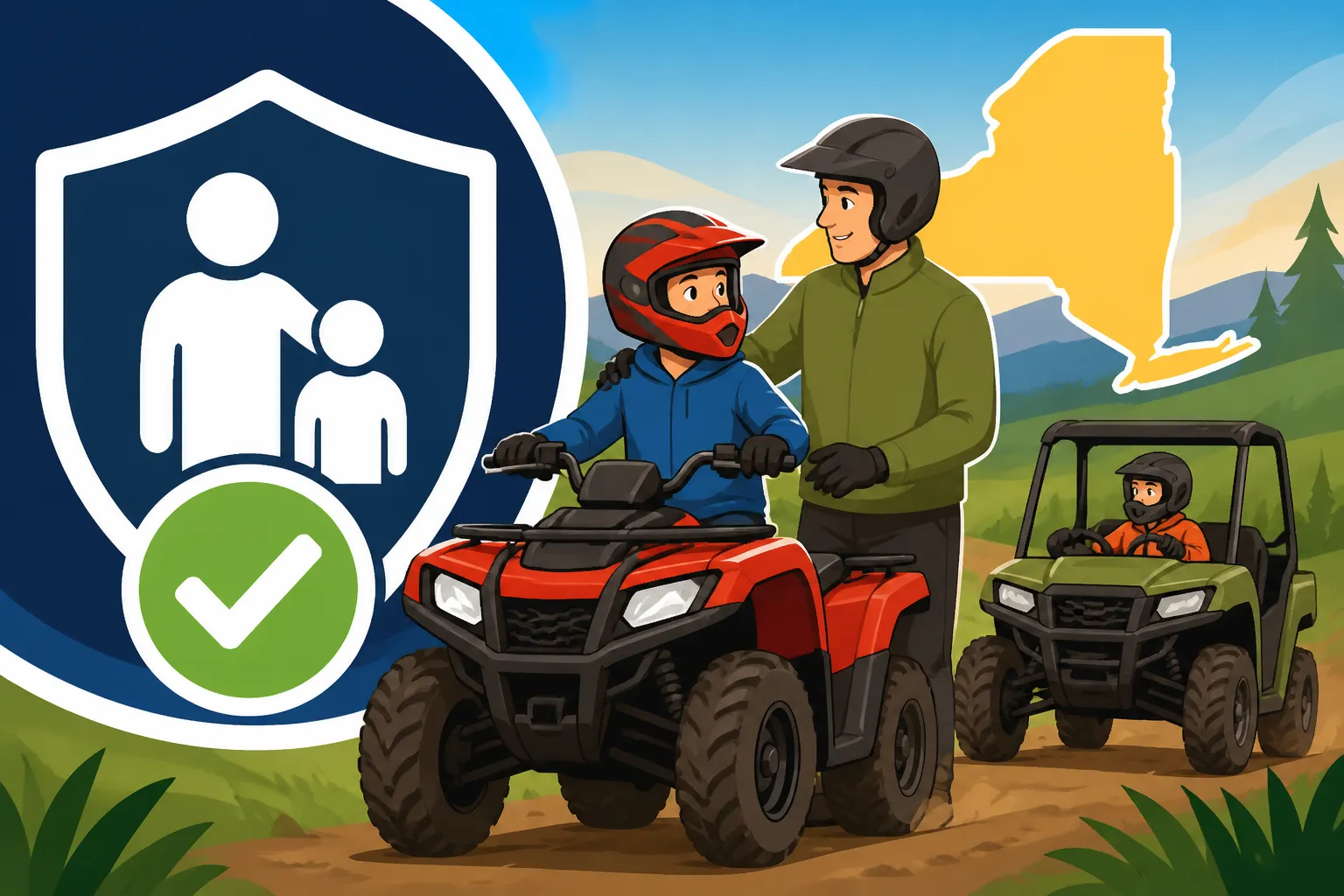
Once a child hits the age of ten, the door to ATV riding in New York technically opens, but it comes with specific requirements. For anyone between the ages of 10 and 15, operating an ATV is contingent upon two crucial things: they must possess a valid New York State ATV Safety Certificate, and they must be under the general supervision of someone 18 years of age or older. This isn't an "either/or" situation; both conditions must be met. The safety certificate ensures they've received formal instruction on safe riding practices, machine operation, and trail etiquette. It's not just about passing a test; it's about building foundational knowledge and respect for the machine and the environment. Without this certificate, even if your 14-year-old feels like a pro, they're not legally allowed to ride off your own private property without explicit landowner permission. The "general supervision" part is equally critical, establishing accountability and ensuring an adult is always aware of the young rider's activities and safety.
What "General Supervision" Really Means on the Trail
The term "general supervision" can sometimes lead to misunderstandings. It doesn't necessarily mean you need to be holding your child's hand or even riding directly beside them at all times. Instead, it implies that the supervising adult must be within reasonable sight or hearing distance of the young rider, capable of intervening if necessary, and generally aware of their location and activities. Think of it less as constant direct observation and more as responsible oversight. If your child is riding a designated trail, you should be on the same trail system, perhaps a short distance ahead or behind, or at a nearby staging area where you can quickly respond. It means you're not just dropping them off and leaving; you're actively monitoring their ride. This rule recognizes that kids need some space to develop their skills, but not at the expense of their safety or an adult's ability to step in. A supervising adult needs to be present, engaged, and ready to act if a situation arises, like a sudden mechanical issue or an unexpected change in trail conditions.
The New York ATV Safety Certificate: A Must-Have for Young Riders
The New York ATV Safety Certificate is more than just a piece of paper; it's a fundamental requirement and a vital tool for ensuring young riders are prepared for the challenges of ATV operation. For parents, it's the state's way of ensuring your child gets a proper foundation in safety before hitting the trails. This certification process helps instill good habits and teaches critical decision-making skills that go beyond just knowing how to operate the throttle and brakes.
Who Needs the Safety Certificate and Why It's Critical
As mentioned, any ATV rider in New York State aged 10 through 15 must possess a valid ATV Safety Certificate to legally operate a machine off their own private property. While it's always recommended for all riders, regardless of age, to take a safety course, for this age group, it's non-negotiable. The certificate serves as proof that the young rider has successfully completed an approved safety course, covering topics like rider responsibility, environmental impact, proper riding techniques, and understanding common hazards. It's critical not only for legal compliance but also because it significantly reduces the risk of accidents. Think of it like getting a driver's permit: you wouldn't let a teenager drive a car without instruction, and the same logic applies to ATVs, which can be just as powerful and potentially dangerous. The course provides structured learning, allowing kids to learn in a safe, controlled environment before facing real-world trail conditions. [The New York ATV Safety Certificate Explained] provides more detail on this essential document.
How and Where to Get Your Child Certified
Finding an ATV Safety Course for your child in New York is generally straightforward. These courses are typically offered by the New York State Parks, Recreation and Historic Preservation (OPRHP) or by approved organizations and clubs. Many are held on weekends or during school breaks, making them accessible for families. You can often find listings of upcoming courses on the OPRHP website or by contacting local ATV clubs or dealers. The courses usually combine classroom instruction with hands-on riding exercises, ensuring that students not only learn the theory but also practice the practical skills under expert guidance. The duration can vary, but generally, expect a full day or two half-days of instruction. It's a small investment of time for a lifetime of safer riding. Make sure to sign up in advance, as spots can fill up quickly, especially during peak riding seasons. [Where to Take a New York ATV Safety Course] can help you locate a suitable program.
The Importance of Carrying Proof While Riding
Once your child has earned their ATV Safety Certificate, it's absolutely crucial that they, or their supervising adult, carry proof of this certification whenever they are riding an ATV off private land. Just like you'd carry your driver's license in a car, this certificate is your young rider's "license" to operate an ATV. Should they be stopped by law enforcement or a park ranger, presenting this certificate will demonstrate compliance with state law. Failing to produce it could result in a citation, even if they've completed the course. It’s a simple step that can save a lot of hassle and potential fines. We all hope for smooth rides, but being prepared for an interaction with authorities is part of responsible riding. Consider laminating the certificate or keeping it in a waterproof pouch in a secure spot on the machine or with the supervising adult.
Navigating Supervision in Different Riding Scenarios
The concept of supervision isn't a one-size-fits-all situation. Depending on where you're riding and who's on the machine, the practical application of New York's supervision rules can shift. Understanding these nuances is key to ensuring continuous compliance and, most importantly, the safety of your young riders. Whether it's your own backyard or a sprawling county trail system, the adult's responsibility remains paramount.
Riding on Private Land vs. Designated Trails
A common question parents have is whether the supervision rules differ between private land and public or designated trails. In New York, the requirement for a safety certificate and general supervision for riders aged 10-15 primarily applies when operating an ATV off the owner's property. This means if your child is riding on your family's farm or a friend's large acreage with explicit permission, the safety certificate might not be strictly required by law, as long as they are still under general supervision. However, and this is a big "however," it is always recommended for young riders to have the certificate, regardless of where they ride. The skills and knowledge gained in the course are invaluable everywhere.
When you transition to designated public trails, such as those found in Lewis County or Oswego County, the rules become much stricter and are actively enforced. On these trails, your 10-15-year-old must have their safety certificate, and you, as the supervising adult, must be present and provide general supervision. Ignoring these rules on public trails can lead to fines, having your machine impounded, or even losing your riding privileges. Always remember that while private land offers more flexibility, safety should never be compromised, and the lessons from a safety course are universally beneficial. [New York Rules for Riding Private Land] offers more insight into landowner consent.
Passengers and Youth Riders: Double-Checking the Rules
Another critical aspect of supervision, particularly with minors, involves passengers. New York law is quite specific about who can ride as a passenger on an ATV. Generally, an ATV must be specifically designed by the manufacturer to carry a passenger, meaning it has a factory-fitted passenger seat and handholds. You cannot simply add a makeshift seat or allow a second rider on a machine designed for single occupancy, especially if that second rider is a child. Even if the ATV is designed for two, the age and supervision rules still apply to the primary operator.
Furthermore, if a child is riding as a passenger, the supervising adult must ensure they are wearing appropriate safety gear, including a helmet, and that they are mature enough to follow instructions and hold on securely. The overall spirit of the law is to prevent overloading a machine or placing a child in an unsafe position. Before letting any minor, whether as an operator or a passenger, get on an ATV, always double-check the manufacturer's recommendations for that specific model, which you can often find from accessory companies like SuperATV if you're looking at aftermarket parts or guides. [New York Passenger Rules on an ATV] covers this in more detail.
When Parents Share the Liability for a Minor's Ride
This is a serious point that often gets overlooked in the excitement of a ride: parents, guardians, or even adults who lend an ATV to a minor can be held legally responsible for any damage or injury caused by that minor's operation of the machine. In New York, if your child, while under your supervision (or lack thereof), causes an accident, you could be facing significant civil liability. This means you could be sued for medical expenses, property damage, and other costs. This is precisely why the state mandates a [New York's Mandatory ATV Insurance] policy for all registered ATVs. Your insurance policy is your first line of defense in protecting your family's assets in such unfortunate circumstances.
This shared liability underscores the immense responsibility that comes with supervising a minor on an ATV. It's not just about making sure they follow the rules; it's about actively fostering safe riding habits, ensuring they're on an appropriate machine, and having the necessary insurance coverage in place. Understanding that your actions (or inactions) have legal consequences can help reinforce the importance of constant vigilance and adherence to all safety protocols. [When a Parent Pays for a Minor's ATV Crash] provides a sobering look at these responsibilities.
Common Pitfalls and Misconceptions for Parents
Even with the best intentions, it's easy for parents to fall into common traps or misunderstand aspects of New York's ATV supervision rules. These misconceptions, if not clarified, can lead to dangerous situations or unnecessary legal trouble. Let's clear up some of these points to ensure your family's riding experience is as safe and compliant as possible.
Assuming "General Supervision" Means Eye-to-Eye Contact
One of the biggest misunderstandings revolves around the definition of "general supervision." While it means you need to be within reasonable sight or hearing, it does not mean you need to maintain constant, direct eye contact with your child. The trails are dynamic environments, and sometimes a young rider might be just out of view around a bend, or the sound of your own machine might temporarily mask theirs. The key is proximity and responsiveness. Can you get to them quickly if something goes wrong? Are you aware of their general direction and speed? This flexibility allows young riders a bit more freedom to develop their skills and confidence, but it places an even greater emphasis on the adult's judgment regarding safe distances and conditions. For example, if you're riding a complex, winding trail, "general supervision" might mean staying closer than on a wide-open, straight path. Always err on the side of caution.
The Lure of Over-Sized Machines for Growing Kids
It's natural for kids to grow, and for parents to want to buy a machine they can "grow into." However, putting a child on an ATV that is too large or too powerful for their size and skill level is a significant safety risk and a common pitfall. An oversized machine can be difficult for a child to control, especially when braking, turning, or navigating obstacles. They might not have the strength to properly shift their weight, reach the controls comfortably, or manage the machine's momentum. This can lead to loss of control, tipovers, and serious injuries.
When selecting an ATV, especially for a youth rider, always refer to the manufacturer's age and size recommendations. Many reputable manufacturers and aftermarket companies, including SuperATV with their range of parts for various machines, design ATVs and accessories specifically for different age groups and sizes. Resisting the urge to "upsize" too soon is one of the most important decisions you can make for your child's safety. A smaller, appropriately sized machine will allow them to learn and master skills more safely, building confidence before moving to a larger model. [Matching a Machine to a Child in New York] elaborates on this vital point.
Forgetting About Insurance Requirements for Minors
While we've touched on liability, it bears repeating: every ATV operated in New York State, even by a minor, must carry proper insurance coverage when ridden off private property. This isn't just a suggestion; it's a legal mandate. Many parents focus so heavily on the safety certificate and supervision rules that they might overlook or forget to verify their insurance coverage, especially if it's an older machine or one inherited. [New York ATV Insurance Requirement] applies equally to machines ridden by adults and minors.
Your insurance policy should meet New York's minimum liability requirements, which are designed to cover damages and injuries to others in the event of an accident. Without adequate insurance, any accident involving your child on an ATV could result in devastating financial consequences for your family. Always contact your insurance provider to confirm that your ATV policy covers operation by a minor under the required supervision and that it meets all state minimums. It's a proactive step that protects your entire family, allowing you to focus on the joy of riding, not the worry of unforeseen circumstances.
New York ATV Riding Age and Supervision Rules At A Glance
To help consolidate the information, here's a quick reference table summarizing the key age and supervision rules for ATV riders in New York State. This can be a handy guide for parents looking for a quick overview.
| Rider's Age | ATV Safety Certificate Required? | General Supervision Required? (by 18+ adult) | Where Can They Ride? | Key Considerations |
|---|---|---|---|---|
| Under 10 years old | No (not permitted to operate) | N/A (not permitted to operate) | Nowhere legally (off private property, strictly no operation) | Absolute minimum age is 10. No exceptions. |
| 10 – 15 years old | Yes | Yes | Designated trails, public lands (where permitted), private land (with permission) | Must have passed an approved NYS ATV Safety Course. Adult must be within reasonable sight/hearing. Not permitted on public roads unless specifically designated and posted. |
| 16 years old + | No (recommended) | No (but responsible riding is always key) | Designated trails, public lands (where permitted), private land (with permission) | While not legally required, a safety course is highly beneficial for all riders. Still subject to all other ATV laws (registration, insurance, helmet, etc.). |
| Passenger (any age) | N/A | Yes (for operator, and passenger must be capable) | Only on ATVs specifically designed for a passenger (factory-fitted seat). | Passenger must be capable of holding on securely and following instructions. Helmet required for all riders/passengers. The operator must meet age/certificate requirements. Never exceed manufacturer's capacity. |
Disclaimer
This article is for general informational purposes only and does not constitute professional advice. Laws, prices and regulations vary by location and change over time. Consult a qualified professional for guidance on your specific situation.