Crossing at Ninety Degrees in New York
Riding an ATV in New York offers incredible opportunities to explore, but it also comes with a very specific set of rules, especially when it comes to interacting with public roads. One of the most common frustrations riders face is navigating those brief, unavoidable moments when a trail crosses a paved road. It's not always intuitive, and getting it wrong can lead to a ticket or, worse, a dangerous situation. This guide will walk you through the essential rules for safely and legally crossing public roads in New York, focusing on the critical "ninety-degree" rule and other important considerations.
The Core Rule: Crossing at Ninety Degrees in New York
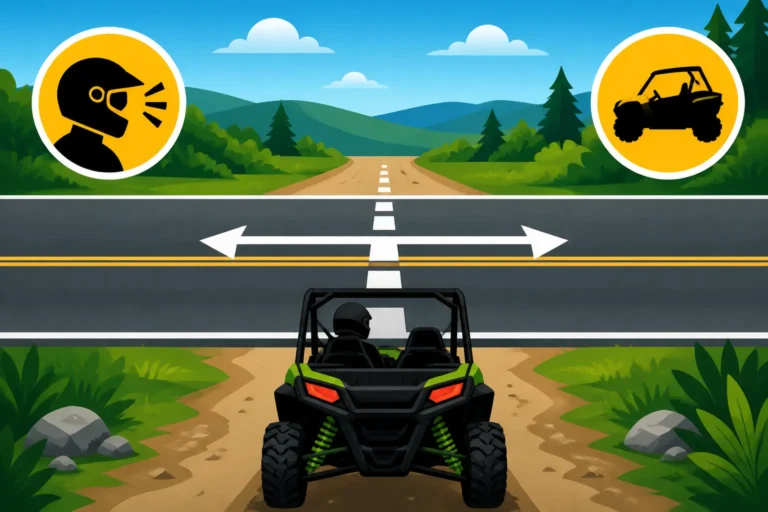
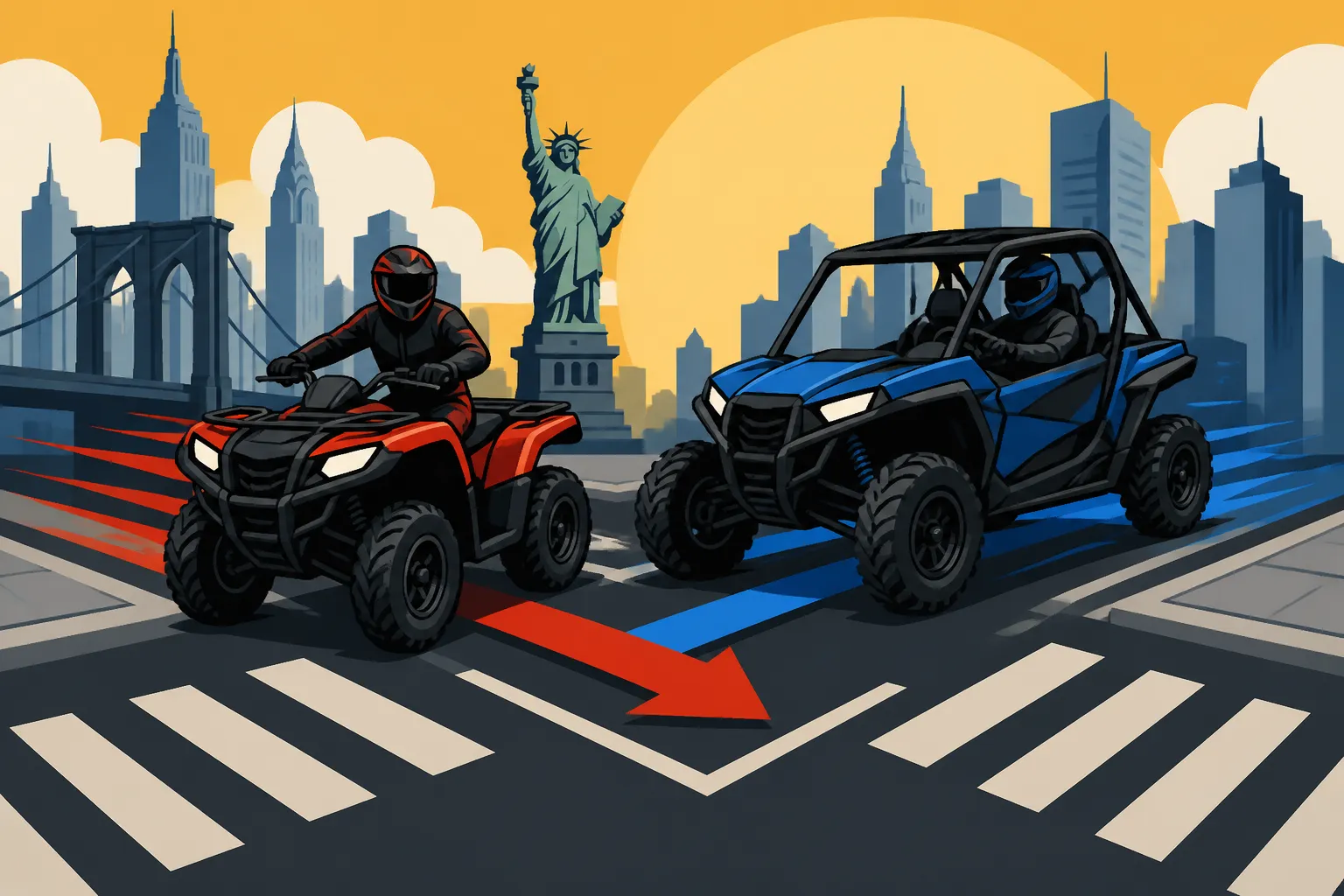
You've been out on the trail, enjoying the fresh air and the rumble of your machine, when suddenly you see it—the tell-tale sign of pavement ahead, indicating your trail will briefly intersect a public road. This is where New York's primary rule for ATVs on public ways comes into play: you must cross at a ninety-degree angle. This isn't just a suggestion; it's a legal requirement designed to minimize the time your machine spends traveling parallel to traffic on a road not meant for ATVs.
Why the "Ninety-Degree" Rule Exists
Think about it from a safety perspective. When you're crossing a road, you want to be as visible as possible for the shortest duration possible. Driving along the shoulder, even for a short distance, means you're moving in a way that other drivers might not anticipate. You're slower, less visible, and not designed for the flow of road traffic. The ninety-degree rule forces you to make a direct, perpendicular pass, getting you off the asphalt and back onto the trail on the other side as quickly and safely as possible. It reduces your exposure to oncoming vehicles and makes your intentions clearer to anyone on the road.
This rule is a cornerstone of New York's approach to ATV use on public lands and adjacent areas. It acknowledges that trails often need to connect across minor roads, but it places strict limitations on how that interaction can occur. It's about protecting both the ATV rider and other motorists by keeping the ATV's presence on the main thoroughfare to an absolute minimum. Adhering to this is not just about avoiding fines; it's about making sure everyone gets home safely.
Executing a Ninety-Degree Crossing Safely
So, how do you actually do it? It's a precise maneuver that demands your full attention. First and foremost, approach the roadway with caution, slowing down well before you reach the edge. You need to be ready to make a complete stop. As you get to the edge of the road, look for a clear, safe spot to pull over without impeding traffic or getting stuck in a ditch.
Once you've stopped, the next critical step is to look in both directions for oncoming traffic—not just once, but multiple times. Listen for approaching vehicles you might not see, especially around curves or hills. If there are passengers on your machine, ensure they are also aware and ready. When the coast is absolutely clear, signal your intent if you can, and then proceed directly across the road at a ninety-degree angle. Avoid any unnecessary weaving or adjustments, and maintain a steady speed that gets you across efficiently. The goal is to traverse the road straight and without hesitation, minimizing your time on the pavement before rejoining the trail. This is a moment where your focus must be entirely on the road and traffic.
Stopping Before a New York Crossing
It’s easy to get caught up in the flow of a good ride, but the moment you see a road crossing ahead, your mindset needs to shift. New York law is very clear: you cannot just roll through an intersection. A full, complete stop is mandatory before you even consider entering the public road. This rule is just as important as the ninety-degree crossing itself, as it sets the stage for a safe and legal maneuver.
Why a Full Stop is Non-Negotiable
This isn't like approaching a "yield" sign where you might just slow down and proceed if clear. Think of every road crossing as a mandatory "stop" sign for your ATV. The law requires you to come to a complete halt, just as a car would at a stop sign. This ensures that you have ample time to assess the traffic situation, look both ways thoroughly, and make an informed decision about when it's safe to cross. Rushing through, even if you think the road is clear, can be a recipe for disaster and will almost certainly get you a ticket. Officers are vigilant about riders who fail to stop, as it directly compromises safety.
The logic here is purely about safety and accident prevention. An ATV is far less visible than a car, and its speed and maneuverability on pavement are different. Stopping gives you the crucial seconds needed to evaluate the speed and distance of approaching vehicles. It also gives any approaching motorists a moment to spot you before you enter their path. It's a small inconvenience that provides a huge safety benefit, and frankly, it's the bare minimum required to legally cross.
Identifying the Proper Stopping Point
Now, simply stopping isn't enough; you need to stop in the right place. The law specifies "before the shoulder" of the road. This means you shouldn't be on the paved surface, nor should you be blocking any part of the shoulder where a vehicle might pull over. You need to be off to the side, completely clear of any active traffic lanes or shoulders. Look for a flat, stable spot that gives you a good, unobstructed view of the road in both directions without putting your machine at risk of tipping or getting stuck in soft ground.
Sometimes, depending on the terrain leading up to the road, finding this perfect spot can be tricky. You might need to slow down even more gradually to find solid footing for your machine that is still far enough back from the shoulder. The goal is to be in a position where you can clearly see traffic, but where traffic does not have to react to your presence until you decide to cross. This also ensures that if another ATV is following you, they too have space to stop safely behind you. [New York Rules for Crossing a Public Road] emphasizes these details for a reason.
Signaling Your Intent and Maintaining Visibility
Crossing a public road on an ATV is an inherently risky maneuver because your machine isn't designed for road use, and other drivers may not expect to see you. Beyond stopping and crossing at ninety degrees, doing everything you can to make yourself visible and clearly communicate your intentions is paramount. This isn't just about adhering to the letter of the law; it's about practical, real-world safety.
Lights On for a Low-Visibility Crossing
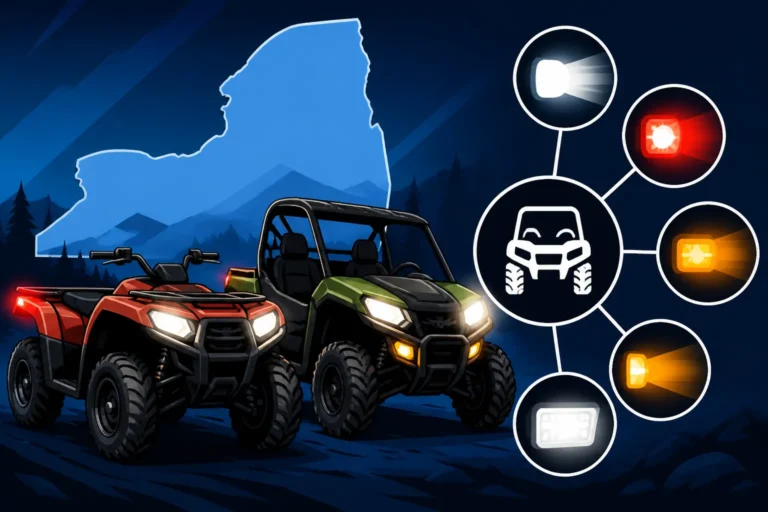
Whether it's dusk, dawn, a cloudy day, or even bright sunshine, having your headlights and taillights on when you approach and execute a crossing is always a smart move. While New York law mandates lights during specific times, such as [Headlight and Taillight After Sunset] and [New York Rules for Riding After Dark], it's good practice to switch them on for any crossing. A brightly lit ATV, even in daylight, is much more noticeable than one with its lights off. It catches the eye of approaching motorists, giving them more time to register your presence and react accordingly.
Consider also adding reflective elements to your gear or even your machine. Products from brands like SuperATV often include accessories that can boost visibility, such as additional LED lights or reflective decals, which can make a significant difference. Every bit of extra visibility helps reduce the chance of a driver overlooking you. Think of it as adding an extra layer of protection—a beacon signaling your brief entry into their world. [New York Equipment Rules for ATVs] cover some of the legal requirements, but going above and beyond those minimums is highly recommended for safety.
Hand Signals and Visual Cues
While ATVs don't have turn signals like cars, you can still use clear hand signals to indicate your intention to cross, especially if you're riding with a group. A simple, extended arm pointing in the direction you plan to cross, even if it's just straight ahead, can provide a visual cue to any nearby motorists or other riders. Furthermore, making eye contact with drivers, if possible, is an invaluable communication tool. A quick nod or wave can confirm that they've seen you and acknowledge your intent.
Beyond specific signals, your overall body language matters. Stay alert, keep your head on a swivel, and avoid any sudden, unpredictable movements. When you're stopped at the edge of the road, remain still and focused. Don't engage in distracting conversations or look away from the traffic. Projecting an image of caution and control can also subtly influence how other drivers perceive and react to your presence. The more clearly and confidently you communicate your intentions, the safer your crossing will be.
Types of Roads and Prohibited Crossings
Not all roads are created equal, and New York's ATV laws reflect that. While you might be able to cross a quiet town road, attempting to cross a major highway is not only illegal but extremely dangerous. Understanding which roads are permissible for crossings and which are absolutely off-limits is vital for any ATV rider in the state. [Street Legal ATVs in New York: The Short Answer] will tell you that ATVs are not street legal, which makes these crossing rules so critical.
What Roads You Can and Cannot Cross
Generally, you're permitted to cross town roads, county roads, and sometimes minor state routes if they are not specifically designated as limited-access highways. The key here is that the crossing must be part of an otherwise legal trail system, such as a designated [New York Rules for Riding a Town Road] or [New York Rules for Riding a County Road]. These are typically lower-speed roads where drivers are more accustomed to seeing unexpected things, and sightlines might be better. However, even on these roads, all the rules—stop, look, listen, ninety-degree angle—still apply.
The caveat is always to check local regulations. Some towns might have specific ordinances that prohibit ATV crossings on certain local roads, even if state law might otherwise allow it. Always look for posted signs, and if in doubt, err on the side of caution. It's far better to find an alternate route or even walk your machine across if you're unsure about the legality of a particular crossing.
Why You Cannot Even Cross a New York Interstate
This is a non-negotiable point: you absolutely cannot, under any circumstances, cross an Interstate highway or any other limited-access state highway in New York. These roads are designed for high-speed, uninterrupted traffic flow. There are no safe crossing points for ATVs, and attempting to do so would be incredibly dangerous and illegal. The speeds involved, combined with the lack of shoulders and the sheer volume of traffic, make it an impossible and reckless maneuver. [Interstates Closed to New York ATVs] is an ironclad rule that all riders must respect.
The penalties for attempting to cross an Interstate are severe, and rightly so. It's considered an extreme hazard to yourself and countless others. These highways are built with specific entry and exit ramps, and any off-road vehicle attempting to cross them poses a massive risk of a high-speed collision. There is no legal loophole, no obscure regulation that permits it—it is simply forbidden. If your trail leads to an Interstate, you must find a legal alternative, which almost always involves trailering your machine to the next section of trail.
Penalties and Enforcement for Improper Crossings
Let's be blunt: breaking the rules for crossing roads on your ATV in New York can be a costly mistake, both in terms of fines and potential danger. Law enforcement takes these regulations seriously because they are directly tied to public safety. Ignorance of the law is never a valid excuse, and officers are trained to spot violations.
What Happens When You Break the Rules
If you're caught improperly crossing a public road—whether it's failing to stop, driving parallel to the road, or attempting to cross a prohibited highway—you're looking at fines, and potentially having points assessed on your driver's license, even if you weren't operating a street-legal vehicle. The specific penalty can vary depending on the severity of the offense and the discretion of the officer, but it will certainly put a dent in your wallet. Repeat offenses or particularly egregious violations could even lead to your machine being impounded, leaving you with the hassle and expense of retrieving it.
Consider this table outlining some potential issues:
| Violation Type | Immediate Consequence | Potential Long-Term Impact |
|---|---|---|
| Failing to Stop Before Crossing | Fine, possible points | Increased insurance rates |
| Crossing at Wrong Angle (not 90°) | Fine, possible points | Safety risk, potential accident |
| Crossing a Prohibited Highway | Significant fine, impoundment | Major safety risk, criminal charges |
| Riding on Road (not just crossing) | Fine, impoundment, points | Loss of riding privileges, severe accident risk |
| No Registration/Insurance at Crossing | Fine for unregistered/uninsured machine | Further legal complications |
Remember, these fines and consequences are designed to deter unsafe behavior and ensure that ATV use remains recreational and doesn't spill over into public road hazards. [New York Fines for an ATV Violation] can really add up, making adherence to these simple crossing rules a very wise investment of your attention.
Officer Discretion and Trailhead Enforcement
Law enforcement officers, whether it's a State Trooper, a Sheriff's Deputy, or a local police officer, are often present in popular ATV riding areas, especially near trailheads and known road crossing points. They know where riders tend to push the limits or make mistakes. Officers aren't just looking for major infractions; they're also observing how riders handle those crucial moments where trail meets road. A friendly wave might be met with a routine check, where an officer might ask to see your registration and proof of insurance, as detailed in [What a New York Officer Checks Roadside].
While officers do have some discretion in how they enforce the law, consistent or blatant disregard for safety rules like proper road crossings is unlikely to be overlooked. They are there to protect everyone, including the riders themselves. The best way to ensure a smooth interaction with law enforcement is to always operate your ATV responsibly, know the rules, and follow them to the letter. This includes making those required stops, looking both ways, and crossing only where and how the law allows.
Disclaimer
This article is for general informational purposes only and does not constitute professional advice. Laws, prices and regulations vary by location and change over time. Consult a qualified professional for guidance on your specific situation.