Registering a Municipality’s Machine
Navigating the ins and outs of ATV registration in New York State can feel like a maze, and when you add the complexities of a municipal entity, it can become downright bewildering. Many assume that because a machine is owned by the town, village, or county, it's somehow exempt from the same rules private citizens face, or that there's a secret, simpler government pathway. This guide will cut through that confusion, clearly outlining the specific requirements and processes for registering an ATV or UTV owned and operated by a municipality in New York.
Understanding Why Municipalities Need to Register ATVs in New York
It's a common misconception: "Our town owns it, so it's not subject to the same rules as a private quad, right?" Unfortunately, that's often not the case. While some nuances exist for government vehicles, the fundamental requirement to register ATVs in New York State generally applies to all owners, including municipalities. This isn't just about collecting fees; it's about public safety, accountability, and ensuring proper use of these machines, regardless of who holds the keys.
The Legal Obligation for Public Entities
New York State law doesn't draw a hard line between private and public ownership when it comes to the basic act of ATV registration. The legislature recognized that an ATV, whether operated by a private citizen or a public employee, still poses similar risks and requires similar oversight. Think about it: a code enforcement officer on an ATV checking property lines, a parks department crew maintaining trails, or an emergency service team responding to an incident – these are all scenarios where the machine's operation impacts public safety and requires adherence to regulations. The legal framework ensures that even government-owned machines are accounted for and meet basic operational standards.
This obligation helps to standardize safety and environmental practices across all ATV use. Without proper registration, it would be much harder to track incidents, enforce safety rules, or manage the overall impact of ATV use within a community. It validates that the municipality is a responsible owner and operator, upholding the same standards it expects of its citizens. Ignoring this obligation could lead to fines for the municipality, not just the individual operator, which can be a difficult pill to swallow when public funds are involved.
Benefits of Proper Registration for Municipal Operations
Beyond simply avoiding penalties, there are tangible benefits for a municipality in ensuring its ATVs are properly registered. First and foremost, it guarantees compliance with state law, protecting the municipality from legal issues and potential liabilities. Imagine a town park ranger using an unregistered ATV for maintenance; if an incident occurs, the lack of proper registration could complicate insurance claims or legal defense, potentially costing the taxpayers far more in the long run.
Proper registration also enables legitimate access to designated trails or areas where ATVs are permitted. While many municipal machines are used on private land or within specific public parcels, some may need to traverse public ATV trails or cross public roads, and registration is a prerequisite for such activities. Furthermore, from an administrative standpoint, registration creates a clear record of the machine as a municipal asset, aiding in inventory, maintenance scheduling, and budgeting. This transparency is crucial for the responsible management of public resources.
The Specifics of Registering a Municipality's ATV
So, a municipality needs to register its ATV. What does that process actually look like? While the core idea is similar to a private registration, there are distinct differences, particularly when it comes to documentation and certain exemptions. It's not as simple as walking into the DMV with a bill of sale; there are specific forms and proofs tailored for government entities.
Required Documentation for a Government Machine
The paperwork for a municipal ATV registration will look a little different than what a private citizen typically provides. For starters, you generally won't need a traditional "bill of sale" in the same way, as the machine is often purchased through a public bidding process or acquired through other governmental means. Instead, the municipality will need to provide proof of acquisition, such as a purchase order, an invoice addressed to the governmental entity, or even a resolution from the town board authorizing the purchase. This documentation serves as the chain of ownership for the municipality.
One critical form that municipalities will rely on, just like private owners of non-titled vehicles, is Form MV-51B, the New York State Department of Motor Vehicles (DMV) Vehicle Bill of Sale. While it's typically for a bill of sale, it's also used to establish ownership for vehicles that aren't issued titles by the state, which includes ATVs. The municipality would complete this form, clearly indicating the government entity as the purchaser, even if it's an internal record of acquisition rather than a sale between two parties. You'll also need a pencil tracing of the VIN, a unique identifier that helps ensure the machine's identity. This requirement is consistent for all ATV registrations in New York. Don't forget proof of insurance, as even government vehicles must be covered. For more details on the form, you can look up [New York's Form MV-51B Explained].
The Registration Process: Step-by-Step for a Municipality
The actual act of registering a municipal ATV typically falls to a designated clerk, department head, or administrative assistant. This isn't usually something the mayor or town supervisor handles directly, but rather someone responsible for fleet management or administrative tasks. The first step involves gathering all the necessary documentation: the proof of acquisition, the completed MV-51B form, the VIN tracing, and evidence of insurance.
Next, the designated individual will need to visit a local New York DMV office. While some private vehicle registrations can be handled online or by mail, initial ATV registrations, especially for non-titled vehicles, generally require an in-person visit. At the DMV, the representative will present all the paperwork, pay any applicable fees, and process the registration. It's often a good idea to call ahead to the specific DMV office to confirm their requirements for municipal registrations, as processes can sometimes vary slightly by location or particular clerk's interpretation. Ensure you have all the [New York ATV Registration Paperwork] in order before you go, and understand the [New York ATV VIN Tracing Requirement].
Fees and Exemptions for Municipal ATVs
When it comes to costs, municipalities typically enjoy one significant exemption: sales tax. Since government entities are generally exempt from sales tax on purchases made for public use, you won't need to factor that into the acquisition or registration process. This is a considerable saving compared to what a private citizen pays.
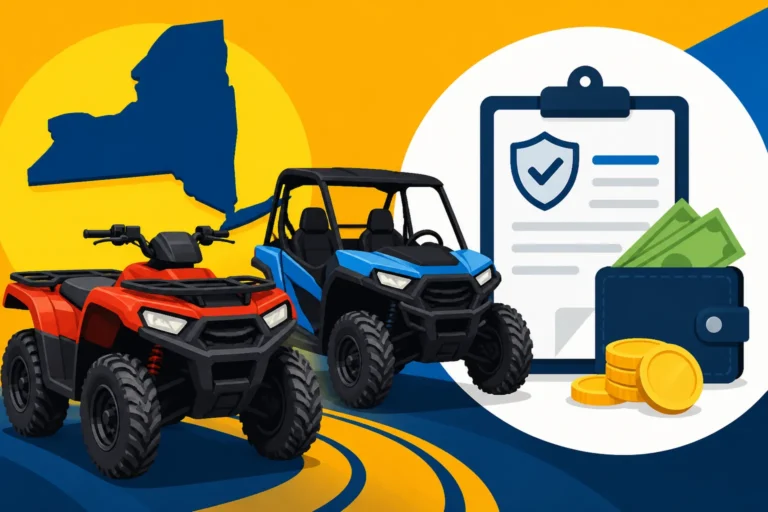
However, the core registration fees usually still apply. Just like a private owner, the municipality will be responsible for the annual registration fee and the one-time plate fee. The [New York ATV Registration Cost] includes an annual fee, which helps fund trail maintenance and administration, and the initial [New York ATV Plate Fee], which covers the physical plate itself. These fees are part of the system that supports ATV recreation and safety throughout the state, and municipalities, as users of the system, contribute to it.
Ongoing Compliance and Special Considerations
Registering an ATV for a municipality isn't a one-and-done deal. Just like with private machines, there's an ongoing responsibility to maintain its registration and insurance, and to handle any changes in the machine's status. Keeping these aspects up to date is crucial for continued legal operation and to protect public assets.
Renewing a Municipality's ATV Registration
One of the most important aspects of ongoing compliance is renewing the registration annually. In New York, all ATV registrations expire on August 31st, regardless of when they were initially registered. This universal expiration date simplifies administration for the state and ensures all renewals occur around the same time. The municipality will receive a renewal notice, usually by mail, prompting them to renew the registration before the deadline.
The renewal process is generally simpler than the initial registration, often allowing for online or mail-in options once the machine is in the system. However, it's crucial not to let the registration lapse, as operating an unregistered municipal ATV can lead to fines and legal complications. Establishing a robust internal reminder system within the relevant department is vital to ensure these deadlines are never missed. For more information on this, check out [New York's August 31 Expiration] and [Renewing a New York ATV Registration]. The [What a New York Renewal Costs] section will help with budgeting.
Insurance Requirements for Municipal ATVs
Even though it's a government machine, [New York's Mandatory ATV Insurance] requirement still applies. The state mandates specific minimum liability coverage for all ATVs operated off private property, and this doesn't typically change for municipal machines. This insurance protects against damages or injuries that could occur if the municipal ATV is involved in an accident. For a government entity, this is doubly important, as any accident could lead to significant claims against the municipality, impacting taxpayer funds.
Municipalities often have their own comprehensive insurance policies that cover their fleet of vehicles, including ATVs. It's essential to ensure that the ATV is specifically listed on or covered by the municipal policy and that it meets New York's minimum coverage requirements. A copy of the insurance card or declaration of coverage must be kept with the machine and presented upon request by law enforcement. It's not enough to simply have general municipal liability; the ATV must be explicitly covered under the state's mandate.
Addressing Machine Changes and Transfers
Situations will arise where a municipality needs to update its ATV records. Perhaps an old machine is being retired and sold off, or a new ATV is being acquired to replace an aging one. When a machine is sold or disposed of by the municipality, it's important to officially remove it from the municipal fleet records and, if possible, notify the DMV that it's no longer under their ownership. This helps prevent any future liability or confusion.
For a newly acquired machine, the entire initial registration process would need to be followed. If a municipality decides to sell an older ATV to another entity or even a private citizen, they will need to provide appropriate documentation. This might include an official bill of sale from the municipality. Resources like LawDepot can be incredibly helpful here for drafting formal internal records of transfer or generating a professional bill of sale document if the municipality is disposing of an asset. Using such templates ensures all legal bases are covered and provides clear documentation for both parties.
Common Pitfalls and Best Practices for Municipalities
While the process might seem straightforward once laid out, municipalities often encounter unique challenges. Understanding these pitfalls and implementing best practices can save time, money, and headaches, ensuring that the municipality's ATVs are always operated legally and safely.
Avoiding Lapses and Fines
One of the most common issues is simply forgetting to renew the registration. With so many vehicles and assets to manage, an ATV can easily slip through the cracks. As mentioned, operating an unregistered ATV can result in significant [New York Fines for an Unregistered ATV], which impacts the municipal budget and can create negative publicity. To combat this, establish a centralized system for tracking all municipal vehicle registrations, with designated personnel responsible for monitoring renewal dates.
This system should include multiple layers of reminders, perhaps digital calendar alerts, email notifications to relevant department heads, and even a physical binder with copies of all registration documents and their expiration dates. Early renewal reminders are crucial, giving ample time to process the paperwork and budget for the associated fees. Consider assigning a backup person who can also track these dates in case the primary individual is unavailable.
Best Practices for Fleet Management
Effective fleet management goes beyond just registration. It involves comprehensive oversight of the ATVs from acquisition to disposal. Maintaining detailed maintenance logs for each machine is critical. This not only ensures the ATV remains in safe operating condition but also provides valuable data for budgeting future repairs and replacements. Regular safety checks, pre-ride inspections, and scheduled servicing should be standard procedure.
Furthermore, any municipal employee who operates an ATV should be properly trained and, if applicable, hold a [New York ATV Safety Certificate]. New York law specifies age and supervision requirements for ATV operators, and while these often pertain to younger riders, ensuring all operators, regardless of age, are competent and follow safety protocols is a best practice. For internal record-keeping, especially concerning operator agreements, usage policies, or even waivers for specific activities, tools like LawDepot can provide standardized legal forms that help manage these aspects within the municipal framework. This helps to protect the municipality from liability and ensures accountability among its employees.
Navigating Special Use Cases
Municipal ATVs are used for a variety of tasks, from park maintenance to emergency response, and sometimes for less obvious roles like code enforcement or surveying. It's important to remember that even a municipal machine isn't granted carte blanche to ride anywhere. Just like private ATVs, they are typically restricted to designated trails, private property with permission, or public roads explicitly posted for ATV use. Understanding these restrictions is paramount.
For instance, if a municipal ATV is used for [Snow Removal on Private Property] and that property is not owned by the municipality (e.g., clearing a path for a senior citizen under a public service program), the rules around ATV operation and potential liability might shift. Always verify local ordinances and state laws for such specific use cases. Clear guidelines for municipal ATV usage should be established, distributed to all operators, and regularly reviewed to reflect any changes in law or policy.
Here's a quick comparison of documentation between private and municipal ATV registration in New York:
| Feature | Private Citizen ATV Registration | Municipal ATV Registration |
|---|---|---|
| Proof of Ownership | Bill of Sale (MV-51B), MCO/MSO, previous registration | Purchase Order, Invoice to Municipality, Board Resolution, or MV-51B |
| Sales Tax | Applicable (State + County rates) | Generally Exempt |
| Registration Form | Usually MV-51B (for non-titled ATVs) | MV-51B (for non-titled ATVs) |
| VIN Verification | Pencil tracing or VIN verification form | Pencil tracing or VIN verification form |
| Proof of Insurance | Mandatory liability insurance from authorized insurer | Mandatory liability insurance (often municipal fleet policy) |
| Fees | Annual registration fee, one-time plate fee | Annual registration fee, one-time plate fee |
| Renewal | Annually by August 31st | Annually by August 31st |
| Plate Placement | Required on the rear of the machine | Required on the rear of the machine |
Disclaimer
This article is for general informational purposes only and does not constitute professional advice. Laws, prices and regulations vary by location and change over time. Consult a qualified professional for guidance on your specific situation.