New York ATV Registration at a County Office
Navigating the labyrinthine world of ATV registration in New York can feel like a ride through a particularly dense and confusing forest. Many riders assume they can just waltz into any local Department of Motor Vehicles (DMV) office and walk out with a plate, only to discover that the process isn't always that straightforward. This guide aims to clear up the common confusion surrounding ATV registration at New York county offices, helping you understand where to go, what to bring, and what to expect so you can get your machine registered without unnecessary headaches.
The Role of County Offices in ATV Registration
It's a common misconception that all DMV offices in New York operate uniformly, offering the same services across the board. In reality, the New York DMV system is a hybrid, with some offices directly administered by the state and others managed by individual counties. This distinction can cause a lot of frustration for ATV owners trying to register their machines. You might hear stories from a friend in one county who had no trouble, while your experience in another feels completely different.
Not All County Offices Handle ATV Registrations
The decentralized nature of the New York DMV means that while most county offices handle standard vehicle registrations like cars and trucks, their capacity to process specialized registrations, such as those for ATVs, can vary. Some county clerk offices, acting as agents for the state DMV, are fully equipped and trained to handle all types of registrations, including initial ATV registrations, renewals, and transfers. However, others might have limited services, or their staff might be less familiar with the specific nuances of ATV documentation. This isn't because they don't want to help, but simply due to the administrative structure and training priorities within that particular county's office.
Imagine planning your Saturday morning around a trip to the DMV, only to arrive and find out the local clerk's office doesn't handle ATV registrations, or worse, only does so on specific days or with specialized staff who aren't in that day. It's a waste of precious riding time and a genuine source of annoyance. It's truly baffling that a system designed to serve the public can have such pockets of inconsistency, leaving ATV owners to guess which door to knock on. This is why a little homework beforehand can save you a significant amount of grief.
What Services a County Office Might Offer
When you do find a county office that processes ATV registrations, you'll generally find they offer a comprehensive range of services. This usually includes initial registration for a newly purchased ATV, whether it's brand new from a dealer or a used machine you bought privately. They can also assist with [Renewing a New York ATV Registration] when your current one is nearing its August 31st expiration date. If your ATV plate gets damaged or lost during an adventurous ride on the Tug Hill Plateau, a county office should be able to process a [Replacing a Lost New York ATV Plate].
Additionally, they typically handle changes to your registration, such as updating your address if you move within the state. They might even be the place to go if you need to officially remove a lien from your ATV's record after paying off a loan. For many common ATV-related transactions, a well-equipped county office can be your one-stop shop, provided they are indeed authorized and prepared for ATV-specific procedures. The key here is provided, as the experience can differ wildly from one county to the next, which is precisely why you can't assume. Always, always check first.
Preparing for Your Visit to a County Office
The old adage "fail to prepare, prepare to fail" couldn't be more apt when it comes to dealing with government bureaucracy. Showing up at the DMV unprepared is a surefire way to extend your visit, potentially requiring multiple trips and causing undue stress. For ATV registration, there are specific documents and payment considerations that, if overlooked, will send you home empty-handed. Trust me, I've seen it happen countless times – folks driving an hour to their county seat, only to realize they forgot one crucial piece of paper.
Essential Documents to Bring
This is where the rubber meets the road. To successfully register your ATV, you'll need to present a collection of documents that prove who you are, that you own the machine, and that it's insured. First and foremost, you'll need proof of ownership. This is often the trickiest part because, unlike cars, New York does not title ATVs. Instead, you'll typically need a clear, legible bill of sale. This document should detail the buyer and seller, the ATV's make, model, year, and its unique Vehicle Identification Number (VIN). If you bought the machine new from a dealer, you might have a manufacturer's certificate of origin (MCO) along with a dealer's bill of sale. For a private sale, a well-drafted bill of sale is absolutely critical. You can find reliable templates online from services like LawDepot, which can help ensure all the necessary information is included. This protects both you and the seller.
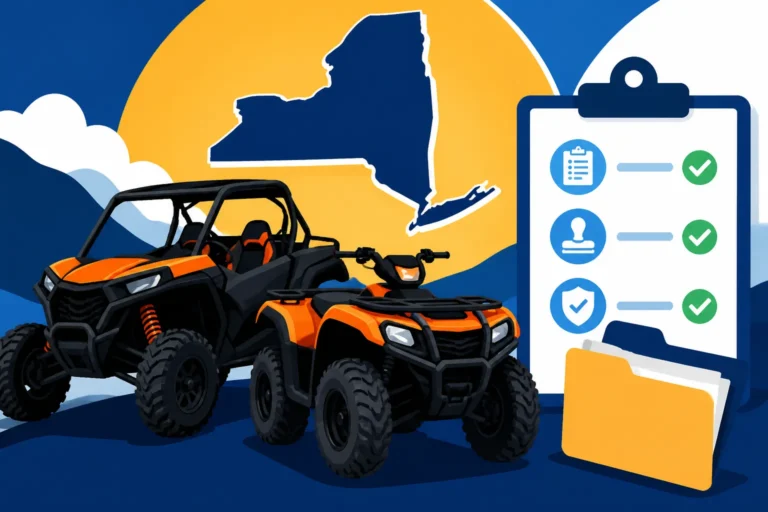
Beyond ownership, you'll need proof of identity, usually a valid New York State driver's license or non-driver ID. Don't forget your social security card. You must also provide proof of New York State liability insurance for the ATV. This is non-negotiable; New York mandates insurance for all ATVs operated off private property. Make sure your insurance card or policy declaration explicitly lists your ATV's VIN and shows active coverage. Finally, you'll need [New York's Form MV-51B Explained], which is the official New York State Application for Registration. You can often print this form from the DMV website beforehand and fill out most of it to save time at the office. For a deeper dive into these requirements, check out [New York ATV Proof of Ownership Requirements] and [New York ATV Registration Paperwork].
Here's a handy checklist to keep everything straight:
| Document Category | Specific Items Needed | Notes |
|---|---|---|
| Proof of Ownership | Bill of Sale (for used ATVs) / MCO (for new ATVs) | Ensure all details are clear: buyer/seller info, ATV make/model/year, VIN, purchase price. For private sales, LawDepot offers excellent, legally sound bill of sale templates. |
| Proof of Identity | Valid NYS Driver's License or Non-Driver ID | Must be current and unexpired. |
| Social Security Proof | Social Security Card or official document showing SSN | This is required for tax and identity verification. |
| Proof of Insurance | NYS ATV Liability Insurance Card or Policy Declaration | Must clearly show the ATV's VIN and active coverage that meets New York's minimums. |
| Application Form | Form MV-51B (Application for Registration and Title) | Even though ATVs aren't titled, this is the correct form. Fill it out beforehand. |
| VIN Verification | Pencil Tracing or Photo of VIN | Some offices require a [New York ATV VIN Tracing Requirement] or a clear photo of the VIN on the machine. Call ahead to confirm. |
Understanding Payment and Fees
Once you have your documents in order, the next hurdle is payment. There are specific fees associated with ATV registration in New York, and it's essential to be prepared for them. The primary cost is the annual registration fee itself, which covers the administrative costs of maintaining the registration system and contributes to various programs, including trail grants. On top of this, there's a [New York ATV Plate Fee], which is a one-time charge for your physical ATV plate. If you're replacing a lost or damaged plate, there might be a small fee for that as well.
The exact amounts for these fees are subject to change, so I always recommend checking the current figures on the official New York DMV website or calling your specific county office before you visit. Don't rely on outdated information you found on a random forum from five years ago! While I can't give you current numbers, I can tell you that the fees are generally quite reasonable compared to the cost of a traffic ticket for riding an unregistered machine. Most county offices accept various forms of payment, including cash, check, and credit/debit cards, but it's always wise to confirm their accepted payment methods in advance, especially if you're dealing with a smaller, more rural county clerk's office. Being prepared with the correct payment method ensures a smooth transaction and prevents any last-minute scrambling. You can find more details on the [New York ATV Registration Cost].
Navigating the Registration Process at a County Office
Even with all your documents in hand, the actual process of registering an ATV can still be a bit daunting for the uninitiated. Understanding the flow of the visit and what to expect can alleviate a lot of anxiety and help you remain patient if things move a little slowly. Remember, the folks working at the counter are often juggling multiple tasks and dealing with a wide array of customer needs. A little patience goes a long way.
The Step-by-Step Experience
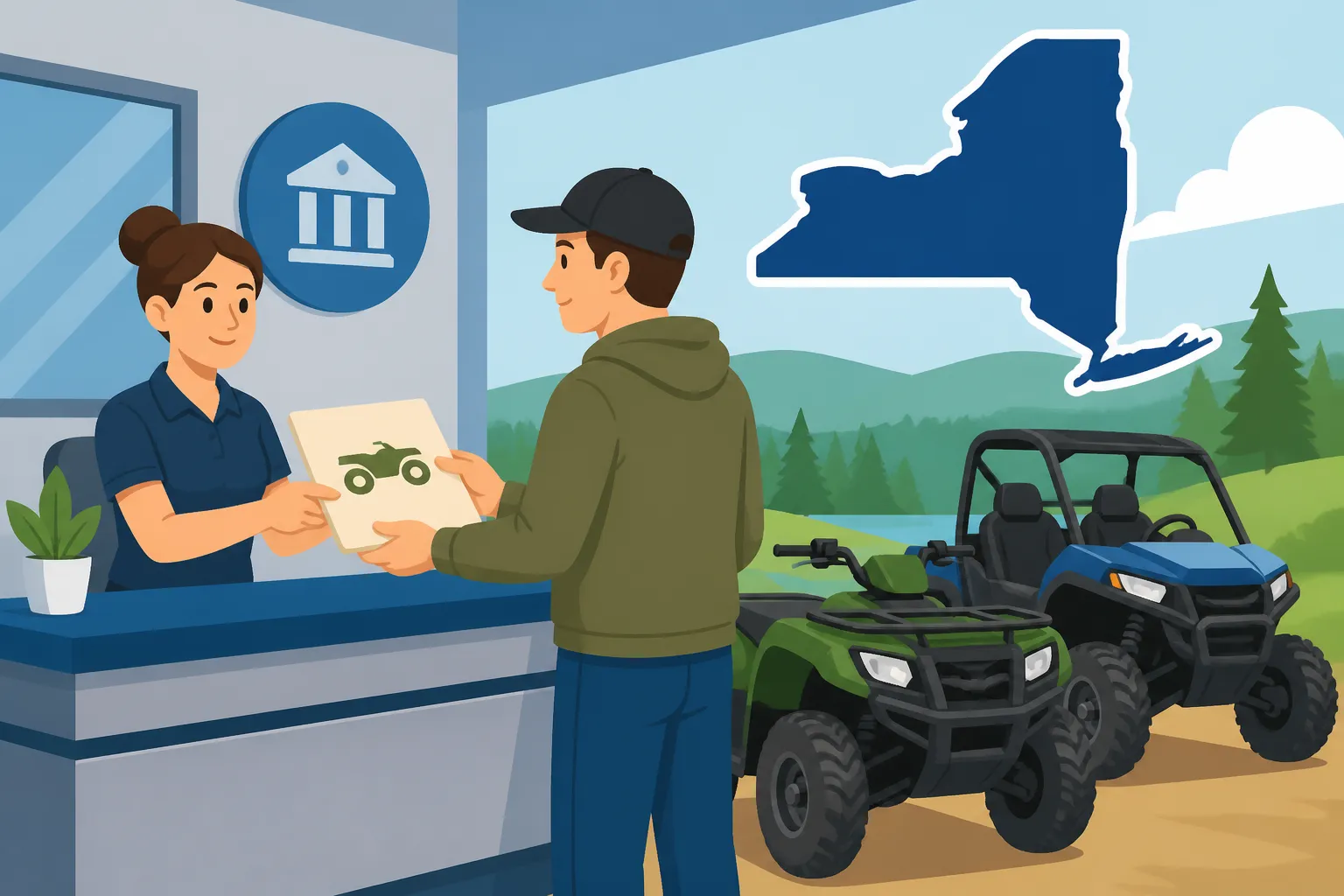
When you arrive at the county office, your first step will likely involve taking a number or joining a queue, much like any other DMV visit. Once your number is called, you'll approach the counter and present your compiled documents. The clerk will meticulously review everything you've provided, checking for completeness and accuracy. This is where those properly filled-out forms and a clear bill of sale (perhaps one from LawDepot that covers all the bases) truly shine. They'll verify your identity, confirm your insurance, and process your application.
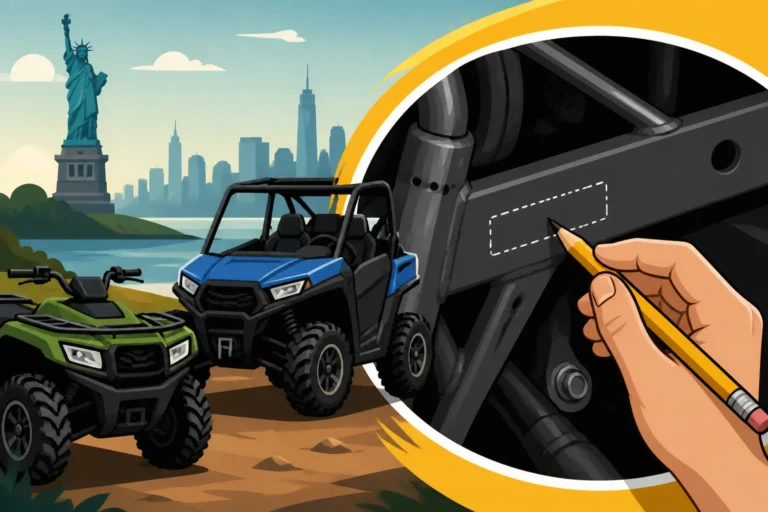
A crucial part of the process, especially for initial registrations, is the VIN verification. Because New York doesn't title ATVs, the DMV relies heavily on verifying the Vehicle Identification Number to ensure the machine you're registering is indeed the one described in your ownership documents and that it hasn't been reported stolen. Some offices may require you to bring a pencil tracing of the VIN, while others might accept a clear photograph. Always confirm this requirement with your specific county office before you go. Missing this detail can, and often does, result in an immediate denial of service until you return with the proper verification. After all checks are complete and fees are paid, they will issue you a temporary registration, your New York ATV plate, and the required validation decal. This temporary paperwork allows you to legally operate your ATV while the official registration is processed and mailed to you.
What Happens After Submission
Once you've handed over your paperwork and payment, and received your temporary documents, plate, and decal, you're usually good to go! The county office will typically provide you with a paper temporary registration that's valid for a short period (often 10-15 days). This temporary document serves as your legal proof of registration until your official, more durable registration card arrives in the mail from the state DMV. Don't lose this temporary slip; it's your lifeline in case you're stopped by law enforcement before your permanent card arrives.
You'll also walk out with your new physical New York ATV plate and the small validation decal. The plate needs to be securely mounted on the rear of your ATV, visible and free from obstruction. The decal usually goes on the plate itself, in a designated corner. Ensure both are affixed correctly to avoid any issues if you're stopped. While the physical plate and decal are instantaneous, the full processing time for your permanent registration card can vary. It's usually a matter of a few weeks, but it's wise to keep your temporary paperwork accessible until you receive the permanent card. If you experience unusual delays, don't hesitate to follow up with the DMV. For more details on what to expect, read up on [New York ATV Registration Processing Time].
Common Issues and How to Avoid Them
Even the most prepared ATV owner can encounter snags. Understanding the most frequent problems people face at the registration counter can help you preemptively address them, ensuring your visit is as smooth as possible. Some of these issues stem from the unique nature of ATV registration in New York, while others are simply universal challenges when dealing with administrative processes.
The Dreaded Missing Document Scenario
Picture this: You've waited in line, your turn finally comes, and the clerk informs you that your bill of sale is missing a crucial piece of information, or your VIN tracing isn't clear enough. This is perhaps the most common and frustrating issue. It means packing up, driving home (or wherever your ATV is stored), getting the missing information, and then making a repeat trip to the DMV, enduring the wait all over again.
To absolutely minimize this risk, create a dedicated folder for your ATV registration documents. Before leaving home, use the checklist provided above (or one you made yourself!) and physically check off each item. For the bill of sale, especially if it's a private sale, consider using a standardized template like those offered by LawDepot. These templates are designed to ensure all legally required fields are completed, which can save you a world of trouble. If you're unsure about the VIN tracing or photograph, call your specific county office ahead of time to confirm their preferred method. A quick phone call can save you hours of wasted time and frustration. Better to be overly cautious than caught unprepared.
When Your Machine Doesn't Meet Requirements
A significant source of heartbreak for many New York riders, particularly those interested in modern side-by-sides, is discovering at the DMV counter that their machine simply doesn't meet New York's specific definition of an "ATV" for registration purposes. New York has strict requirements regarding ATV dimensions, specifically a [New York ATV Width Limit for Registration] of 70 inches and a [New York ATV Weight Limit for Registration] of 1,000 pounds. Many popular side-by-sides, or Utility Terrain Vehicles (UTVs), exceed these limits, making them ineligible for standard ATV registration.
It's a devastating moment when you've just invested thousands in a new machine, only to find you can't register it to ride on public trails or designated routes. This issue is so prevalent that it's worth reading [Why Most Side-by-Sides Cannot Be Registered in New York] before you even consider purchasing a UTV in the state. Always, always check the specifications of any ATV or UTV you plan to buy against New York's current registration rules. Measure it if you have to! Don't rely solely on what a salesperson tells you, as they might not be fully versed in New York-specific registration nuances. Verifying these limits proactively can prevent you from purchasing a machine that you can only legally ride on private property, severely limiting your riding options.
Specific County Variations and How to Prepare
As mentioned earlier, the decentralized nature of the New York DMV system means that county offices can have varying levels of service and staff expertise when it comes to ATV registration. What's routine in one county might be a rare event in another, leading to potential delays or a lack of specific knowledge from the clerk assisting you. Some smaller county clerk offices might only process ATV renewals, directing new registrations to a larger state-run DMV office nearby. Others might require appointments for certain services or have different hours for specialized transactions.
The best way to navigate these potential variations is to embrace the phone call. Before you even load your trailer, call the specific county office you plan to visit. Ask them directly: "Do you process initial ATV registrations here?" "What are your hours for ATV services?" "Do I need a VIN tracing or a photo for verification?" "What payment methods do you accept?" This proactive approach can clarify any ambiguities and confirm that the office is indeed equipped to handle your specific needs. Don't assume anything. A quick, friendly phone call can prevent a wasted trip, saving you time, gas, and a significant amount of frustration. Being prepared for these variations will make your ATV registration process in New York much smoother, allowing you to get out on the trails faster.
Disclaimer
This article is for general informational purposes only and does not constitute professional advice. Laws, prices and regulations vary by location and change over time. Consult a qualified professional for guidance on your specific situation.