Registering a Homebuilt Machine in New York
Building your own ATV, piece by piece, sounds like an incredible journey of passion and skill, doesn't it? It’s the ultimate expression of mechanical artistry and personal grit. But let's be real: that thrill can quickly turn into a headache when you realize the New York DMV wasn't exactly set up for machines born from a pile of custom parts and pure ingenuity. You've poured your heart, sweat, and probably a fair bit of scraped knuckles into this creation, and now you just want to get it registered so you can finally hit the trails. This guide is here to walk you through the often-confusing, sometimes-frustrating, but ultimately navigable process of registering your unique, homebuilt machine in the Empire State.
The Unique Challenges of Registering a Homebuilt ATV in New York
When you stroll into the DMV with a receipt for a brand-new quad or a title for a used one, the process is usually pretty straightforward. You hand over the paperwork, pay your fees, and walk out with a registration and a smile. But a homebuilt ATV? That's a whole different animal. You're not just registering a vehicle; you're essentially proving its existence and legitimacy from the ground up, and that comes with a unique set of hurdles.
Why "Homebuilt" Isn't Like Buying Off the Lot
The biggest difference, right out of the gate, is the lack of official manufacturer documentation. When a shiny new ATV rolls off a dealer's lot, it comes with a Manufacturer's Certificate of Origin (MCO), a clear Vehicle Identification Number (VIN) stamped on the frame, and a direct lineage of ownership. Your homebuilt machine doesn't have any of that. It doesn't have a factory-issued MCO, because there's no factory to issue one, and it certainly doesn't have a pre-existing VIN.
This absence of standard paperwork creates a void that you, the builder, have to fill. It means you can't just hand over a piece of paper that unequivocally states what your machine is, who made it, and when. This can be incredibly frustrating, especially when you encounter DMV personnel who are used to processing cookie-cutter applications. You might feel like you're speaking a different language, explaining a concept that doesn't quite fit into their usual checkboxes. It’s not that they’re trying to be difficult, but your situation simply doesn't align with their typical procedures, which are designed for mass-produced vehicles.
New York's Definition of an ATV and How Homebuilds Fit (or Don't)
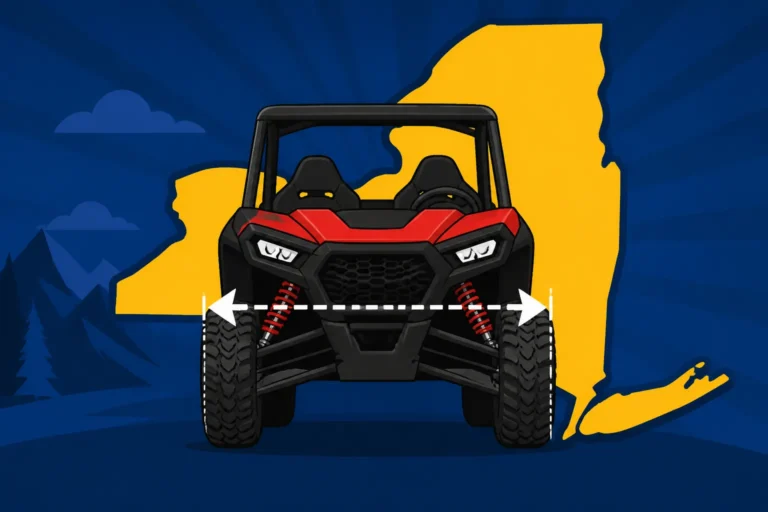
New York State has very specific legal definitions for what constitutes an All-Terrain Vehicle for registration purposes. These definitions often include parameters for width, weight, and even engine type or design. For instance, to be considered an ATV in New York, a machine generally needs to be no more than 70 inches wide and weigh no more than 1,000 pounds. You can find more specific details on these limits in articles like [New York ATV Width Limit for Registration] and [New York ATV Weight Limit for Registration].
When you're building a machine from scratch, it's easy to inadvertently exceed these limits. Perhaps you wanted a wider stance for stability, or you used heavy-duty components that pushed the overall weight past the threshold. Maybe you even opted for an engine that, while powerful, makes the DMV question if it truly fits the "ATV" designation. The challenge here is that your custom design, while perfect for your needs, might fall into a grey area or even outright violate the state's established criteria. This isn't just a minor technicality; it can determine whether your machine can be registered at all. It requires a careful review of your final dimensions and specifications against the precise language of the law.
Proving Ownership for a Machine That Never Had It
This is often the central hurdle for homebuilt ATVs. Unlike buying a used quad where you get a bill of sale and maybe a previous registration, your homebuilt machine truly starts its legal life with you. There's no previous owner, no title, no existing registration to transfer. You need to prove that you legally own all the components that went into your build, and then that you own the assembled vehicle.
This means every major part—the frame, the engine, the transmission, the axles—needs a paper trail. If you bought parts new, you'll need the original receipts. If you acquired components used, you'll need a bill of sale for each item, no matter how small or informal the transaction. Imagine trying to track down a handwritten bill of sale from a swap meet five years ago for that particular engine you sourced. It can be a monumental task, and the DMV is likely to scrutinize these documents to ensure you didn't simply "find" parts. Without clear evidence of ownership for the constituent parts, the state has no way of knowing if the assembled machine is legitimately yours, and they certainly won't register it.
Essential Steps to Get Your Custom Quad Registered
Registering a homebuilt ATV in New York requires a proactive approach to documentation. You can't rely on pre-existing forms or titles; you have to create the paper trail yourself. This means meticulously collecting information, preparing official-looking documents, and being ready to prove every step of your machine's creation. Think of yourself not just as a builder, but as a legal historian for your vehicle.
Documenting Your Build: The Paper Trail You Must Create
Before you even think about stepping foot in a DMV office, you need to gather every single piece of documentation related to your homebuilt ATV. This includes all receipts for new parts purchased, from the smallest bolt to the most significant component like the frame or engine. If you bought used parts, you need a bill of sale for each of those as well. Make sure these bills of sale clearly identify the part (e.g., "Honda 400EX engine, serial number XXXXXX"), the seller's name and address, the date of sale, and the purchase price.
It’s not enough to just have a pile of papers. You should organize these documents neatly, perhaps even creating a detailed ledger that lists each major component, where and when it was acquired, and its cost. This level of detail will demonstrate to the DMV that you’ve been diligent and transparent about the origin of your machine. If you've been doing trades for parts, or acquiring things informally over time, it's never too late to try and get a retroactive bill of sale from the person you got the item from. Sometimes, for these more informal transactions, especially if you're writing them up after the fact, it can be helpful to use a reliable template. Services like LawDepot offer customizable bill of sale forms that can help ensure you don't miss any critical details, even for individual parts.
Crafting a Legally Sound Bill of Sale for Your Entire Machine
Once all the individual components are assembled into your finished homebuilt ATV, you effectively become the "manufacturer" in a very informal sense. At this point, you need to create a comprehensive bill of sale for the entire machine, from yourself (the builder) to yourself (the owner). This sounds a bit odd, but it's crucial for the DMV to see that the collection of parts has now formally become a single vehicle. This document will serve as your primary proof of ownership for the complete ATV, much like a standard bill of sale would for a factory-produced one.
This "self-generated" bill of sale must include specific information: a detailed description of the ATV (make, model if applicable, color, engine size, etc.), the date it was "completed" or "assembled," and a statement attesting to your ownership of all its components. Crucially, it will also need a unique identifier, which will typically be the VIN assigned by the DMV (more on that in the next section). If you haven't been assigned a VIN yet, you can use a temporary identifier and update it once the official VIN is issued. Many online resources, including document creation services like LawDepot, provide templates for general bills of sale that you can adapt for this unique purpose. They can help you ensure all the necessary legal language and fields are present, making your document as robust as possible for the DMV. Having a strong, clear [New York ATV Bill of Sale Requirements] compliant document will save you a lot of grief.
Obtaining a Vehicle Identification Number (VIN) for Your Creation
This is perhaps the most critical step for any homebuilt vehicle. Since your ATV wasn't mass-produced, it won't have a factory VIN. The New York DMV has a process for assigning a VIN to custom-built or reconstructed vehicles. You can't just make one up; it must come from them. This process usually involves an inspection where DMV personnel or a state-authorized inspector will examine your machine.
During this inspection, they'll verify the components you've used, check for any existing serial numbers on major parts like the engine or frame (to ensure they aren't stolen), and confirm that the vehicle meets the basic safety and registration criteria. Once they are satisfied, they will assign an official New York State VIN to your machine. This VIN will then be affixed to your ATV, usually as a metal plate or a stamped impression on the frame, in a clearly visible location. It's a fundamental part of the registration process; without an official VIN, your homebuilt ATV is essentially an unidentifiable collection of parts in the eyes of the law. You can't register a vehicle without a proper identifier, similar to how they'd want a [New York ATV VIN Tracing Requirement] for a factory machine.
The DMV Process: Navigating the Red Tape
Once you've diligently documented your build, created your self-generated bill of sale, and secured an assigned VIN, you're finally ready to face the New York DMV. This phase is all about presenting your meticulously prepared paperwork and your unique machine in a way that aligns with their procedures, even if your situation isn't entirely typical. Patience and organization are your best friends here.
Required Forms and Where to Find Them
For a homebuilt ATV, you'll primarily be dealing with forms designed for non-titled vehicles, since your machine doesn't have a traditional manufacturer's title or MCO. The most crucial form you'll need is the Form MV-51B, Certificate of Sale. This form is typically used for vehicles that are not titled, such as older ATVs or snowmobiles, and it's essential for proving the transfer of ownership (even if it's from yourself, the builder, to yourself, the owner). You can learn more about its specific uses in [New York's Form MV-51B Explained].
In addition to the MV-51B, you'll need to bring:
- Proof of Identity: A valid New York driver's license or non-driver ID.
- Proof of Residency: Documents like a utility bill or lease agreement showing your current New York address.
- All Your Component Receipts and Bills of Sale: This is the binder of documentation you've painstakingly put together.
- The Self-Generated Bill of Sale for the Complete ATV: This solidifies your ownership of the entire finished machine.
- Proof of Insurance: You'll need an ATV insurance policy for your homebuilt machine before it can be registered.
It's highly recommended to call your local DMV office beforehand to confirm any specific requirements for homebuilt vehicles, as sometimes regional offices might have slightly different interpretations or additional requests. This can save you a frustrating wasted trip. Remember, you're essentially providing a complete history of the vehicle, from its individual parts to its final assembly. For more guidance on which forms apply to non-titled vehicles, you might find [Which DMV Form Registers a Non-Titled ATV in New York] helpful.
The Inspection and Verification Process
As mentioned earlier, getting a VIN assigned is a major part of the inspection process. However, even if you already have a VIN assigned, the DMV or an authorized agent will still perform a verification of the vehicle when you go to register it. They want to ensure the physical machine matches the description on your paperwork and that the VIN plate or stamping is correctly applied and readable.
During this inspection, the inspector will likely:
- Visually confirm the vehicle details: They'll check the general appearance, color, and engine type against what you've described on your bill of sale and other documents.
- Verify the assigned VIN: They'll ensure the VIN on your paperwork matches the one affixed to the vehicle. They'll also check that it hasn't been tampered with.
- Check for safety equipment: While not as stringent as a car inspection, they may briefly look for basic safety features that align with ATV regulations, such as functional brakes and lights (if applicable for your intended use).
- Confirm the dimensions: They might even do a quick measurement to ensure your homebuilt machine falls within the state's width and weight limits for ATVs.
It's crucial that your homebuilt ATV is in working order and safe to operate before you bring it for inspection. Any glaring safety issues or discrepancies with your documentation will likely lead to delays or rejection of your registration application. Be prepared to answer questions about the build, its components, and its intended use.
Understanding Fees, Sales Tax, and Insurance for Homebuilts
Once your documentation is in order and your machine has passed inspection, you'll need to address the financial aspects of registration. This includes registration fees, potential sales tax, and mandatory insurance.
Registration Fees: Just like any other ATV, your homebuilt machine will be subject to an annual registration fee. This fee is generally flat, though the initial registration might include a one-time plate fee. While I can't give you exact numbers, be prepared for a modest charge to get your plate and decal. For more on the typical costs, check out [New York ATV Registration Cost].
Sales Tax: This can be a tricky area for homebuilt vehicles. Since you didn't buy the complete vehicle from a dealer or private seller, the traditional sales tax on a purchase price doesn't directly apply. However, New York State expects sales tax to be paid on the value of the components used to build the machine. If you have all your receipts, the DMV may calculate sales tax based on the total cost of parts. In cases where receipts are incomplete or parts were acquired through trade, the DMV might require an appraisal to determine a fair market value for sales tax purposes. This can be complex, so be upfront and have as much cost documentation as possible. Information on [New York ATV Sales Tax on an ATV Purchase] can provide a general overview of how sales tax is handled.
Mandatory Insurance: New York State mandates that all registered ATVs carry liability insurance. This is non-negotiable, and you'll need to show proof of coverage before your registration can be issued. Getting insurance for a homebuilt machine can sometimes be a little more involved, as insurers may want details about its construction and value. Be prepared to provide clear photos and a detailed description to your insurance agent. It's wise to start this process before your DMV appointment. You'll need to meet the minimum coverage requirements discussed in [New York's Mandatory ATV Insurance]. In some unique cases, especially if you're dealing with unusual components or a very high-value build, your insurer or the DMV might ask for specific affidavits or legal statements regarding the machine's value or construction. In such instances, using customizable legal documents from a service like LawDepot can provide the necessary legal clarity and structure to satisfy these requirements.
Common Pitfalls and How to Avoid Them
Registering a homebuilt ATV is definitely off the beaten path, and it's easy to stumble into common pitfalls if you're not prepared. Many of these issues stem from a misunderstanding of how the DMV views a custom-built machine, or from simply not having the right documentation in place from the very beginning. Let's look at some of these traps and how you can steer clear of them.
The "It's Just Parts" Mentality and Its Downfall
One of the biggest mistakes builders make is treating their creation as an ongoing project of "parts" rather than a fully assembled vehicle until they're ready to register. While it might start as a collection of components, the DMV will only register a complete, functional ATV. The "it's just parts" mentality can lead to a lack of formal documentation for the finished machine. For instance, if you don't create that comprehensive, self-generated bill of sale for the entire ATV, the DMV has no clear document stating that you own the whole thing, not just the individual pieces.
From the moment you decide your collection of components is going to become a functional ATV, you need to shift your mindset. Begin documenting the assembly process, take photos of the major stages, and be ready to present it as a cohesive, single unit. The DMV isn't interested in registering a frame, an engine, and some wheels separately; they want to register the ATV. This means all your paperwork needs to reflect the machine as a singular entity, and you need to be able to demonstrate its functionality and completeness.
Getting Stuck with an Unregistrable Machine
This is a heartbreaking scenario, but it's a real risk: building your dream machine only to find out it doesn't meet New York's specific criteria for ATV registration. As we discussed, the state has clear limits on width (generally 70 inches) and weight (generally 1,000 pounds) for ATVs. If your custom build exceeds these, you might find yourself with a fantastic piece of engineering that can only be ridden on private property. For example, many larger side-by-sides fall outside these parameters and are therefore unregistrable as ATVs in New York, as detailed in [Why Most Side-by-Sides Cannot Be Registered in New York].
Before you even start welding or buying major components, educate yourself thoroughly on [New York ATV Width Limit for Registration] and other regulations. Measure your design or your nearly completed machine carefully. If your homebuilt machine is wider or heavier than the limits, you might need to adjust your design or accept that its use will be restricted. There's no exception for "I built it myself"; the rules apply to all ATVs. The last thing you want is to invest countless hours and dollars into a machine that can't legally hit the trails you intended it for.
Seeking Professional Help When the Paperwork Gets Overwhelming
Let's be honest, dealing with government paperwork and navigating niche regulations can be incredibly taxing, even for the most seasoned enthusiasts. If you find yourself overwhelmed by the documentation requirements, the DMV process, or the legal nuances of proving ownership for your homebuilt machine, don't hesitate to seek professional help. This isn't a sign of weakness; it's a smart strategic move.
You could consult with a lawyer who specializes in vehicle registration or property law, especially if your component ownership chain is complex or you're facing unusual challenges at the DMV. There are also private vehicle registration services that specialize in difficult or custom registrations, though these can be costly. These professionals can help ensure your documentation is airtight, guide you through the inspection process, and even represent you if needed. When it comes to creating legally sound documents like detailed bills of sale for parts or affidavits for unique situations, online services like LawDepot can be invaluable. Their customizable templates can help you generate clear, defensible paperwork that strengthens your case with the DMV, making the entire process smoother and more efficient. Sometimes, having an expert eye on your paperwork can make all the difference between a quick registration and months of frustrating delays.
Required Documents for Homebuilt ATV Registration in New York
Here’s a quick overview of the essential documents you’ll need to bring to the DMV to register your homebuilt ATV in New York. Remember, always call your local DMV first to confirm their specific requirements for custom-built vehicles, as circumstances can vary.
| Document Type | Description | Purpose |
|---|---|---|
| Proof of Identity | Valid New York State Driver's License or Non-Driver ID. | Confirms who you are. |
| Proof of Residency | Utility bill, lease agreement, or other official mail showing your current New York address. | Verifies your New York State residency. |
| Component Receipts/Bills of Sale | Original receipts for all new parts, and detailed bills of sale for all used major components (frame, engine, transmission, axles, etc.). Must include seller info, date, and description. | Establishes legal ownership of all constituent parts of the ATV. |
| Self-Generated Bill of Sale | A comprehensive bill of sale for the entire assembled ATV, from yourself (as builder) to yourself (as owner). Includes detailed description and VIN (once assigned). | Proves ownership of the finished homebuilt vehicle as a single entity. |
| Form MV-51B (Certificate of Sale) | Completed form, used for non-titled vehicles. This serves as the official document for registering your homebuilt machine, much like a title would for a factory model. | Official DMV form to register your non-titled homebuilt ATV. |
| Proof of Assigned VIN | Documentation from the DMV or authorized inspector confirming the assignment of a new VIN to your homebuilt ATV. | Legal identification number for your unique machine. |
| Proof of New York ATV Insurance | An insurance card or declaration page from an authorized insurer, showing that your homebuilt ATV meets New York's minimum liability coverage requirements. | Mandatory for all registered ATVs to operate legally on designated trails or properties. |
| Photos of ATV | Good quality, clear photos of the assembled ATV from multiple angles, including any unique identifying features. | Provides visual documentation for the DMV file and helps with appraisal if needed. |
| Appraisal (if requested) | If sales tax cannot be determined from component costs, the DMV may require an official appraisal to establish a fair market value for sales tax purposes. | Determines sales tax due on the vehicle. |
Disclaimer
This article is for general informational purposes only and does not constitute professional advice. Laws, prices and regulations vary by location and change over time. Consult a qualified professional for guidance on your specific situation.