Registering a Machine Bought Off a Farm
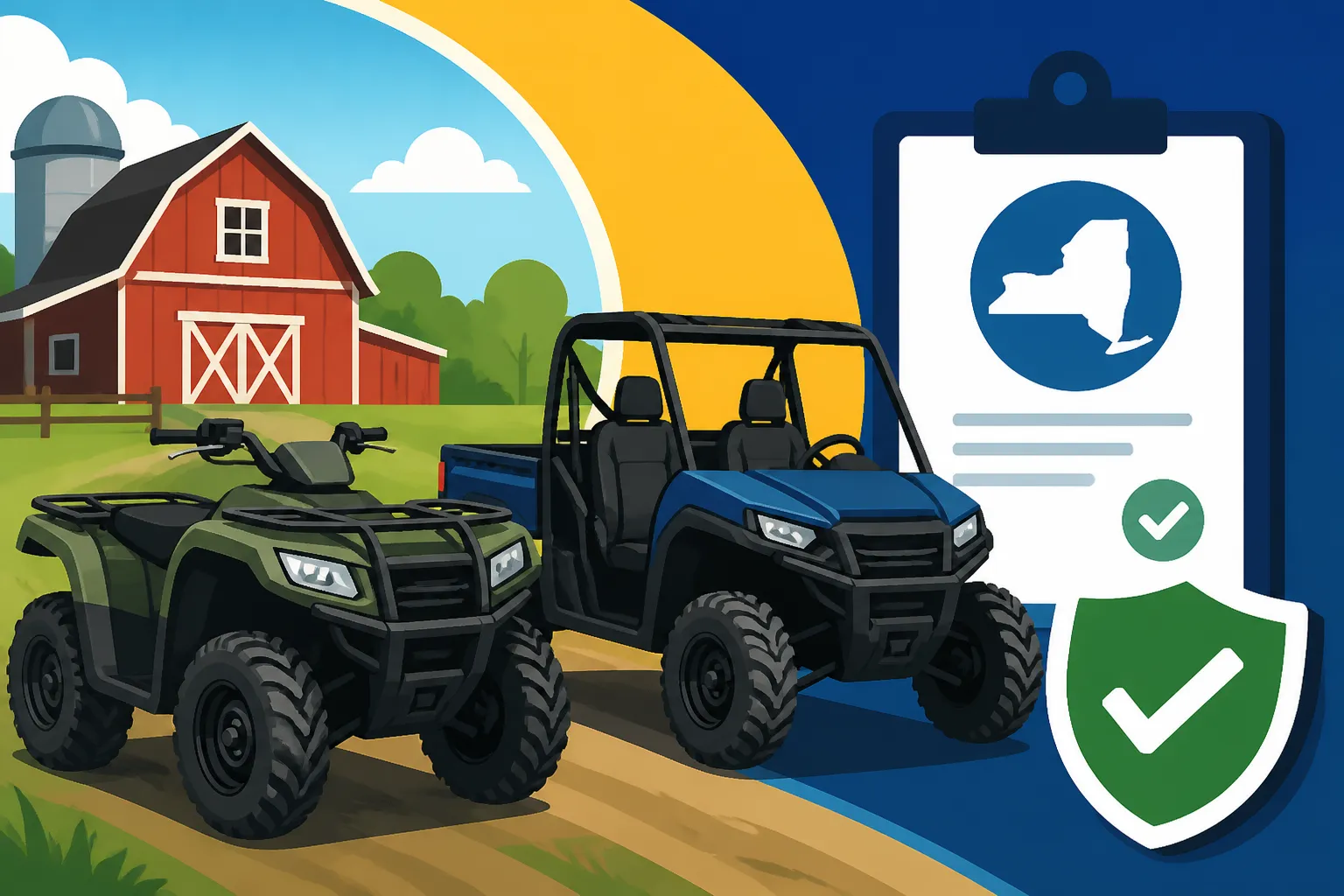
So, you've just snagged what seems like a fantastic deal on an ATV from a local farmer, picturing yourself hitting the trails. But then reality hits: the farmer might not have much in the way of paperwork, and suddenly you're wondering how on earth you're going to get this machine registered in New York. This guide is here to walk you through the often-confusing process of proving ownership and getting that farm-fresh quad ready for legitimate trail riding, addressing the unique challenges that come with machines that have lived their lives mostly on private land.
The Unique Challenges of a Farm-Bought ATV
Buying an ATV from a farm can feel like hitting the jackpot. You often find machines that have been well-maintained, used for practical work rather than aggressive trail riding, and sometimes at a price that seems too good to be true. However, these machines come with their own set of hurdles when it's time to register them for public trail use. The biggest challenge? Paperwork, or the distinct lack thereof. Many farmers operate under the assumption that since the ATV never leaves their property, it doesn't need to be registered or titled, which can create a real headache for a new owner.
The Myth of "Farm Use Only" No Paperwork
It's a common misconception, one that many farm sellers genuinely believe and inadvertently pass on: "This ATV was only used on the farm, so it never needed registration, and there's no title." While it's true that a machine exclusively used on private land doesn't have to be registered with the New York Department of Motor Vehicles, this doesn't mean it exists in a legal vacuum. The moment you want to take that machine off the farm and onto any public land—be it a designated ATV trail, a county road that permits ATVs, or even just crossing a public highway—it absolutely needs to be registered.
The frustration often sets in when you realize that the previous owner's lack of formal documentation now impacts your ability to legally enjoy your new purchase. You might have bought a perfectly good quad, only to find yourself struggling to prove it's actually yours in the eyes of the DMV. This isn't just about avoiding a ticket; it's about establishing clear ownership and making sure you're compliant with all the rules from day one.
Why a Title Isn't the Norm for ATVs in New York
One of the first things people often ask for when buying a vehicle is the title. It's standard practice for cars, trucks, and even many motorcycles. However, when it comes to ATVs in New York, you're not going to find one. This can be incredibly confusing, especially if you're new to the world of powersports in the state. New York State simply does not issue titles for ATVs. This isn't unique to farm-bought machines; it applies to all ATVs, new or used, bought from a dealer or a private seller.
Because there's no state-issued title, the burden of proof for ownership falls squarely on other documents, primarily the bill of sale. This is why getting a robust, detailed bill of sale is not just a good idea, but an absolute necessity when you're buying any ATV in New York, especially one that might have questionable past paperwork. It's a key distinction from other vehicle purchases, and understanding this upfront will save you a lot of head-scratching at the DMV counter. For more on this, check out [Why New York Issues No ATV Title].
The Hunt for Proof of Ownership
Given the absence of a title and the potential for minimal paperwork from a farm sale, your mission becomes clear: you need to establish a rock-solid chain of ownership. The DMV's primary concern is ensuring that the person registering the ATV is its rightful owner and that the machine wasn't stolen or sold improperly. Without a title, this proof largely revolves around a comprehensive bill of sale, and in some cases, supplementary affidavits or previous registration documents if they exist.
You might find yourself needing to be a bit of a detective, piecing together information about the machine's history. Was it ever registered by the farmer, even for a short period? Did they buy it from a dealer who might still have a record of the original sale? These questions can feel daunting, especially if the farmer you bought it from is a bit laid-back about record-keeping. But don't despair; the DMV has processes in place for these situations, as long as you come prepared with as much information as possible. The more you can document, the smoother your journey will be.
Gathering Your Proof of Ownership
When it comes to registering an ATV bought from a farm, your success hinges almost entirely on the quality and completeness of your ownership documents. Since there's no title to transfer, you'll need to focus on what the New York DMV does accept as proof. This is where many prospective riders run into trouble, especially if they didn't get all their ducks in a row at the point of sale.
The All-Important Bill of Sale
A well-executed bill of sale is your golden ticket. It's the primary document that establishes you as the legal owner of the ATV. It needs to be clear, concise, and contain specific information to be acceptable to the DMV. First and foremost, it should clearly identify both the buyer and the seller, including their full names and current addresses. Next, it must accurately describe the ATV, including the year, make, model, and crucially, the Vehicle Identification Number (VIN) or frame number. This VIN is paramount for identification.
The bill of sale also needs to state the date of the sale and the purchase price. While New York State does collect sales tax on ATV purchases, and county rates vary, the stated price on the bill of sale will be used to calculate that tax, unless the machine qualifies for an exemption. Finally, and this is non-negotiable, both the buyer and the seller must sign and date the document. A handwritten note on a napkin simply won't cut it. For a comprehensive list of what needs to be included, refer to [New York ATV Bill of Sale Requirements]. If you're feeling unsure about drafting one, resources like LawDepot offer customizable bill of sale templates that can ensure you cover all the necessary legal bases, making the process much easier for both you and the seller.
What If You Don't Have a Proper Bill of Sale?
This is where the real headaches begin for many buyers of farm-used ATVs. Perhaps you bought the machine years ago, and the original bill of sale is long lost, or the farmer simply scribbled something down that the DMV deems insufficient. It’s a frustrating scenario, but not necessarily a dead end. The DMV does have provisions for situations where traditional proof is lacking, though it often involves more steps and patience on your part.
One common solution is to go back to the seller and ask them to complete a proper bill of sale retroactively. This works best if you have a good relationship with them. You could even print out a template, perhaps one generated from LawDepot, and ask them to fill it out and sign it. If that's not possible, or if the seller is no longer available, you might need to use an affidavit of ownership. This is a sworn statement, often notarized, detailing how you came into possession of the ATV, why a formal bill of sale isn't available, and affirming your legal ownership. It's a more involved process, and the DMV will scrutinize these carefully, so ensure all details are accurate and truthful. For more specific guidance on this tricky situation, read [Proving Ownership Without a Title in New York].
Understanding the VIN Tracing Requirement
Here’s a little quirk of the New York ATV registration process that often catches people off guard: the VIN tracing. When you register an ATV, the DMV often requires a pencil tracing of the machine's VIN (Vehicle Identification Number) or frame number. This isn't just a verbal confirmation; they want a physical imprint. The reason is simple: it helps prevent fraud and ensures that the number you're providing matches the actual machine.
To get a VIN tracing, you'll need a pencil and a piece of paper. Locate the VIN on your ATV – it's typically stamped into the frame, often near the front suspension, under the seat, or on the lower left side of the frame. Place the paper over the VIN, and gently rub the side of the pencil lead across the paper until the numbers and letters of the VIN appear. It's like making a rubbing of a tombstone, but for your quad! This might seem old-fashioned, but it's a required step, so don't forget it. Prepare for this requirement by knowing where your VIN is and practicing the tracing before you head to the DMV. You can find detailed instructions and common VIN locations in [New York ATV VIN Tracing Requirement].
Navigating the New York DMV Registration Process
Once you've diligently gathered all your ownership documents, the final hurdle is the New York Department of Motor Vehicles (DMV). While it might seem intimidating, especially with a farm-bought machine, being prepared can make the process much smoother. Remember, the DMV staff are there to help you, but they also have strict rules to follow regarding documentation.
Which Forms You'll Need at the DMV
Getting your ATV registered means filling out the correct forms. The primary form you'll need is the New York State Vehicle Registration/Title Application, known as Form MV-82. However, for non-titled vehicles like ATVs, you'll specifically be using an attachment to this form. It's often referred to as the MV-51B, "Statement of Transaction for Sales Tax," which also serves as a critical component for non-titled vehicle registration. This form documents the sale, calculates sales tax, and essentially acts as your bridge to ownership without a title.
In addition to the MV-82 and MV-51B, you'll need to present your valid New York State Driver's License or other acceptable proof of identity. Don't forget proof of insurance! New York law mandates that all ATVs ridden off private property must carry liability insurance. Make sure your insurance policy meets the state's minimum coverage requirements, and bring your insurance card or declaration page. Without insurance, they won't register your machine. Gathering all these documents beforehand is crucial. For a comprehensive checklist of what to bring, consult [New York ATV Registration Paperwork] and [Which DMV Form Registers a Non-Titled ATV in New York].
What to Expect at the Counter
When you arrive at the DMV, have all your documents organized. You'll likely start by taking a number and waiting your turn, just like for any other DMV service. When your number is called, approach the counter with your completed forms, your bill of sale, your VIN tracing, proof of insurance, and your identification. The clerk will review everything carefully. They'll verify your identity, inspect the bill of sale for completeness and accuracy, and check the VIN tracing against the information on the forms.
Be prepared for questions. They might ask about how you acquired the machine, especially if the paperwork seems sparse or unusual. This is where your detailed bill of sale or affidavit becomes invaluable. They will also calculate any sales tax due and the registration fees. While exact figures vary, expect to pay a base registration fee and a one-time plate fee. The staff will process your payment, issue you a temporary registration, and send your official registration and ATV plate in the mail. It's generally a straightforward process if you're fully prepared. You can learn more about the associated costs in [New York ATV Registration Cost].
Potential Hurdles and How to Overcome Them
Even with meticulous preparation, you might encounter a few snags. One of the most common hurdles is an incomplete or insufficient bill of sale. If the clerk determines your bill of sale doesn't meet the requirements (e.g., missing VIN, no seller signature), they might send you away to get a corrected version. This is why it's so important to get it right the first time, or have an affidavit ready. Another issue could be a VIN that's hard to read or trace, so ensure your tracing is clear.
If the machine was particularly old or if its ownership history is truly murky, the DMV might require additional documentation, such as a statement from the previous owner (if available) or even an inspection by a law enforcement officer to verify the VIN. The key is patience and persistence. If you're sent away, understand exactly what additional information or documentation is needed. Don't be afraid to politely ask for clarification. If you're still struggling to create proper documentation, consider revisiting resources like LawDepot for legal templates that can help you formalize past transactions, even if they were informal at the time. Remember, the goal is to satisfy their requirements so you can get that ATV registered and hit the trails legally!
Disclaimer
This article is for general informational purposes only and does not constitute professional advice. Laws, prices and regulations vary by location and change over time. Consult a qualified professional for guidance on your specific situation.