Replacing a Lost New York ATV Plate
There are few things as frustrating for a New York ATV rider as getting ready for a great day on the trails, only to discover your license plate is missing. It throws a wrench in your plans, fills your head with worry about fines, and leaves you wondering exactly what steps you need to take with the New York Department of Motor Vehicles. This comprehensive guide will walk you through everything you need to know about replacing a lost, stolen, or damaged New York ATV plate, so you can get back to riding legally and safely.
The Frustration of a Missing ATV Plate in New York
It's a familiar scenario: you've just loaded your quad onto the trailer, or maybe you're doing a quick pre-ride inspection before heading out, and then you notice it. The spot where your New York ATV plate should be is empty. Just a couple of bolt holes, perhaps some mud splatter, but no plate. Your heart sinks. That little piece of metal is more than just a decoration; it's your machine's identification, and riding without it can lead to some serious headaches, not to mention fines.
The immediate thought is often panic. "Where could it be? Did it fall off on the last ride? Was it stolen?" The questions swirl, and the desire to just load up and go anyway fights with the knowledge that it's simply not worth the risk. Losing your plate feels like a major setback, and navigating the government bureaucracy to get a new one can seem daunting. But don't worry, it's a process that many riders have gone through, and it's completely manageable once you know the steps.
When You Realize It's Gone
The moment of discovery is usually followed by a frantic search. You retrace your steps from the last ride, peering into every mud puddle or rut you can remember. You might even check the bed of your truck or your garage floor, hoping it's just a misplaced item. But for many riders, that plate is simply gone, a casualty of the trail or perhaps a moment of carelessness somewhere. This realization can put a damper on your whole weekend, knowing that your beloved machine is now temporarily sidelined until you sort out the paperwork.
The primary concern, beyond the inconvenience, is the legal aspect. You can’t legally operate your ATV on any public land, designated trail, or even cross a public road without a valid, properly displayed registration plate. An officer stopping you for an inspection, or worse, after an incident, will immediately flag the missing plate as a serious issue. Understanding the implications is the first step to resolving the problem calmly and effectively.
Why Plates Go Missing on New York Trails
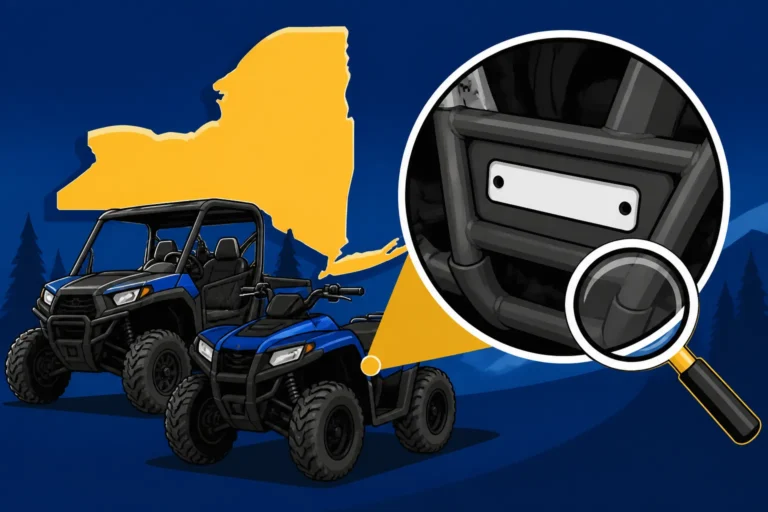
New York trails, while beautiful and exhilarating, are also tough on equipment. ATV plates are often mounted in exposed areas, typically on the rear rack, where they are vulnerable to the elements and the rigors of off-road riding. Vibrations from rough terrain can slowly loosen bolts, especially if they weren't secured with lock washers or thread locker. A tree branch might snag it, or a deep mud hole could exert enough force to rip it clean off. We’ve all seen a quad with a bent or barely hanging-on plate, and sometimes, those barely hanging-on plates just don’t make it home.
Poor mounting practices are also a common culprit. Using flimsy zip ties, or only one bolt when two are available, significantly increases the risk of loss. Even a minor bump or scrape against a rock can be enough to dislodge an inadequately secured plate. Regular pre-ride checks that include a glance at your plate’s security can often prevent this headache before it even starts. The good news is, replacing it is straightforward, and you can take steps to ensure your new plate stays put, even on the gnarliest Replacing a Lost New York ATV Plate.
Immediate Steps After Losing Your Plate
So, you've confirmed your New York ATV plate is indeed gone. Your first instinct might be to just throw caution to the wind and ride anyway, but that's a gamble you really don't want to take. The consequences of operating an unregistered or improperly plated ATV in New York can be significant, ranging from fines to potential impoundment of your machine. It's far better to address the issue head-on and follow the proper channels to get a replacement. Think of it as a temporary pause for proper maintenance, just like you would if you noticed a significant mechanical issue.
Beyond the legal ramifications, there's a safety aspect. A missing plate means your machine is less identifiable in an emergency, which, while not a primary concern for most riders, is still something to consider. Taking immediate and correct action ensures you protect yourself legally and get back on the trail as quickly as possible. Don't let the inconvenience tempt you into making a costly mistake.
Securing Your Machine and Avoiding Trouble
The most crucial step you can take immediately after discovering a lost plate is to not ride the ATV. Seriously, resist the urge. Operating your ATV on public lands, designated trails, or even crossing roads without a visible, valid New York registration plate is a direct violation of state law. If you're pulled over, you'll be facing fines for operating an unregistered vehicle, even if you have your registration document with you. The plate itself is the proof of current registration that needs to be displayed.
Imagine this scenario: you're out on a county trail, enjoying the scenery, and a Conservation Officer or State Trooper flags you down for a routine check. They ask for your registration and insurance, which you promptly provide. Then they ask, "Where's your plate?" Suddenly, your fun day has turned into a stressful encounter with a ticket book. Don't put yourself in that situation. Park the machine, start the replacement process, and save yourself a potential headache and a dent in your wallet. The [New York Fines for an Unregistered ATV] can be steep, and it's just not worth the risk for a few hours of riding.
Reporting the Loss to Authorities (Or Not?)
This is where things can get a little fuzzy for some people. When you lose a standard vehicle license plate (for your car or truck), the DMV often recommends or even requires you to file a police report, especially if you suspect it was stolen. For a lost ATV plate in New York, the process is slightly different. Generally, if your ATV plate is simply lost due to falling off or being misplaced, you are not required by the New York DMV to file a police report. They understand that these things happen with off-road vehicles.
However, if you have reason to believe your plate was stolen, then filing a police report is a very good idea. While not strictly mandated for replacement, it creates an official record of the theft. This record can be incredibly valuable if the stolen plate is later used in connection with illegal activities, or if you need to provide documentation for insurance purposes. Even for just a lost plate, creating a simple personal record, perhaps through a platform like LawDepot, detailing when and where you believe the plate was lost, can offer peace of mind and help you keep your affairs in order. It's about protecting yourself from any unforeseen complications, even if the DMV doesn't explicitly demand it for a standard loss.
The New York DMV Process for Plate Replacement
Alright, you've accepted that the plate is gone, and you're ready to get a new one. The good news is that the New York Department of Motor Vehicles has a pretty clear-cut process for this, even if it feels like jumping through hoops. While it might not be as quick as an instant online printout, understanding the steps beforehand will save you time and frustration. The DMV handles thousands of these requests every year, so they're well-versed in getting you back on track.
The key is to have all your ducks in a row before you interact with them, whether in person or by mail. Gathering the correct forms and knowing what information you need to provide will make the experience much smoother. Remember, DMV personnel are there to help, but they can only do so if you come prepared with the right paperwork and understanding of the process.
Required Forms and Documentation
To replace a lost, stolen, or damaged New York ATV plate, you’ll need to complete the New York State Department of Motor Vehicles form MV-15, which is the "Application for Replacement Plates, Stickers, and Decals." This form is used for various types of vehicle plates and registration components, including ATV plates. It's not a special ATV-specific form, so don't be surprised if it looks generic. You can usually download this form directly from the New York DMV website or pick one up at any local DMV office.
When filling out the MV-15, you'll need to provide information such as your current registration number, your vehicle identification number (VIN) for the ATV, and details about how the plate was lost or damaged. You'll also need your personal information as the registrant. It's crucial that all the information matches what's on your current ATV registration document. Speaking of which, it's always a good idea to have a copy of your current ATV registration handy, as it contains all the necessary details to accurately complete the MV-15. Even though New York ATVs are non-titled vehicles, your registration document is your primary proof of legal operation, and you'll want to ensure all details align with it, much like you would for any [Which DMV Form Registers a Non-Titled ATV in New York].
Fees and Payment for a New Plate
Yes, unfortunately, there is a fee involved in replacing your ATV plate. While the exact amount can change, it's generally a modest administrative fee for the cost of producing and issuing a new plate and decal. The New York DMV aims to cover the costs associated with the materials and processing, not to make a profit off your misfortune. It's a small price to pay for the peace of mind and legality of having a proper plate. Since I can't give specific figures, always check the official New York DMV website or call your local office for the most current fee schedule.
You can typically pay this fee by personal check or money order if you're submitting your application by mail. If you visit a DMV office in person, they will usually accept cash, credit/debit cards, and checks. Make sure any checks or money orders are made payable to the "Commissioner of Motor Vehicles." Don't forget that this fee is solely for the replacement plate itself. If your registration was expired and you needed to renew it before getting a new plate, those renewal fees would be separate. For the most up-to-date information on this, refer to [New York ATV Plate Replacement Cost] on the official DMV resources.
Where to Submit Your Application
Once you have your completed MV-15 form and the appropriate fee, you have a couple of options for submission:
- In Person at a DMV Office: This is often the quickest way to get your replacement plate processed. You can visit any New York State Department of Motor Vehicles office. Bringing your current registration document with you will expedite the process, as the clerk can easily verify your information. While you won't walk out with a new plate the same day (they're usually mailed), submitting in person ensures your application is reviewed immediately, and you can ask any questions you might have. You can find a list of local offices by searching "New York DMV offices near me" online.
- By Mail: If getting to a DMV office during business hours is difficult, you can mail your completed MV-15 form and payment to the address provided on the form itself, or to the central DMV processing unit. While convenient, mailing can add several days to the processing time due to postal delivery and internal sorting. This option requires you to be very diligent in ensuring everything is filled out correctly and the payment is attached, as any errors will delay the process further.
Choosing whether to go in person or mail depends on your urgency and availability. Either way, make sure you keep a copy of your completed application and your payment receipt for your records. This is particularly important if there are any questions or delays down the line. For comprehensive details on where to conduct various ATV-related transactions, consult [Where to Register an ATV in New York].
| Submission Method | Pros | Cons | Typical Processing Time (Mailed Plate) |
|---|---|---|---|
| In Person | Immediate review, questions answered, receipt | Requires travel and wait time | 1-2 weeks (after in-person submission) |
| By Mail | Convenient, no travel | Slower processing, potential for postal delays, no immediate help | 2-4 weeks (from mailing date) |
Mounting Your New Plate and Preventing Future Loss
After a short wait, that crisp new New York ATV plate and validation decal will arrive in your mailbox. It's a relief, for sure! But don't just slap it on with the first bolt you find. Now is your chance to learn from the previous plate's demise and ensure this one stays securely attached, even through the most demanding riding conditions New York trails can throw at it. A little effort now can save you another round of frustration and fees down the road.
This is also a good opportunity to evaluate your riding style and common trail conditions. Are you frequently bottoming out, leading to scrapes on your rear end? Do you often find yourself in deep, sucking mud? Understanding these factors can help you choose the best mounting method and protective measures for your specific machine and riding habits.
Proper Mounting Techniques for New York ATVs
Mounting your new plate properly is paramount. Most ATV manufacturers provide designated mounting points on the rear rack, often with pre-drilled holes. Here’s how to do it right:
- Use Quality Hardware: Ditch those flimsy bolts. Opt for stainless steel bolts, nuts, and washers. Use two bolts whenever possible, even if your machine only came with one.
- Lock Nuts or Thread Locker: Regular nuts can vibrate loose. Use self-locking nuts (nylon insert nuts) or apply a small amount of removable thread locker (like blue Loctite) to the bolt threads before tightening.
- Backing Plate: For extra security and to prevent the plate from bending or tearing around the bolt holes, consider using a small aluminum or plastic backing plate. This distributes pressure and makes it much harder for the plate to rip off. You can often find these at ATV accessories shops.
- Strategic Placement: Ensure the plate is visible and clear of exhaust pipes that might melt or damage it over time. The rear rack is the standard place, usually as far back as possible without being directly in the path of flying debris from the tires. For more detailed guidance, [New York ATV Plates and Where They Mount] offers excellent advice.
- Secondary Security (Optional but Recommended): Some riders add heavy-duty zip ties as a failsafe, threading them through the plate and around a sturdy part of the rack in addition to the bolts. This way, if the bolts fail, the plate is still loosely attached, giving you a chance to find it. Remember, [A Plate on the Rear of a New York Machine] is a legal requirement.
Protecting Your Plate from Trail Hazards
Beyond just mounting it securely, you can take steps to protect your plate from the environment:
- Mud Flaps/Fender Extensions: If your tires are constantly flinging mud and rocks directly at your plate, consider adding aftermarket mud flaps or fender extensions. These can significantly reduce the impact and abrasion your plate experiences.
- Avoid Deep Ruts/Bottoming Out: While sometimes unavoidable, try to choose lines that minimize the chance of your ATV's rear end dragging or impacting obstacles. This is where many plates get bent, scraped, or torn off.
- Pre-Ride Checks: Make it a habit to quickly check your plate's security before every ride. Give it a gentle wiggle; ensure the bolts are tight and there are no cracks forming around the holes.
- Regular Cleaning: Keeping your plate clean and free of excessive mud ensures its legibility, which is also a legal requirement. Mud-caked plates can also add weight and stress to mounting points.
What About a Temporary Plate?
Here’s an important point: unlike cars or trucks where you might receive a temporary paper plate to display while waiting for your permanent one, the New York DMV does not issue temporary paper plates for ATVs. Once you submit your application for a replacement, you simply have to wait for the new physical plate to arrive in the mail.
This means there's a period where you legally cannot ride your ATV on designated trails or public lands. It's an inconvenience, but it's the reality of the system. Planning ahead, especially if you know your plate is getting old or damaged, can help minimize this downtime. There's no workaround, no special permit to ride without a plate while you wait. You must have that physical, valid plate displayed.
Navigating Common Plate Replacement Scenarios
While the general process for replacing a lost ATV plate is straightforward, specific circumstances can introduce nuances. Understanding these variations can help you prepare for any additional steps or documentation you might need, preventing further delays in getting back on the trails. It's about being proactive and anticipating potential hurdles.
Different situations, like theft versus a simple loss, or an expired registration, require slightly different approaches. Knowing these distinctions can save you time and frustration when you interact with the DMV or other authorities.
If Your Plate Was Stolen
Discovering your ATV plate was stolen feels a lot worse than just losing it. Not only is it an inconvenience, but it also carries the unsettling thought that someone might use your plate for illicit activities. In this scenario, unlike a simple loss where a police report isn't usually required by the DMV, filing one becomes highly advisable.
A police report creates an official record that your plate was taken without your permission. This is crucial for several reasons:
- Protection from Liability: If your stolen plate is found on another ATV involved in a hit-and-run or other criminal activity, the police report serves as your defense, proving you are not involved.
- Insurance Purposes: While ATV plates themselves usually aren't insured for their monetary value, the theft might be part of a larger incident, and a police report is essential documentation for any insurance claim.
- DMV Record: Although the DMV might not require it for replacement, having a police report on file can add an extra layer of official documentation to your replacement request, particularly if there are any unusual circumstances.
Beyond official channels, platforms like LawDepot can be useful if you're looking to create personal legal documentation, such as an incident report for your own records, or even a notarized statement detailing the theft. While not a substitute for a police report, it can help organize your thoughts and provide a formal structure for your personal account of the incident, which might be helpful if you need to recall details later or provide supplemental information.
What if Your Registration is Also Expired?
This is a common pitfall. You finally get around to realizing your plate is missing, and then you check your registration document only to discover it expired last month! In New York, you cannot simply replace a lost plate if the registration itself is expired. The plate is merely a physical representation of a valid, active registration.
Therefore, your first step must be to renew your ATV registration. Once your registration is current, then you can apply for a replacement plate. The DMV system needs to show an active registration for your machine before it will issue a new plate and decal. Think of it like needing a valid driver's license before they'll issue you a replacement for a lost one; you can't replace an invalid credential. Make sure to factor in the renewal fees and the time it takes to process the renewal before applying for your plate. For details on how to get your registration up-to-date, check out [Renewing a New York ATV Registration]. Remember, New York's ATV registrations all expire on August 31st, regardless of when you initially registered, so it's easy to let it slip your mind if you don't ride year-round. This universal expiration date is a key detail to remember, as outlined in [New York's August 31 Expiration].
Dealing with a Damaged or Unreadable Plate
Sometimes, your plate isn't entirely lost, but it's bent, faded, or so caked with mud and trail abuse that it's simply unreadable. While a quick wash might solve the mud problem, a severely bent or corroded plate presents a different challenge. The law requires your plate to be "plainly visible and legible." If an officer can't clearly read your plate number from a reasonable distance, it's essentially the same as not having one.
In such cases, you should go through the same replacement process as you would for a lost plate, using Form MV-15. You might feel silly replacing a plate that's "still there," but it's a necessary step to avoid potential fines for an unreadable plate. Don't assume you can get away with a heavily damaged plate just because it's physically attached to your machine. If you're unsure if your plate qualifies as "unreadable," consider if a stranger would have trouble identifying it. When in doubt, it’s always better to replace it. A good rule of thumb: if you have to explain what number it used to be, it's time for a new one. For further clarity, refer to [Can You Be Ticketed for an Unreadable ATV Plate?].
Beyond the Plate: Keeping Your Registration Current
Getting a new plate is a victory, but it's also a good reminder to stay on top of all your ATV's legal requirements in New York. The plate is just one piece of the puzzle. Maintaining a current registration, understanding the annual renewal cycle, and ensuring you have valid insurance are all critical components of responsible ATV ownership in the Empire State. These aren't just bureaucratic hurdles; they contribute to trail maintenance, safety programs, and protecting yourself and others on the trails.
A well-organized approach to your ATV's paperwork can prevent future headaches and ensure you're always ready to hit the trails without worry. Consider creating a dedicated folder or digital file for all your ATV-related documents.
Understanding New York's Annual Renewal Cycle
New York State has a unique system for ATV registrations: they all expire on August 31st of each year. This is different from vehicle registrations that often expire on a rolling basis based on your birth month or purchase date. This August 31st deadline is crucial to remember, as it means even if you registered your ATV in July, your registration would still expire the following August. This universal expiration date ensures that all ATV registrations are synchronized, simplifying enforcement and administrative processes for the state.
It's easy to forget about this deadline, especially if you don't ride heavily in the late summer or early fall. Many riders simply put their machines away for the winter and then pull them out in the spring, only to realize their registration expired months ago. Set a reminder on your phone or mark your calendar for early August each year to ensure you renew promptly. Renewing online is usually the quickest and easiest way to keep your registration current. The costs for renewal are typically lower than the initial registration, as you've already paid for the one-time plate fee. Always check the DMV site for specific renewal costs.
Proof of Ownership and Insurance Requirements
Beyond your physical plate and current registration document, there are two other vital pieces of documentation you should always have readily accessible when operating your ATV in New York: proof of ownership and proof of insurance.
- Proof of Ownership: While New York ATVs are non-titled vehicles, you still need to be able to prove you own the machine. This usually means carrying your original bill of sale (or a copy) or your current registration certificate (MV-51B), which often serves as the de facto proof of ownership. If you ever sell your machine, a properly executed bill of sale is critical, and resources like LawDepot can help you generate comprehensive, legally sound documents for such transactions. This is why it's so important to safeguard these documents, as discussed in [New York ATV Proof of Ownership Requirements].
- Insurance Requirements: New York State mandates that all ATVs operated on public lands or designated trails must carry liability insurance. This is non-negotiable. The state sets minimum coverage requirements, which typically include bodily injury and property damage liability. You must carry proof of this insurance with you whenever you ride. If you're stopped by law enforcement and can't produce proof of insurance, you can face significant fines and penalties. Just like with the plate, having insurance is not just a legal hurdle; it protects you financially in case of an accident where you are at fault. Always ensure your policy is current and your insurance card is in your riding gear. For a deeper dive into what New York requires, review [New York's Mandatory ATV Insurance].
Staying on top of these requirements—a visible plate, current registration, proof of ownership, and valid insurance—is the best way to ensure your New York ATV adventures are always legal, safe, and worry-free.
Disclaimer
This article is for general informational purposes only and does not constitute professional advice. Laws, prices and regulations vary by location and change over time. Consult a qualified professional for guidance on your specific situation.