Why the Doc Fee Sits Outside the Tax Base
When you buy an ATV from a New York dealer, the paperwork may show a documentary fee beside the machine price and sales tax. The fee can add to what you pay without being part of the taxable price of the ATV. Knowing why those amounts are treated separately—and what to check on the invoice—helps you spot a calculation that needs an explanation.
What “Outside the Tax Base” Means
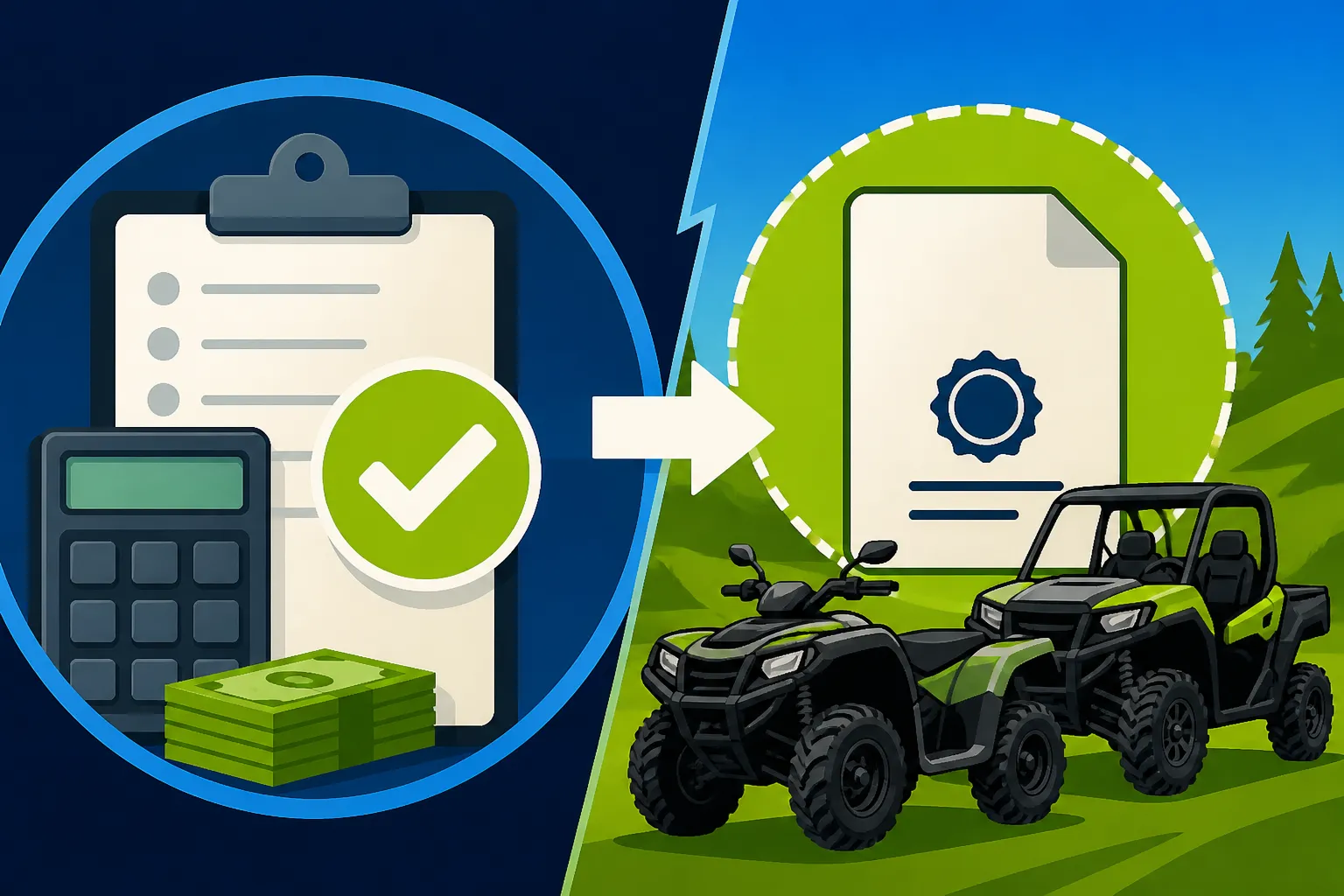
A sales-tax base is the amount a tax is calculated on. For an ATV sale, it generally starts with the taxable selling price of the machine, with applicable adjustments handled under New York’s tax rules. A documentary fee, often called a doc fee, is a separately stated charge for the dealer’s paperwork and transaction processing.
If that fee is outside the tax base, the dealer adds it to your amount due but does not include it in the amount used to calculate sales tax. That does not make the fee disappear or mean the dealer cannot charge it. It means the fee and the taxable price are treated as separate items.
Here is a simplified example using an invented tax rate:
| Invoice item | Amount | Included in the example’s sales-tax base? |
|---|---|---|
| ATV selling price | $10,000 | Yes |
| Separately stated documentary fee | $200 | No |
| Sales tax at an invented rate of 8% | $800 | Tax calculated on the ATV price |
| Total before other charges | $11,000 | Price, fee, and tax added together |
The example is only meant to show the arithmetic. It is not a quote of a current New York tax rate or a current permitted doc fee. Actual tax depends on the applicable state and local rules, and other invoice items may affect the taxable amount.
A dealer invoice can therefore show a doc fee that increases the buyer’s total while leaving the sales-tax calculation unchanged. The distinction is easy to miss because the fee appears in the same purchase transaction as the ATV. But being part of the transaction does not automatically make every charge part of the taxable selling price.
For a broader look at purchase charges, see New York Dealer Fees Explained. For the tax side, New York ATV Sales Tax covers the wider calculation.
Why a Documentary Fee Can Be Treated Separately
The basic distinction is between the item being sold and a separately identified charge for transaction paperwork. The ATV is tangible personal property being purchased. A properly identified documentary fee is meant to cover administrative work related to preparing and processing the sale documents.
That difference matters because sales tax does not necessarily apply to every dollar a buyer pays at the dealership. The tax base depends on the character of each charge and on the rules that apply to it. If an item is part of the taxable selling price, it generally belongs in the base. If it qualifies for separate treatment as a documentary charge, it may be listed outside that base.
The line is about what the charge actually represents, not just what the dealer calls it. Putting “doc fee” on an invoice does not, by itself, settle every tax question. Nor does placing a charge on a separate line automatically make it nontaxable. A charge that is really part of the price of the ATV, or payment for a taxable item or service, may need different treatment.
That is why an invoice should tell a coherent story:
- The ATV’s selling price is stated clearly.
- The documentary fee appears as a separate charge.
- The taxable subtotal is identifiable.
- The sales-tax amount corresponds to the taxable subtotal and applicable tax rules.
- Optional products, accessories, and services are not hidden inside a vague paperwork charge.
A buyer does not need to decide a difficult tax question at the counter. But it is reasonable to ask the dealer to explain what each line covers and how the taxable subtotal was calculated. If the explanation is unclear, ask for an itemized buyer’s order and check the treatment with an appropriate New York tax professional or official source.
New York also regulates dealer documentary charges. The rules governing how much a dealer may charge are separate from the rules determining whether the charge is included in the sales-tax base. For the state’s fee limit and related details, see New York’s $175 Dealer Doc Fee Cap. Because fee rules can change, confirm the current requirements rather than relying on an old quote or online example.
How the Fee Affects Your Total Purchase Cost
“Outside the tax base” does not mean “free,” “optional,” or “excluded from the final amount due.” It means the fee is not included in the amount used for the sales-tax calculation under the treatment described here. You still pay it if it is part of the agreed sale.
It helps to separate three numbers when reviewing a quote:
- The ATV’s selling price. This is the negotiated price of the machine before taxes and separately listed charges.
- The taxable amount. This is the amount the dealer uses to calculate sales tax after applying the relevant rules and any eligible adjustments.
- The out-the-door total. This is what you must pay to complete the purchase, including the machine, documentary fee, tax, and other charges.
The taxable amount and the out-the-door total are not supposed to be identical. The total can be higher because the buyer pays charges that do not form part of the tax base. Conversely, a tax calculation can be wrong even if the final total seems plausible. Check the math rather than judging only by whether the bottom line looks close to the quoted amount.
For example, a quote may list a machine price, a documentary fee, sales tax, registration-related costs, and optional accessories. The fee may be outside the tax base, while an accessory sold with the machine could be treated differently. The dealer should be able to identify which items are taxable and why. Avoid assuming that all “fees” receive the same treatment: a paperwork fee, a delivery charge, an accessory, and a government charge can raise different questions.
When comparing two dealers, compare the full itemization as well as the advertised price. One dealer may advertise a lower machine price but add charges later. Another may have a higher stated price but a different set of included items. A useful comparison includes the selling price, doc fee, taxable subtotal, sales tax, add-ons, and total due.
If you are comparing dealer and private-party purchases, the tax and paperwork issues can differ. New York ATV Dealer Versus Private Sale is a useful companion when weighing those options. If a trade-in is involved, don’t assume the trade automatically reduces every charge. See New York ATV Trade-In Tax Credit and ask the dealer to show how the taxable amount was determined.
How to Check the Dealer’s Invoice
A quick, calm review before signing can prevent confusion later. Ask for the itemized paperwork early enough to read it—not only when you are ready to pay.
- Find the ATV’s selling price. Make sure it matches the negotiated price and any written quote.
- Locate the documentary fee. Check that it is named and shown as a separate line rather than folded into an unexplained total.
- Identify the taxable subtotal. The paperwork should make it possible to see what amount the dealer used to calculate sales tax.
- Check the tax calculation. Confirm that the rate and taxable amount are explained. Local rates can vary, so do not assume a rate from another county applies to your transaction. New York ATV Sales Tax by County explains why location can matter.
- Review other charges one by one. Ask what each charge covers and whether it is required, optional, or a government charge.
- Compare the signed total with the quote. If the amount changed, ask what changed before signing or paying.
If a separately listed doc fee appears to have been included in the taxable subtotal, ask the dealer to explain the calculation. It may be an error, or there may be a reason the charge is being treated differently based on what it covers. A clear written explanation is more useful than a verbal assurance that “the computer does it that way.”
Likewise, if the invoice excludes a charge from the taxable amount, that does not prove the treatment is correct. The relevant question is whether the charge qualifies for that treatment under current rules. Keep the quote, purchase agreement, and final invoice so the figures can be compared later.
For a practical conversation starter, see Asking a Dealer About the Doc Fee. You can ask direct questions without accusing anyone of overcharging:
- “What does this documentary fee cover?”
- “Is it separate from the ATV’s selling price?”
- “Which line is the taxable subtotal?”
- “Can you show how the sales-tax amount was calculated?”
- “Are these other charges required or optional?”
- “Does the invoice reflect the current New York rules?”
A dealer should be able to explain the paperwork in plain language. If the answers do not match the written figures, ask for a corrected itemization before completing the purchase.
Common Confusions About Doc Fees and Sales Tax
A doc fee is not the same as sales tax
The doc fee is a dealer charge; sales tax is imposed under state and local tax rules. They may both appear on the same invoice, but they serve different purposes and are calculated differently. Paying a doc fee does not replace sales tax, and paying sales tax does not mean the doc fee has been taxed.
A separately listed charge is not automatically nontaxable
Separate lines make an invoice easier to understand, but presentation alone does not decide the tax treatment. A dealer cannot turn part of the ATV’s selling price into a nontaxable documentary charge merely by changing the label. The nature of the charge matters.
A fee cap does not determine the tax calculation
New York’s rules about the maximum documentary fee a dealer may charge address the amount of the fee. Tax rules address whether a charge belongs in the taxable base. These are related questions, but they are not interchangeable. A fee can be within the allowed limit and still need to be shown and treated correctly on the invoice. For more on the charge itself, see New York’s $175 Dealer Doc Fee Cap.
A lower taxable subtotal does not always mean a lower bill
A charge excluded from the tax base can still raise the total amount due. For instance, if a buyer pays a separate paperwork fee, that fee remains part of the purchase cost even when it is not taxed as part of the ATV’s selling price. Compare the final total, not just the taxable subtotal.
Different charges need different explanations
A doc fee, delivery or setup charge, accessory, extended service product, registration item, and optional add-on may not all receive the same treatment. If the invoice groups them together, ask for the components and their explanations. A clear itemization makes it easier to compare quotes and identify whether a line is optional.
The most useful rule for a buyer is simple: look at the fee, the taxable subtotal, and the final total as separate figures. Ask the dealer to explain how each was calculated, and confirm any uncertain or changing requirement with an official source before relying on it.
Frequently Asked Questions
Is a New York ATV doc fee part of the sales-tax base?
A properly identified documentary fee may be treated separately from the taxable selling price. The fee’s name alone does not determine its tax treatment, so review what it covers and how the dealer itemized it.
Do I still have to pay a doc fee if it is outside the tax base?
It can still be included in the amount due. Being outside the tax base means it is not included in the sales-tax calculation under the applicable treatment; it does not mean the charge is removed from the purchase total.
Can a dealer put a doc fee inside the ATV’s selling price?
The invoice should clearly distinguish the selling price from separately charged fees. If the paperwork is unclear, ask for an itemized buyer’s order and an explanation of the taxable subtotal before signing.
Does the fee limit decide whether the fee is taxable?
No. A limit on the amount a dealer may charge and the rules for calculating sales tax are separate issues. Confirm both the current fee requirements and the tax treatment if either is unclear.
Disclaimer
This article is for general informational purposes only and does not constitute professional advice. Laws, prices and regulations vary by location and change over time. Consult a qualified professional for guidance on your specific situation.