Why Most Side-by-Sides Cannot Be Registered in New York
Oh, the joy of finally getting that side-by-side you've been dreaming of, only to hit a brick wall when you try to register it in New York! It's a common, incredibly frustrating scenario for so many enthusiasts who just want to enjoy the trails. This guide will dive deep into the specific, often outdated, reasons why most modern side-by-sides simply don't fit into New York's ATV registration framework and what that means for you as an owner.
The Heart of the Problem New York's ATV Definition
When you bring a brand new, shiny side-by-side home, you naturally assume it's just a bigger, more capable version of an ATV, right? You envision cruising down designated trails, maybe even using it to get around your property or help with chores. But then you head to the DMV, full of hope, only to be met with a confused stare or a flat-out denial when you try to get a plate. The root of this widespread confusion and disappointment lies squarely in New York's very specific, and frankly, quite old, legal definition of an All-Terrain Vehicle.
Why the Definition Matters So Much
New York State law has a very particular way of classifying what an "ATV" actually is for registration purposes. This isn't just bureaucratic jargon; it's the gatekeeper to whether your machine can legally receive a New York registration plate and decal, which in turn dictates where and how you can ride it. Without fitting into this exact legal box, your side-by-side, no matter how much you love it, is considered something other than a registerable ATV in the eyes of the state. This distinction is paramount because New York's public trail systems, designated roads, and even the basic requirement for insurance are all tied to that official ATV registration. If your machine doesn't qualify, it’s essentially unregulated for public use, leading to a host of limitations.
For riders coming from other states, or even just those new to the off-road scene in New York, this can be a huge shock. Many states have updated their laws to include side-by-sides (often referred to as UTVs or Utility Task Vehicles) within their ATV definitions, or they've created entirely separate registration categories for them. New York, however, has largely maintained its original, narrower definition. This means that a side-by-side that might be perfectly legal and registered in Pennsylvania or Vermont can become a non-starter the moment it crosses into the Empire State, creating a significant barrier for riders and enthusiasts.
The Historical Context of New York's ATV Laws
To truly understand why we're in this predicament, it helps to look back a bit. New York's ATV laws were largely crafted at a time when the "ATV" landscape looked very different. We're talking about the era of three-wheelers and early, smaller four-wheelers – machines designed for a single rider, or perhaps a rider and a very small passenger, typically used for recreation or light utility on private land. These machines were considerably narrower and lighter than even entry-level side-by-sides today. The legislative intent at the time was to regulate these specific types of vehicles for safety, environmental impact, and public access, primarily focusing on what we now call a quad.
The problem is that as the off-road vehicle industry evolved, developing larger, more powerful, multi-passenger side-by-sides, New York's laws didn't evolve with them. These newer machines exploded in popularity due to their increased stability, carrying capacity, and comfort, offering a completely different riding experience. However, the existing legal framework simply didn't account for them. The state didn't create new categories or significantly amend the old ones, leaving side-by-side owners in a legal gray area where their machines are too big to be ATVs but have no other public registration path. This historical disconnect is the primary reason for the challenges faced by UTV enthusiasts across the state today.
Diving Deep into the Dimensions Width and Weight Limits
The specific details that trip up most side-by-side owners are the hard numbers laid out in New York Vehicle and Traffic Law. These aren't suggestions or guidelines; they are strict statutory limits that define what can and cannot be registered as an ATV. You can have the best intentions, all the proper paperwork, and a brand new machine, but if it physically exceeds these dimensions, the DMV simply cannot process your registration application.
New York's 70-Inch Width Limit
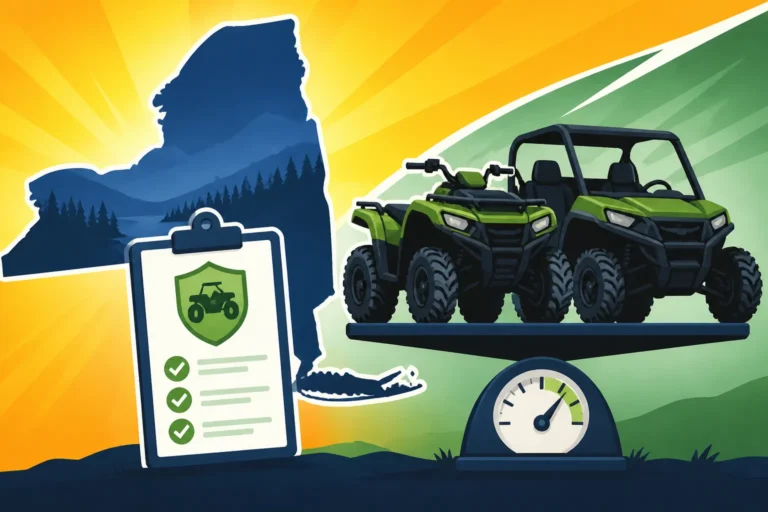
Perhaps the most common stumbling block for side-by-side owners is the [New York's 70-Inch Width Limit]. The law explicitly states that an all-terrain vehicle, for registration purposes, cannot exceed 70 inches in width. Think about that for a moment. Go out to your garage or look up the specs of almost any modern side-by-side on the market today. You'll quickly discover that the vast majority of two-seater and especially four-seater UTVs easily blow past that 70-inch mark. Many popular utility models and recreational machines start at around 60 inches wide, and performance models often push 64 inches, 72 inches, or even wider.
This limit was established when "ATVs" were generally much narrower, often designed to fit on trails originally cut for dirt bikes or single-track use. The legislature likely never envisioned machines that could be as wide as a small car needing to share these spaces. For you, the side-by-side owner, this means that if your machine measures 70.1 inches or more from the widest points of its tires, you're out of luck. It doesn't matter if it's a fraction of an inch; the rule is absolute. This single measurement alone disqualifies an enormous segment of the side-by-side market from ever receiving a New York ATV registration.
New York's 1,000-Pound Weight Limit
Complementing the width restriction is the [New York's 1,000-Pound Weight Limit]. The law states that a registerable ATV cannot exceed 1,000 pounds dry weight. Just like the width limit, this figure is a relic of a bygone era in off-road vehicle design. Early ATVs were relatively lightweight machines, often under 500 or 600 pounds. Even larger sport quads typically stay well within the 1,000-pound threshold.
Side-by-sides, on the other hand, are built for heavier loads, more passengers, and increased utility, often featuring robust frames, larger engines, extensive suspension systems, and sometimes even cabins. Consequently, almost every side-by-side on the market today, even the more compact models, will easily exceed this 1,000-pound dry weight limit. Even a smaller, two-seat utility UTV can weigh 1,200 to 1,500 pounds or more before you add fuel, gear, or passengers. This weight restriction, combined with the width limit, creates a double whammy that ensures virtually all modern side-by-sides are effectively excluded from ATV registration in New York. These two numbers are the primary barriers to [Why a Modern Side-by-Side Fails the Test] in New York.
What This Means for Popular Side-by-Side Models
It’s one thing to talk about abstract legal definitions and weight limits, and another to see how they impact the specific machines many people want to own and ride. The reality is that if you're looking at a Polaris RZR, a Can-Am Defender, a Kawasaki Mule, or virtually any other popular side-by-side, you're likely staring down a situation where New York State won't issue you an ATV registration.
Popular Models That Don't Qualify
Let's take a look at some common side-by-side models that, despite their popularity and utility, simply cannot meet New York's stringent ATV registration criteria. Consider the Polaris Ranger 1000, a workhorse often seen on farms and large properties. This machine, while incredibly useful, typically has a width exceeding 60 inches and a dry weight well over 1,500 pounds, disqualifying it on both counts. Then there are the sport-oriented machines like the Can-Am Maverick X3 or Polaris RZR Pro XP, which are built wide for stability and performance, often pushing 64, 72, or even 77 inches in width, and frequently weighing in at 1,800 pounds or more. These vehicles are designed for thrill-seeking and serious off-road adventure, but their very design makes them incompatible with New York's ATV definition.
Even smaller, more compact side-by-sides, sometimes marketed as "entry-level" or "trail-friendly," usually fall short. Take a basic Kawasaki Mule SX model, for instance. While it might be one of the narrower utility side-by-sides, it still typically measures around 52-54 inches wide, leaving some wiggle room on the width. However, its dry weight is still often in the 1,000 to 1,200 pound range, putting it squarely over the state's 1,000-pound limit. So, even if you manage to find a rare model that might just barely squeeze under the 70-inch width, it almost certainly won't clear the 1,000-pound weight hurdle. This means that for the vast majority of potential side-by-side buyers, the dream of a New York ATV registration for their UTV remains just that – a dream.
The Frustration for Owners of Unregisterable Machines
Imagine you've saved up, done your research, and purchased what you believe is the perfect side-by-side for your property and local riding areas. You then head to the DMV, only to be told, "Sorry, that's not an ATV." The frustration can be immense. You've invested a significant amount of money in a machine that, through no fault of your own, simply doesn't fit the state's outdated legal framework. This leads to a profound sense of limitation and confusion for owners.
Many side-by-side owners are left wondering: "What exactly can I do with this machine then?" The answer, legally speaking, is often "not much beyond private property." Without a state registration, you cannot legally operate your side-by-side on public ATV trails, designated roads, or any public land where ATV registration is required. This effectively turns your expensive new machine into a private-land-only vehicle, severely limiting its utility and the enjoyment you can get from it. This situation is a constant source of discussion and disappointment among the New York off-road community, who feel their concerns about [New York UTV Registration Rules] are not being adequately addressed by lawmakers.
Common Misconceptions and Frustrations for UTV Owners
The lack of clarity around side-by-side registration in New York fuels a lot of misinformation and misunderstanding. Many new owners, or even seasoned riders new to the state, often operate under assumptions that, while logical, simply aren't in line with New York's specific legal framework. This can lead to costly mistakes, both financially and legally.
"It's an ATV, Just Bigger"
One of the most pervasive misconceptions is the idea that a side-by-side is simply a large ATV, and therefore should be registered as such. From a functional standpoint, this makes sense to many. Both are off-highway vehicles, typically with four wheels, handlebars or a steering wheel, and designed for off-road terrain. However, as we've discussed, New York law makes a very clear, quantifiable distinction based on width and weight. It doesn't matter if it has a steering wheel, bucket seats, or a cargo bed; if it exceeds those physical parameters, it is not an "ATV" in the eyes of the New York Department of Motor Vehicles.
This distinction is crucial because thinking of it as "just a bigger ATV" leads people to assume they can register it, insure it, and ride it on trails designated for ATVs. When they find out this isn't the case, it creates a feeling of being misled or that the rules are unfair, which to many, they are. It also means that insurance companies, while they may offer policies for "off-road vehicles" or "UTVs," are doing so for a machine that lacks the fundamental state registration that dictates its legal operating environment. So, while you can certainly insure your side-by-side, that insurance policy doesn't magically grant it legal ATV status or the right to operate on public trails.
The Implication of No Registration: Where Can You Actually Ride?
The stark reality of an unregisterable side-by-side in New York is that your riding options are severely limited. Without that state registration, your side-by-side is generally confined to private property where you have explicit permission to ride. This includes your own land, or land owned by friends, family, or clubs where specific agreements are in place. This can be particularly frustrating for those who purchased a side-by-side with the intention of exploring New York's vast and beautiful designated trail systems.
You cannot legally operate an unregisterable side-by-side on public roads (except for emergency crossings in specific, narrow circumstances), on state forest lands, or on county-managed ATV trail systems. Even if a trail appears open, if it's designated for registered ATVs, your side-by-side cannot be there. Ignoring this can lead to significant fines, impoundment of your vehicle, and even potential liability issues if an accident occurs. It's a hard truth, but the lack of a legal definition and registration pathway for most UTVs means their public access in New York is virtually nonexistent. This is why it's so critical to understand this limitation before you make a purchase, and why you should research where you can legally ride an ATV in New York.
The Current Legal Landscape and Attempts at Change
The frustration among side-by-side owners and enthusiasts hasn't gone unnoticed. There have been ongoing efforts and legislative proposals aimed at bringing New York's laws into the 21st century and creating a legal framework for UTVs. However, changing state law is a slow, often arduous process, and these attempts have, to date, largely stalled.
Legislative Efforts to Expand the ATV Definition
Over the years, various bills have been introduced in the New York State Legislature to address the issue of side-by-side registration. These proposals have typically sought to either expand the existing definition of an "ATV" to include UTVs by increasing the width and weight limits, or to create an entirely new category for these machines, similar to how snowmobiles are registered. For example, there have been discussions and proposed bills like [A New York Bill to Widen the ATV Definition], which aimed to increase the maximum width for registerable ATVs to 80 inches and the weight limit to 2,000 pounds. These proposed changes would encompass a significant portion of the side-by-side market, opening up registration possibilities for many current owners.
The motivation behind these bills is clear: to align New York with other states, increase state revenue from registrations, and provide legal access for UTV owners to designated trail systems. Proponents argue that modern side-by-sides are often safer and more stable than traditional ATVs, and that responsible UTV use could contribute to local tourism and economic development in rural areas. However, despite these compelling arguments and the strong backing from rider advocacy groups, these legislative efforts have consistently faced an uphill battle, often failing to gain enough traction to pass both houses and become law.
Why UTV Bills Often Fail to Become Law
There are several complex reasons why bills to facilitate [A New York Bill on UTV Registration] have struggled to pass. One major factor is the perceived environmental impact and trail degradation concerns raised by some conservation groups and landowners. They worry that larger, heavier side-by-sides could cause more damage to trails not originally designed for such machines, leading to increased maintenance costs and erosion. There are also safety concerns from some legislators regarding the integration of larger vehicles onto trails currently shared with narrower ATVs, dirt bikes, hikers, and mountain bikers.
Another challenge is simply the crowded legislative agenda in Albany. Off-road vehicle legislation often doesn't receive the same priority as other pressing state issues. Furthermore, the diverse interests of various stakeholders – from environmental advocates to farming communities, trail clubs, and recreational riders – can make it difficult to forge a consensus on the specifics of any new law. The result is that while there is an ongoing conversation and a clear desire from the off-road community for change, legislative inertia and competing interests have meant that [Why New York's UTV Bills Are Not Law Yet] remains the reality for side-by-side owners in New York.
What You Can Do with Your Side-by-Side in New York Legally
While the news about public trail access for most side-by-sides in New York can be discouraging, it's not entirely without hope. There are still legitimate and legal ways to enjoy your machine, primarily by understanding the distinction between public and private land use. Knowing your options, and where the boundaries lie, is key to responsible and lawful enjoyment of your UTV.
Riding on Private Property
The most straightforward and widely available option for side-by-side owners in New York is to ride on private property. If you own land, or have explicit, verifiable permission from a landowner, you are generally free to operate your UTV there, regardless of whether it can be registered as an ATV. This is where many utility side-by-sides truly shine, assisting with farm work, property maintenance, hunting, or simply recreational riding within your own boundaries.
It's absolutely crucial, however, that you always obtain clear permission if you're riding on someone else's land. Verbal permission is a start, but a written agreement, perhaps even a simple one created with a service like LawDepot, can save a lot of headaches down the road. This documentation proves you have the right to be there, protecting both you and the landowner. Even on private land, it's wise to adhere to basic safety practices, wear appropriate gear, and be mindful of noise levels, especially if you have neighbors. This practice not only keeps you safe and legal but also helps foster positive relationships that keep private lands open to riders.
Special Exceptions and Agricultural Use
New York law does provide for very limited exceptions where an unregisterable side-by-side might be operated off private property, but these are highly specific and do not open up general trail access. One notable area is [The Agricultural Exemption in New York]. Farm vehicles, which can include side-by-sides when used exclusively for agricultural purposes, may be operated on public roads for short distances between fields or properties, provided they meet certain criteria and often have "slow-moving vehicle" signs. However, this is strictly for agricultural use and not for recreational riding. You cannot take your farm UTV out on a public ATV trail system for fun, even if you sometimes use it for farming.
Similarly, there are provisions for snow removal on private property, and sometimes local municipalities might issue special permits for very specific, localized tasks. However, these are exceptions, not rules. They don't negate the general requirement for registration for recreational public use. Always check with local authorities for any specific local ordinances that might affect your use, as towns and villages can sometimes have stricter rules regarding off-road vehicles within their boundaries. Remember, these exceptions are narrow and are not a loophole for general public riding.
Proving Ownership Without a State Registration
Since most side-by-sides cannot be registered as ATVs in New York, they also do not receive a traditional vehicle title from the DMV. This can create a unique set of challenges when it comes to proving ownership, particularly when buying or selling the machine, or in the event of theft or an accident. It's a situation that requires diligence and careful record-keeping on the part of the owner.
The Role of a Bill of Sale
In the absence of a state-issued title, the bill of sale becomes the single most critical document for establishing ownership of your side-by-side. This document legally transfers ownership from the seller to the buyer. It should be comprehensive, including:
- Full Names and Addresses: Of both the buyer and the seller.
- Detailed Machine Description: Make, model, year, and crucially, the Vehicle Identification Number (VIN) or frame number.
- Purchase Price: Clearly stated.
- Date of Sale: Important for establishing a timeline.
- Signatures: Of both parties, ideally witnessed or notarized for extra security.
A well-drafted bill of sale is your primary proof of [Proving Ownership Without a Title in New York]. It’s what you would use to get insurance, to sell the machine in the future, or to demonstrate ownership if the machine is ever stolen and recovered. When buying a used side-by-side, insist on a complete and accurate bill of sale. If the seller can't provide one, or if it seems incomplete, it's a major red flag. Services like LawDepot can provide customizable bill of sale templates that ensure you include all the necessary legal details, giving you peace of mind in your transaction.
Additional Ownership Documentation
While the bill of sale is paramount, other documents can help strengthen your claim of ownership. These include:
- Manufacturer's Statement of Origin (MSO) or Manufacturer's Certificate of Origin (MCO): This is the "birth certificate" of your side-by-side, issued by the factory. It's usually given to the dealer, who then passes it to the first retail buyer. If you buy new, make sure you receive this document. While New York won't title your UTV with it, it's irrefutable proof of its origin and initial ownership.
- Previous Bills of Sale: If you're buying a used side-by-side, collecting a chain of prior bills of sale back to the original owner who received the MSO creates an ironclad paper trail. This is especially important for proving legitimate ownership if you're trying to [Registering a Machine Bought Off a Farm] that might have been exchanged many times without formal paperwork.
- Insurance Policy Documents: Your insurance policy itself, listing you as the policyholder and detailing your side-by-side, serves as additional evidence of your ownership and financial interest in the machine.
- Receipts for Major Repairs or Accessories: While not direct proof of initial ownership, these receipts can help demonstrate ongoing possession and investment in the machine.
Keeping all these documents organized and in a safe place is critical. Consider scanning them and keeping digital copies in addition to the physical ones. In New York, where most side-by-sides exist in a non-titled, non-registered legal limbo for public use, meticulous record-keeping is your best defense against potential disputes or claims of ownership.
Navigating the Purchase of a Side-by-Side in New York
Buying a side-by-side in New York, especially if you're hoping to use it for anything beyond your own backyard, requires a different approach than purchasing a traditional car or even a registerable ATV. It's essential to go into the process with open eyes and a clear understanding of the limitations imposed by state law.
What to Ask a Dealer Before You Buy
When you walk into a dealership or browse online listings for a side-by-side in New York, don't assume anything about its legal status for public road or trail use. Your first and most critical questions should revolve around New York's specific width and weight limits. Ask the dealer:
- "What is the exact dry weight and width of this specific model, from the widest point of the tires?"
- "Will this side-by-side qualify for ATV registration in New York State?"
A reputable dealer who understands New York's laws should be able to answer these questions directly and honestly. They should also be transparent about the fact that most side-by-sides they sell will not be registerable as ATVs for public use. If a dealer tries to skirt the issue, or implies that "everyone just rides them anyway," consider that a significant red flag. They should also be able to provide you with the Manufacturer's Statement of Origin (MSO) upon purchase, which is vital for proving ownership even without a title. While some dealers might process [Registering an ATV Bought From a New York Dealer], this typically only applies if the machine actually meets the strict ATV definition – which, for side-by-sides, is exceedingly rare. Be particularly wary of any dealer who suggests that an existing out-of-state registration will solve the problem; New York has its own distinct rules.
Understanding Your Limited Riding Options
After getting honest answers from a dealer, you'll likely realize that your new side-by-side will be primarily a private-land vehicle. This understanding should shape your purchase decision. Are you buying it mainly for work on your own property, for hunting access, or for use at a private club that allows UTVs? If so, then the lack of public registration might not be a deal-breaker. However, if your dream is to explore the extensive public trail systems across New York, then purchasing a side-by-side that exceeds the state's width and weight limits means that dream, for now, cannot be realized legally.
You must be realistic about where you can legally operate your machine. Operating an unregistered, unqualifying side-by-side on public trails or roads can lead to severe penalties, including fines, impoundment, and potential legal liability in case of an accident. It's far better to know these limitations upfront and make an informed decision about whether a side-by-side is the right choice for your intended use in New York. If public trail access is your top priority, you might need to reconsider and look at machines that genuinely meet the state's ATV definition, or explore riding opportunities in other states with more permissive UTV laws.
The Future of Side-by-Side Riding in New York
While the current situation for side-by-side registration in New York can feel stagnant and frustrating, it doesn't mean the landscape will never change. Advocacy efforts continue, and the growing popularity of UTVs keeps the conversation alive. Understanding the potential pathways for change, and the ongoing challenges, offers a glimpse into what the future might hold for New York side-by-side enthusiasts.
Continued Advocacy and the Role of Riders
The path forward for broader side-by-side access in New York heavily relies on sustained advocacy from riders, clubs, and industry representatives. Organizations that champion off-road riding in New York regularly engage with legislators, sharing data on the economic benefits of responsible UTV tourism, the safety features of modern machines, and the frustrations of current owners. They work to educate lawmakers on the distinctions between different types of off-road vehicles and propose common-sense solutions that balance recreational access with environmental protection and public safety.
As a side-by-side owner, your voice matters. Joining local ATV/UTV clubs, participating in organized rides that demonstrate responsible usage, and contacting your elected officials to share your perspective can all contribute to these ongoing efforts. The more legislators hear from their constituents about the desire for updated UTV laws, the more likely the issue is to gain traction. Change often happens incrementally, and persistent, organized advocacy is the most effective way to push for progress. Many clubs rely on their members' engagement with policymakers to try and pass [A New York Bill on UTV Registration] that would finally open up more possibilities.
Potential Legislative Solutions and Challenges
When new legislative proposals emerge, they typically focus on a few key solutions. One approach, as previously mentioned, is to simply modify the existing ATV definition to accommodate larger vehicles. This would mean increasing the 70-inch width limit and the 1,000-pound weight limit to something more aligned with modern UTV dimensions. Another approach is to create an entirely separate vehicle class and registration process specifically for UTVs, much like New York has for snowmobiles. This would allow for tailored regulations regarding equipment, operation, and trail access, recognizing that UTVs are distinct from traditional ATVs.
However, each of these solutions comes with its own set of challenges. Expanding the ATV definition might be simpler administratively but could raise concerns about trail compatibility and safety on existing ATV trails. Creating a new UTV category would offer more flexibility but would require significant legislative effort to define the category, establish registration fees, determine specific operating rules, and designate appropriate riding areas. Regardless of the approach, any successful bill would need to carefully address environmental concerns, landowner rights, funding for trail development and maintenance, and public safety. The goal remains to find a legislative solution that responsibly integrates UTVs into New York's off-road landscape without compromising existing resources or user groups.
A Comparative Look at ATV vs. UTV Registration in New York
To put everything into perspective, here's a quick comparison of how New York State views ATVs and UTVs for registration purposes, highlighting the critical differences that lead to so much frustration for side-by-side owners.
| Feature | New York ATV (Registerable) | New York UTV/Side-by-Side (Generally Not Registerable as ATV) |
|---|---|---|
| Maximum Width | 70 inches | Often 60-77+ inches (Exceeds limit) |
| Maximum Dry Weight | 1,000 pounds | Often 1,200-2,000+ pounds (Exceeds limit) |
| Primary Use | Single-rider recreation/utility | Multi-passenger recreation/heavy utility |
| Steering | Handlebars | Steering wheel |
| Seating | Straddle seat (often single or small second) | Bench or bucket seats (2-6+ passengers) |
| Registration | Required for public land/road access | No dedicated public registration path in NY |
| Title Issued? | No (Non-titled vehicle in NY) | No (Non-titled vehicle in NY) |
| Proof of Ownership | Bill of sale, MSO, [MV-51B and New York's Non-Titled Vehicles] | Bill of sale, MSO (crucial, use LawDepot for templates) |
| Public Trail Access | Yes, on designated/posted trails | No, generally limited to private land |
| Road Operation | Very limited, specific crossings | Very limited, specific crossings (e.g., farm use) |
This table clearly illustrates the rigid criteria that currently prevent most side-by-sides from being legally recognized and registered as ATVs in New York. The disparity in width and weight alone is enough to disqualify nearly every UTV on the market, underscoring the need for updated legislation.
Disclaimer
This article is for general informational purposes only and does not constitute professional advice. Laws, prices and regulations vary by location and change over time. Consult a qualified professional for guidance on your specific situation.