Autumn Color on a Tug Hill Ride
Autumn on Tug Hill can mean brilliant maples, quiet roads, and a memorable ride—but it can also mean muddy ground, changing trail access, and early darkness. This guide explains how to plan a fall ATV ride around the Tug Hill Plateau, check that a route is open, prepare for the conditions, and enjoy the scenery without putting trails or landowner access at risk.
Plan around the season, not just the foliage
Expect color and conditions to vary
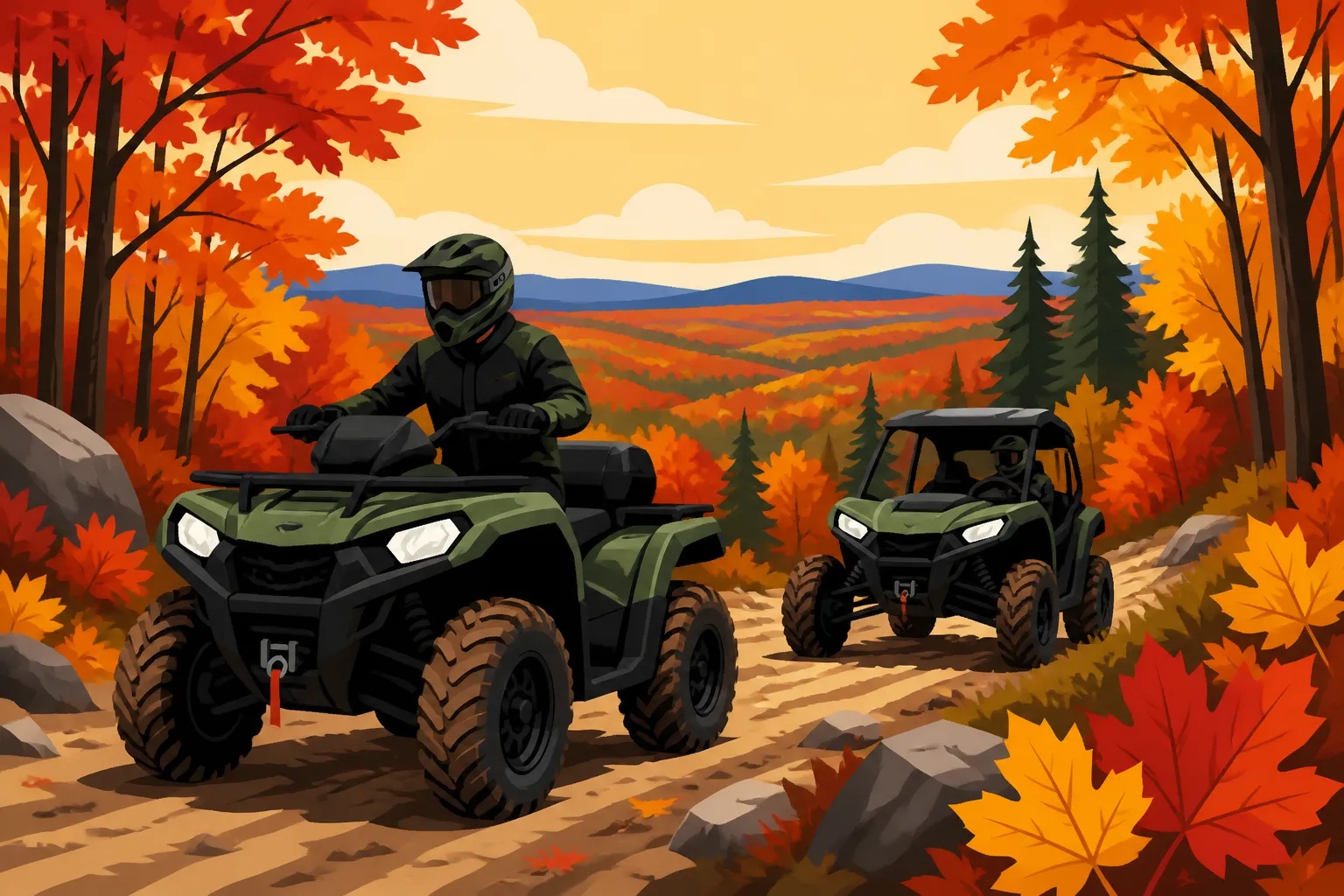
The Tug Hill Plateau spans a large area, so autumn color does not arrive all at once. Elevation, weather, and the mix of tree species can make one stretch look close to peak while another is still mostly green—or already past its brightest. Treat foliage reports as a planning clue rather than a guarantee, and leave room in your schedule to adjust your route.
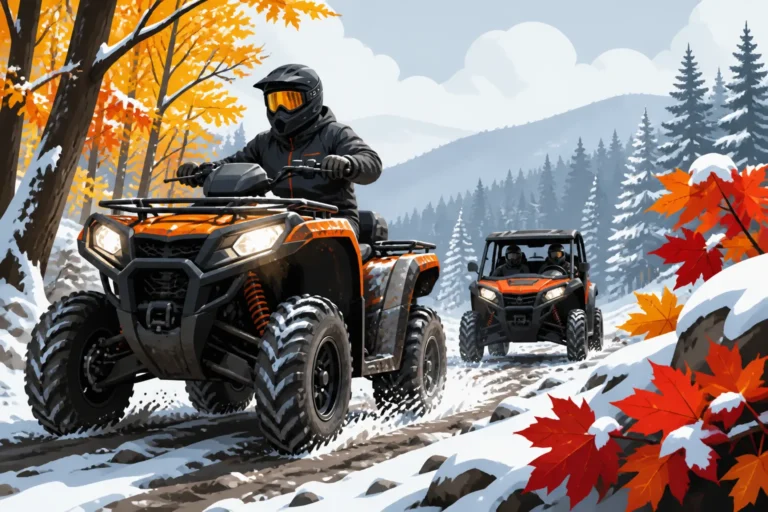
Fall weather can change just as quickly as the scenery. A dry trail can become slick after rain, and shaded sections may stay wet long after exposed ground has dried. Low spots, creek crossings, and soft shoulders deserve extra care. On a machine, those conditions affect more than comfort: a rut made in wet ground can linger and damage a trail.
A useful approach is to plan a shorter outing than you might attempt in summer. That gives you time to stop for views, check signs, and turn around if a section is muddy or closed. If you are traveling from outside the area, build flexibility into your lodging and driving plans rather than counting on one specific trail being available.
Check access before loading your machine
Tug Hill riding opportunities can involve county systems, club trails, private land agreements, and other managed routes. Access is not automatically open just because a trail appears on a map or was open on a previous visit. Seasonal schedules, weather, maintenance, logging, and landowner decisions can all affect where you may ride.
Before you leave, check the latest notices from the county or trail organization responsible for the route. Pay attention to opening and closing dates, permit requirements, parking instructions, and temporary closures. For a broader look at how conditions and seasons affect access, see [New York Riding Seasons and Trail Openings] and [New York Trail Conditions Before You Ride].
Mapping apps can help you understand the area and keep track of your route, but they should not be treated as permission to ride. onX Offroad can be useful for route planning and situational awareness; still, confirm access and closures with the responsible county or trail group. A line on a screen does not override a gate, a posted closure, or a landowner’s restrictions.
Choose a route that fits your group
Keep the ride manageable
For an autumn outing, a route that is enjoyable and easy to shorten is often better than the longest loop you can find. A shorter plan leaves time for breaks and makes it simpler to return before dusk, especially when cloud cover or wooded sections make the light fade sooner than expected.
Think through your group’s experience and machines before choosing a route. New riders may be more comfortable on a familiar, well-marked trail with room to stop safely. A mixed group should agree on a pace and meeting points before setting off. If someone needs to turn back, the group should already know who will accompany them and how the rest of the riders will reconnect.
The Tug Hill area includes varied riding environments, and conditions can differ between routes. The descriptions in [New York's Tug Hill Riding] and [Riding the Black River Valley] can help you explore the character of the region, but use current trail information to decide what is actually open and appropriate for your ride. Do not assume that a scenic road, rail corridor, farm lane, or snowmobile route is open to ATVs.
Use maps as a planning aid, not an access pass
A paper map, county trail map, or navigation app can help you plan fuel stops, estimate travel time, and find your way back to a staging area. onX Offroad may also help you review terrain and mark a planned route before leaving home. Download or save what you need ahead of time if your route may pass through areas with unreliable cellular service.
Keep the official trail map and posted signs in charge. Maps can be incomplete or out of date, and route boundaries are not always obvious on the ground. If a marked trail is closed, do not try to bypass the closure by taking an unmarked track. That can put you on private property, create conflict with a landowner, or damage ground that is especially vulnerable after rain.
| Planning question | What to check before you ride |
|---|---|
| Is the route open? | Confirm with the county or trail organization responsible for it |
| Is a permit required? | Check the rules for that specific trail system |
| Is the route suitable for your machine? | Review width, ground conditions, and any posted restrictions |
| Will you have navigation? | Carry a map and save essential information before leaving |
| Can you finish before dark? | Plan a realistic loop with time for stops and delays |
| Is the staging area available? | Confirm parking instructions and any restrictions |
Access rules can differ even between nearby trail systems. If you are comparing options, [New York's County Trail Systems Compared] can help you understand why it is important to check each system’s own requirements. If you plan to ride in Lewis County, review [Which Trails a Lewis County Permit Covers] and confirm the current permit and access details before the trip.
Prepare for wet ground, cool weather, and shorter days
Check the machine before the ride
A pre-ride inspection is particularly worthwhile in autumn, when wet leaves and mud can hide hazards and make small mechanical problems more consequential. Check tire condition and pressure, brakes, steering, lights, controls, and the condition of any required equipment. Make sure your registration and insurance documents are available, and confirm your machine is suitable for the trails you intend to use.
Bring tools and basic supplies that match your machine and the length of the outing. A small repair kit, tire-repair items, a tow strap, water, and a first-aid kit can help with common problems, though they are not a substitute for riding within your ability. If you are unsure about trail suitability, do not count on a winch or another rider’s machine to get you through a questionable section.
Wet leaves can conceal rocks, roots, and ruts. Slow down when visibility or traction changes, leave more room between riders, and avoid sudden steering or braking on slick ground. If a section is too soft, turning around is usually the responsible choice. Repeatedly spinning tires can deepen ruts and make the route worse for everyone who follows.
Dress and pack for a longer day than planned
A fall ride can start comfortably and turn cold once you are moving through shaded woods or stop for a break. Wear layers that can handle wind and damp conditions, and use gloves and eye protection that remain comfortable when temperatures drop. Keep a dry layer secured in a bag if you have room; being wet and chilled can make the return trip miserable.
Plan for darkness even if you expect to be back well before sunset. Check that your lights work, carry a charged phone, and consider a backup power source. Share your route and expected return time with someone who is not riding with you. If your group gets delayed, tell that person rather than assuming everyone will know where you are.
onX Offroad can serve as one part of your navigation setup, but do not rely on a phone alone. Battery life can fall in cold weather, devices can be damaged, and cellular coverage may be limited in remote areas. A saved map and a clear plan for regrouping make it easier to handle a dead battery or a rider who misses a turn.
Ride respectfully and leave room for the next season
Follow signs and protect trail access
Many routes depend on agreements with private landowners. A closed gate, a trail marker, or a posted sign is not a suggestion to find another way through. Stay on authorized routes, avoid riding around barriers, and do not treat a farm lane or logging road as open simply because it looks passable. If you encounter a closure or a landowner’s instruction, follow it and report any confusing signage to the organization responsible for the trail.
Autumn is also a working season in rural areas. You may encounter farm equipment, logging trucks, maintenance crews, hunters, hikers, or other trail users. Slow down near people and vehicles, give them space, and be prepared to stop. Keep noise and speed under control near homes and working properties, and pack out anything you bring in.
Trail etiquette helps preserve access after the foliage is gone. A muddy route can be especially vulnerable, so avoid making new tracks or widening the trail to get around a wet spot. [New York Trail Etiquette With Landowners] offers more guidance on sharing routes and keeping relationships with landowners in good shape.
Finish with a simple ride-day checklist
Before leaving the staging area, confirm that every rider knows the route, the expected pace, and the plan if the group separates. Check that machines are fueled, lights are working, and required documents and permits are on hand. Make sure someone knows when to expect you back. These small steps can prevent a minor delay from turning into a stressful search or an unnecessarily late return.
At the end of the ride, inspect your machine for packed mud, debris, or damage. Clean it in an appropriate place without washing contaminants into a stream or wetland. If you found a washed-out section, confusing sign, or closure that was not shown on available information, notify the relevant trail organization rather than posting an invitation for others to ride around it.
| Before you go | On the trail | Before you head home |
|---|---|---|
| Confirm official access and permit rules | Obey signs, gates, and closures | Check the machine for damage or debris |
| Check the forecast and daylight | Slow down on wet leaves and mud | Let your contact know you are back |
| Inspect tires, brakes, steering, and lights | Stay on the marked route | Report confusing signs or trail problems |
| Pack layers, water, and basic repair supplies | Give other trail users room | Clean up and take all trash with you |
| Share your plan and return time | Turn around if conditions are unsafe | Avoid damaging wet or closed trails |
A good Tug Hill autumn ride is not measured by how many miles you cover. It is the one where the route is open, the group gets back safely, and the trail is left in good condition for the next riders and the people whose land makes access possible.
Disclaimer
This article is for general informational purposes only and does not constitute professional advice. Laws, prices and regulations vary by location and change over time. Consult a qualified professional for guidance on your specific situation.