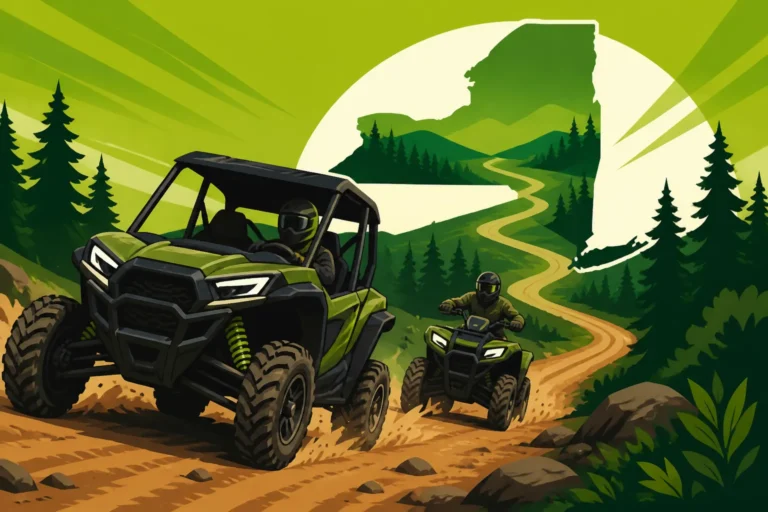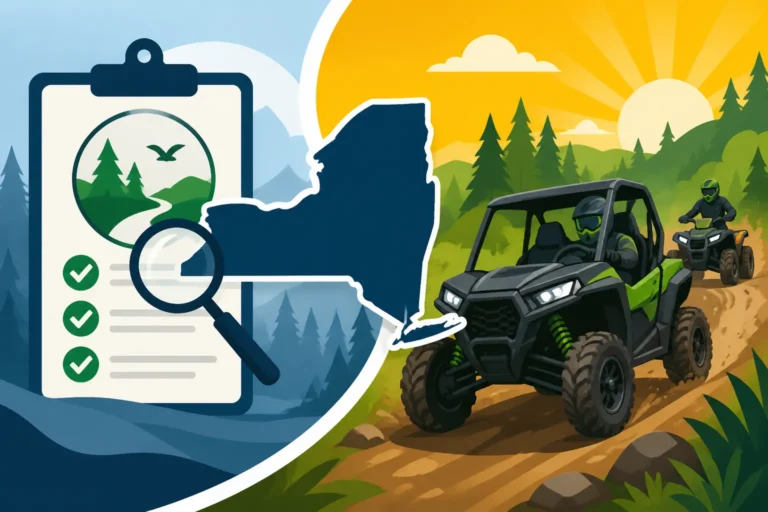
New York Multi-Day Trail Rides
A multi-day ATV ride in New York can turn into a frustrating trip if you assume nearby trails connect, arrive without the right permit, or book lodging far from your staging area. This guide explains how to choose a riding region, plan each day, check access and prepare for the practical details that make a longer trip safer and smoother.
Choose a riding region before you plan a route
Start with a trail system, not a mileage goal
New York offers very different riding experiences, from county-supported trail networks to private parks and club-managed routes. For a multi-day trip, pick one main riding area first, then build your lodging, fuel stops and daily loops around it. Trying to cross several regions in a single trip can mean long trailer drives and confusing changes in access rules.
Lewis County is a natural starting point for riders researching a longer northern New York trip. Its trail system is associated with Tug Hill and the Black River Valley, but access depends on the open routes, applicable permits and current conditions. Begin with [The Lewis County ATV Trail System in New York] and [New York's County Trail Systems Compared] to understand how a county system differs from riding at a private park or on a club trail.
Oswego County is another region to investigate. Its trails are supported by local clubs, and access may depend on the particular trail and the arrangements in place for it. Read [Oswego County's Club Trails in September] and [Oswego County's 100 Miles of New York Trail], then verify which routes are open to visitors and what permissions or permits apply. Do not assume that a route shown on a general map is open to every rider.
A private riding park can be a simpler choice if you prefer to return to one base each night rather than move between communities. Tall Pines ATV Park in Allegany County is one option to research; check its current operating rules, lodging arrangements, machine requirements and riding access directly before making plans. [New York's Tall Pines and Its 70 Miles] and [Camping and Cabins at Tall Pines] can help you assess whether that style of trip fits your group.
Treat trail connections as something to verify
A line on a map does not automatically mean a legal, open connection. New York routes can pass through land managed by different counties, clubs, private owners or public agencies. A trail may stop at a property boundary, close for logging or weather, or require a separate permit from the one you have for another area.
This matters especially when your trip plan depends on riding from one town to another. Confirm the route with the organization that manages it, and ask whether the section is open to your machine, whether a separate permit is needed and whether the route can be ridden in both directions. The details in [New York Trails That Connect Towns] are a useful reminder to check the actual trail arrangements rather than infer connectivity from geography.
New York’s Forest Preserve is not a general-purpose ATV corridor. Do not plan a shortcut through Adirondack or Catskill land unless the specific route is expressly open to the vehicle and use in question. [Why New York's Forest Preserve Is Closed] explains why a nearby public-looking road or trail should not be treated as permission to ride.
Build a realistic multi-day itinerary
Plan each day around the ride, not just the map
A multi-day itinerary should account for the time it takes to unload, check in, follow trail markers, stop for fuel and respond to changing conditions. A route that looks compact on a screen can feel much longer when it includes rough ground, slow sections, group stops or a detour around a closure.
Make a daily plan with a clear starting point, a manageable loop and a backup option. Give your group room to stop for lunch, handle a minor repair or turn back before dark. If you are traveling with newer riders, children or machines with different capabilities, use the most cautious rider’s pace when estimating the day. A shorter ride that ends comfortably is better than a long route that forces the group to hurry.
A route-planning app such as onX Offroad can help you organize waypoints and keep your group’s intended route visible. Use it as a planning aid, not as proof that a trail is open or legal. Compare your plan with maps and notices from the county, club, park or land manager responsible for the route. Save the relevant official information before leaving, especially if mobile coverage may be limited.
| Planning question | What to confirm | Why it matters |
|---|---|---|
| Where does the ride start? | Staging location, parking rules and trailer space | A trailhead may not have room for a large group or multiple trailers |
| Which routes are open? | Official trail or club notices and any closures | Maps may not reflect temporary changes |
| What permits apply? | County, club or private-park requirements | Access rules can differ between systems |
| How long is the day? | Riding time, stops, fuel and return route | A mapped distance does not account for slow sections or delays |
| Where will you refuel? | Suitable fuel stops and machine range | Do not assume fuel is available directly on a trail |
| What is the backup plan? | Shorter loop, turnaround point and emergency contact | Weather or a mechanical issue can change the day |
Use an overnight base that supports the ride
For most groups, staying in one place for the whole trip is easier than changing lodging each night. A central base can reduce packing and towing, make it simpler to keep tools and gear organized, and give the group a familiar place to return to. But “central” should mean close to the actual staging point or approved route—not merely near the riding region on a highway map.
Before booking, ask whether the property allows trailers, where machines can be parked, whether there is a secure place to store gear and whether riding directly from the lodging is permitted. Do not ride across private land, a town road or a neighboring property simply because it appears to connect your lodging to a trail. Check [Camping Near New York ATV Trails] and [Campgrounds Beside a New York Trailhead] for ideas on evaluating an overnight base.
If you want to change scenery between days, make the transfer by trailer unless the connecting route has been confirmed as legal and open. That approach may feel less adventurous than riding straight to the next destination, but it avoids building a trip around a connection that does not exist or cannot be used by your machine.
Check permits, registration and riding rules
Confirm access requirements before travel
Trail access is not the same thing as machine registration. A registered ATV may still need a county or club permit to use a particular trail system. A permit for one area does not necessarily grant access to another. Ask the organization managing each planned route which permit applies, where it must be displayed and whether visitors need to meet additional requirements.
Lewis County’s permit system is one example of why it pays to check locally rather than assume there is a single statewide trail pass. Review [New York ATV Trail Permits Explained] and [Which Trails a Lewis County Permit Covers] before building a trip around a specific network. For club trails, ask whether access is open to nonmembers, whether a day option is available and whether the trail agreement is active for your travel dates.
You also need to confirm that the machine itself can be registered for the use you have planned. New York’s ATV registration rules do not make every side-by-side eligible, and size or weight can be decisive. If you are traveling with a UTV, check [Why Most Side-by-Sides Cannot Be Registered in New York] and the applicable machine requirements before towing it to a trailhead. Never rely on a seller’s assurance or an old forum post when the trip depends on legal registration and access.
Carry the documents and equipment you need
Before departure, check that each rider has the required registration and insurance documentation, along with any trail permit or safety credential that applies. Keep paper or offline copies available in case a phone battery dies or service disappears. Confirm that your plate and required decals are attached where they can be seen, and check the route manager’s rules for helmets, passengers and equipment.
Rules can vary by situation, so do not treat a trail ride as a private-property exception. For an overview of the state requirements, see [New York ATV Registration and Insurance Proof] and [New York's Mandatory ATV Insurance]. Riders under 16 should also review [New York ATV Safety Certificate Requirements] and confirm supervision and machine rules before joining the trip.
A short pre-ride check helps prevent small problems from becoming a long walk back to the staging area. Check tires, brakes, lights, fuel, battery condition and visible leaks. Pack a basic tool kit, tire repair supplies, water, food, first-aid items and a way to contact someone outside the riding group. Keep the load secured so bags and tools cannot shift into a wheel or exhaust area.
Prepare for changing conditions and group needs
Check closures and weather each day
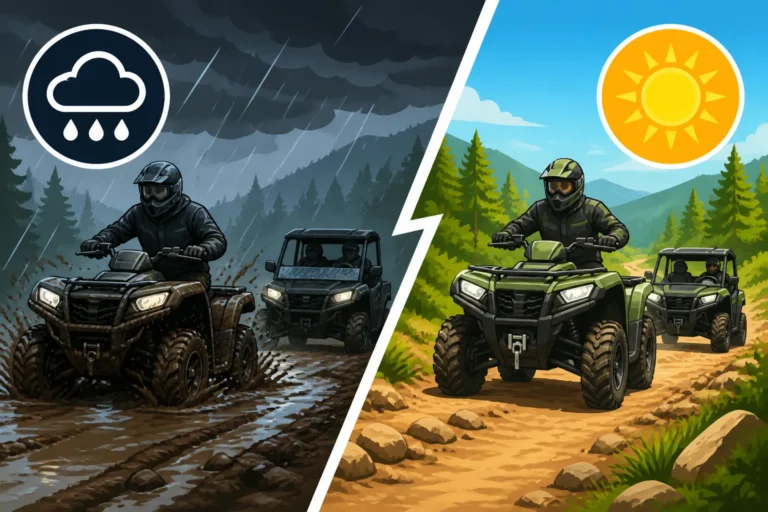
A multi-day route is a plan, not a promise. Heavy rain, spring thaw, trail maintenance, landowner decisions or a local closure can change what is rideable. Conditions may differ from one section to the next, and a route that was manageable the previous afternoon may be rougher or wetter after overnight weather.
Check the official trail notices before each day, not only when you first book the trip. If a route is closed, respect the closure rather than trying to detour through an unmarked road or private property. [New York Trail Conditions Before You Ride] and [New York Trail Closures to Check First] are useful starting points for building this habit into your daily routine.
Use onX Offroad or another navigation tool to keep your own route plan organized, but compare it with local updates and posted signs. If the map and the sign disagree, stop and seek clarification from the trail manager. It is far better to shorten a loop than to risk trespass, a ticket or a conflict that could affect future trail access.
Make the trip work for the whole group
Groups often include different machines, experience levels and expectations. One rider may want a full day in the saddle, while another needs frequent breaks or prefers easier terrain. Discuss the pace and daily distance before the trip, and agree on a regrouping plan if someone falls behind. Keep the group together at intersections and do not let a fast rider’s preferred pace set the plan for everyone.
Machine width and capability deserve particular attention. A route that works for a narrow ATV may not suit a wider machine, and mud, rocks or tight turns can create problems even where the machine is technically permitted. Check the route’s machine restrictions, then compare them with your vehicle’s dimensions. [New York Trails for a Narrow Machine] can help you think through the fit before committing to a destination.
Finally, set a clear end-of-day cutoff. Make sure everyone knows the staging location, the route back and what to do if the group separates. Keep enough fuel for the planned loop and an unplanned return, and do not assume that a nearby community will have a suitable repair shop or parts for your machine. A little extra planning can make the difference between a relaxed three-day ride and a stressful trip spent improvising.
Disclaimer
This article is for general informational purposes only and does not constitute professional advice. Laws, prices and regulations vary by location and change over time. Consult a qualified professional for guidance on your specific situation.