New York Private Trail Systems
Private ATV and UTV trails in New York can be confusing to plan: a route may cross private land, require club membership, or be open only during certain conditions. This guide explains the main kinds of private trail systems, how to check access before you unload, and what to confirm about permits, registration, insurance, and local rules.
How private trail systems work in New York
“Private trail” can mean several different things in New York. A commercial park may invite riders onto land it operates, while a club trail may cross property that landowners have agreed to share. Either way, access is conditional: a trail shown on a map is not automatically open to the public.
Before planning a ride, identify who manages the trail and what that manager requires. A county permit, club membership, park pass, landowner permission, or reservation may be necessary. Requirements for one system do not automatically apply to another.
Commercial parks, club trails, and permitted networks
A commercial ATV park is generally the most straightforward kind of private riding area to understand. The business or land manager sets the admission rules, operating schedule, machine requirements, and other conditions. Read those rules directly before you travel, especially if you are bringing a passenger, a young rider, or a machine that may be wider or heavier than a typical ATV.
Club trails are different. A local club may help maintain trails that cross multiple properties under land-use agreements. Some routes may be open to members, while others may require a separate permit or be subject to seasonal closures. A club’s trail access can depend on landowner permission, so a familiar route can change when an agreement ends or conditions on the property change. See [New York Club Memberships and Trail Access] for more on how membership and access can fit together.
Some counties operate or support trail networks that use private land. Riders may need a county-specific permit, and that permit may cover only particular trails or areas. Do not assume that a permit from one county authorizes riding in a neighboring county. For example, check [County Permits Instead of a State Sticker] and [Two Counties, Two Permits] when your planned ride crosses county lines.
Private property does not mean unrestricted access
A landowner’s permission matters even when a route appears on a public-facing map or has been used by riders before. Permission may be granted through a club or trail agreement, but it can be limited to certain dates, routes, machines, or types of use. A trail agreement is not a blanket invitation to ride elsewhere on the property.
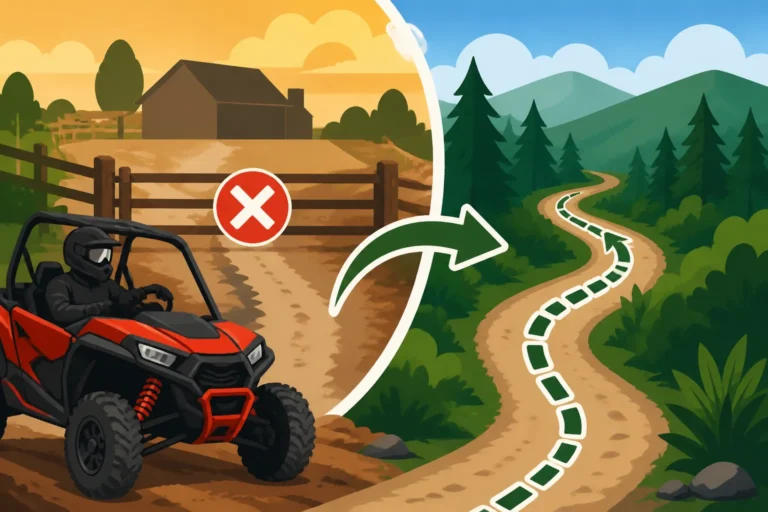
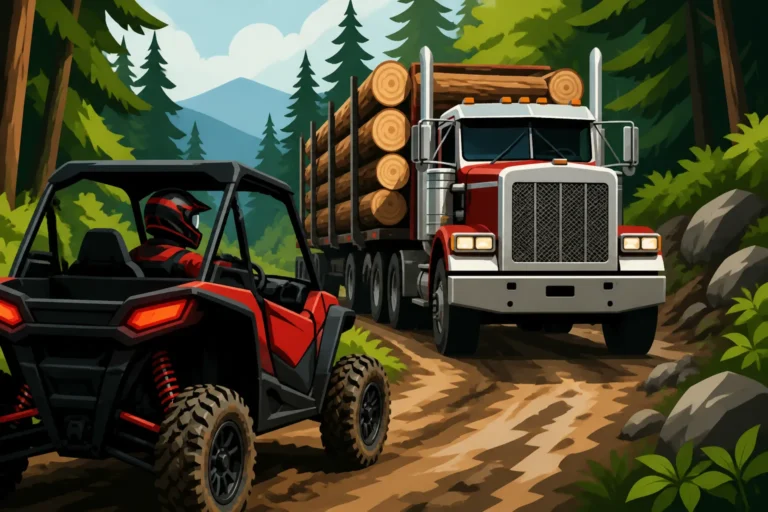
Pay attention to signs, gates, posted closures, and instructions from the trail manager. A gate may be closed for a reason that is not obvious from the trailhead: logging, farm operations, wet ground, a landowner request, or a safety concern. Do not go around it or create a new route to avoid a closure. [New York Trails That Cross Private Land] explains why maintaining those agreements is important to keeping riding opportunities available.
An app such as onX Offroad can help you review route information and orient yourself, but a mapped line does not prove that you have permission to ride. Use it as a planning aid, then confirm access with the park, club, county, or other land manager responsible for that specific trail.
How to find and verify a private trail system
Finding a trail name is only the first step. The practical question is whether the system is open to your machine, on the date you plan to ride, under the access terms you can meet. Checking those details before you leave can prevent a long drive to a closed gate or a trailhead where your permit is not accepted.
Start with the trail manager’s information
Look for the organization that operates or maintains the route: a park, county office, ATV club, or other named manager. Use its own posted information to confirm the current access process, operating dates, trail rules, and any closures. If the information is unclear, contact the manager rather than relying on an old forum post or a ride report from another season.
If your route involves a club system, confirm whether membership is required, whether nonmembers can ride, and whether a separate permit is needed. A club may maintain trails without operating them as open public recreation. The distinction matters: membership in one club does not necessarily provide access to every nearby club trail. [Joining a New York ATV Club] and [What a New York Club Membership Buys] can help you understand what to ask before paying dues.
For a commercial park, check the park’s rules directly. Confirm that the property welcomes the kind of machine you plan to bring, and ask whether there are separate procedures for day riding, organized rides, or overnight visits. If you are considering Tall Pines, for instance, verify its current riding information with the park before planning around it. Do not assume a park rents machines simply because it offers riding access.
Check maps, boundaries, and closures together
Use a map to understand the general route, but compare it with the trail manager’s latest notices. A line on a map can be outdated, can run near a property boundary, or can intersect an area that is temporarily closed. onX Offroad may help you review terrain and route context, but it should not replace confirmation from the organization responsible for access.
Keep the system’s boundaries in mind. A permit or club pass may apply only to marked routes, not to nearby woods, fields, roads, or connecting trails. If the route reaches another property or trail network, check whether the access permission continues. Do not treat a visible trail, tire tracks, or an unlocked gate as authorization.
Weather and land use can also change what is available. A trail that was rideable last weekend may close after heavy rain, during a thaw, or for work on the property. Before loading, check for closures and ask whether the trail manager has any conditions riders should know about. These checks are especially useful when visiting a system for the first time or traveling a long distance.
| Trail system type | Who to check with | Access questions to ask |
|---|---|---|
| Commercial riding park | Park operator | Is the park open, and are there machine or rider restrictions? |
| Club trail system | Local club or trail manager | Is membership required, and are nonmembers allowed? |
| County-supported network | County or designated permit administrator | Which trails does the permit cover, and are there local closures? |
| Route across private property | Landowner or authorized trail manager | Is this route currently open, and what conditions apply? |
What to confirm before riding
Private trail access is only one part of trip planning. Your machine, registration, insurance, and rider equipment still need to fit the rules that apply to the ride. A park’s entry requirements may add conditions, but they do not automatically replace New York requirements.
Registration and insurance
Check whether your machine must be registered for the riding you plan to do, and carry the required registration documents. The details can depend on the machine and how it is being operated. Do not assume that private property or a private trail automatically removes every state requirement. For a broader starting point, see [Do You Need to Register an ATV in New York?] and [New York ATV Registration and Insurance Proof].
Confirm insurance requirements before riding, including what proof you need to carry. A trail system may ask riders to meet its own conditions as well. If you are visiting from outside New York, verify how your registration is treated and what insurance rules apply to your visit; an out-of-state plate does not by itself settle every requirement. [New York Reciprocity for Out-of-State Registrations] is a useful companion for visiting riders.
If you are unsure whether your machine qualifies for registration, check before buying a permit or making the trip. This is particularly important for some side-by-sides and other UTVs, because New York’s ATV definition and registration rules can exclude machines that riders commonly call ATVs. A trail system’s willingness to admit a machine does not mean the machine is eligible for New York registration.
Rider rules and trail etiquette
Check age, supervision, helmet, passenger, and equipment rules before the ride. Requirements may vary with the rider’s age and situation, and a park or club can set additional conditions. Make sure each rider understands the route markings and knows what to do if the group becomes separated.
Stay on authorized routes and follow posted speed, noise, and safety rules. Give way carefully when meeting other trail users, and slow down around homes, farms, road crossings, and work areas. Private trails often depend on landowners being comfortable with recreational use; avoid behavior that could damage crops, disturb livestock, block access, or create unnecessary noise.
Carry the documents and access proof the system requires, and make sure the group knows where they are stored. A rider who has the permit but cannot show it at a checkpoint can still lose time and create problems for everyone. Keep your machine within the system’s stated limits, and do not bring extra riders if the machine is not designed or approved for them.
Plan a smoother ride on private trails
A little preparation helps avoid the most common private-trail frustrations: arriving at a closed system, discovering the permit covers a different area, or learning at the gate that a machine is not eligible. Make a short checklist for each trip, even if you have ridden the system before.
Use a pre-ride checklist
Before departure, confirm:
- The system is open. Check the manager’s latest notices and ask about closures or seasonal conditions.
- Your access is valid. Confirm whether you need a permit, club membership, reservation, or landowner authorization.
- Your route stays within the authorized area. Check boundaries and do not improvise a shortcut onto adjoining property.
- Your machine is eligible. Verify any width, equipment, or machine-type rules with the trail manager, and confirm applicable registration requirements.
- Your documents are ready. Bring required registration, insurance proof, and trail-access information.
- The group knows the rules. Review rider requirements, passenger rules, trail etiquette, and what to do if someone gets separated.
onX Offroad can be part of your route-planning routine, particularly when you want to understand where a mapped route sits in relation to roads or other features. Still, confirm the route and access conditions with the manager. If an app and a posted closure notice seem to conflict, follow the trail manager’s instructions and ask for clarification before riding.
Respect the access agreement
The long-term availability of private trails depends on trust. Stay on marked routes, pack out what you bring in, and leave gates and barriers as instructed. If you encounter a landowner, worker, or trail volunteer, be courteous and follow directions. Report a hazard or a damaged marker to the responsible manager rather than trying to repair or reroute the trail yourself.
Be especially careful after rain or a thaw. Turning a soft trail into deep ruts can damage the property and make the route harder to maintain. If conditions look poor, postpone the ride instead of trying to push through. A closed day can be disappointing, but respecting a closure helps protect access for the next visit.
When planning a multi-area trip, verify each section separately. A club trail, county route, and private park can have different access terms even if they appear close together on a map. Treat each manager’s rules as distinct, and do not assume one pass or permission covers the whole journey.
Disclaimer
This article is for general informational purposes only and does not constitute professional advice. Laws, prices and regulations vary by location and change over time. Consult a qualified professional for guidance on your specific situation.