New York Trail Closing Day
A trail marked open last weekend may be closed by the time you get the trailer loaded this weekend. In New York, there is no single statewide ATV trail closing day: counties, clubs, landowners, weather, and seasonal schedules all matter. This guide explains how to check the closing date for your destination, spot an early closure, and plan a final ride without risking a ticket or damaging the trail.
Why New York Has No Single ATV Trail Closing Day
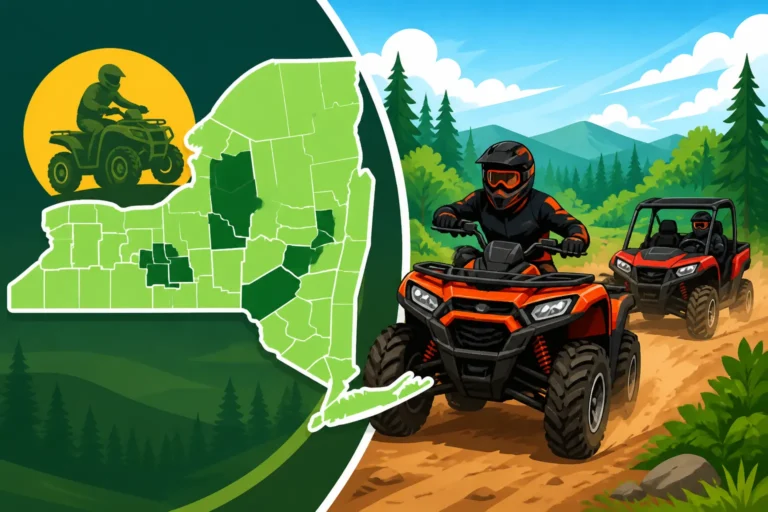
Counties and trail systems set their own schedules
New York’s ATV trail networks do not all operate under one shared calendar. A county-managed trail system, a club trail, and a private riding park may each have different opening and closing dates. Even trails in nearby areas can follow separate schedules because the agreements, terrain, and maintenance arrangements are not the same.
That means a date you hear from a friend may be right for one system and wrong for another. Lewis County’s network, Oswego County club trails, and Tall Pines ATV Park near Andover are distinct riding destinations, not interchangeable parts of one statewide trail. Before planning around a date you saw in a group chat or on an old map, check the specific system’s current notice. [New York's County Trail Systems Compared] offers useful context on how access can differ by area.
Some systems use a published seasonal calendar, while others close when conditions or landowner needs require it. A posted closing date is a planning guide, not a promise that every segment will remain open until that day. For a broader look at how opening and closing schedules are set, see [New York Riding Seasons and Trail Openings].
A familiar fall date may not apply to your ride
You may encounter trail information that refers to closing around Columbus Day. That can be a useful clue for a particular trail network, but it should not be treated as a statewide rule. One system may close shortly after the holiday, while another may set a different date or close earlier because of weather, trail conditions, or a change in access permission.
This is why search results and older posts can be frustrating: they may describe a real schedule, just not the schedule for the place you intend to ride. If you’re planning a late-season trip, look for a notice that names the county, club, park, or trail system rather than relying on a general phrase like “New York trails close in October.” The posts [Closing the Tuesday After Columbus Day in New York] and [Closing the Week After Columbus Day] refer to different scheduling examples, not a universal deadline.
As a practical habit, confirm the date close to your trip and again before you leave home. If the official notice gives a closing date but also says trails can close earlier due to conditions, plan as though that early closure is possible. It’s much easier to adjust a ride at home than to arrive with machines unloaded and discover the gate is closed.
What Can Cause a Trail to Close Early
Mud, thaw, and trail damage
A trail can become unsuitable before its calendar closing date, particularly when the ground is soft. Repeated ATV traffic over wet soil can deepen ruts, damage drainage, and make repairs harder. A route that felt firm during a dry weekend may be vulnerable after rain or a thaw, especially in shaded areas, low spots, and sections with slow drainage.
Late fall can bring sharp swings in conditions. A cold night may firm the ground temporarily, followed by a warm, wet afternoon that softens it again. A trail may look rideable at the entrance while a low section farther along is already saturated. If a system posts a closure or asks riders to stay off muddy trails, don’t treat a shallow-looking puddle as permission to continue.
Weather-related closures also protect future access. Many New York trail routes depend on agreements with private landowners. Ruts, bypasses around muddy sections, and riding around gates can strain those relationships. If you want a better sense of why conditions can affect access, [New York Trails Closed in Mud Season] and [Spring Thaw and Rutted Trails] explain the same problem from the seasonal trail-user perspective.
Snow, freeze, and changing access conditions
Snowfall does not automatically mean an ATV trail is open for winter riding. Some corridors may be shared with other users or managed for a different season. Others may close when snow, ice, or frozen ground creates unsafe or damaging conditions. A trail that appears usable from a road can still be officially closed, so visible tracks are not proof that riding is allowed.
Lake-effect snow can arrive quickly in areas such as Tug Hill, and conditions may change between the time you check a route and the time you reach the trailhead. Snow can obscure signs, gates, drainage problems, and route markers. For a late-season ride, pay attention to notices about weather closures as well as the final scheduled date. [Lake-Effect Snow and an Early Close] covers why a weather change can override a planned schedule.
Access can also change for reasons unrelated to weather. Logging, maintenance, a landowner request, or a temporary issue on a specific segment may lead to a local closure. A trail map can help you understand where the route goes, but it cannot necessarily tell you whether every segment is open today. Check notices for the whole system and for individual trail sections before setting out.
How to Confirm the Closing Date Before You Load
Check the trail system’s official information
Start with the county, club, or park responsible for the trail you plan to ride. Look for a page or notice that names the system and gives the season’s dates, current conditions, and any temporary restrictions. If the information is unclear, contact the organization directly rather than assuming a schedule from another trail network applies.
Then check for updates posted close to your ride date. A seasonal calendar may tell you the expected closing day, while a newer announcement may report an early closure or a route-specific restriction. The newer, more specific notice is the one to follow. [New York Trail Closures to Check First] is a useful reminder to check closures before traveling, and [Checking a County Notice Before You Load] focuses on the last-minute check that can save a wasted drive.
Use a trail map as a planning aid, not as the final authority on access. A mapping app such as onX Offroad can help you review the general route and understand where you intend to ride, but confirm closures through the trail system or land manager. If you use onX Offroad, compare what you see there with official notices rather than assuming a mapped line means the trail is currently open. You can also review [Downloading a County Trail Map] for another way to prepare before leaving home.
| What to check | Why it matters | What to do if it is unclear |
|---|---|---|
| Seasonal closing date | Gives the planned end of the riding season | Confirm that the date applies to your specific trail system |
| Recent closure notices | May show an early or route-specific closure | Follow the newest notice and contact the managing organization |
| Weather and trail conditions | Mud, thaw, snow, or flooding can make routes unsuitable | Postpone if conditions are poor or the system requests that riders stay off |
| Landowner or maintenance updates | Access may change even when the overall system is scheduled to be open | Check the system’s updates before departing |
| Map and route information | Helps you understand where the route and trailhead are | Cross-check mapped routes against official access information |
Make a backup plan for the ride
If the date is close to the end of the season, have a second plan before you leave. That might mean choosing a different officially open trail system, shortening the route, or postponing the trip. Don’t make your backup plan “ride around the gate” or take an unmarked path. A closed segment may cross private property or be closed specifically to prevent damage.
When using digital maps, including onX Offroad, keep in mind that a map is only one part of the decision. It can help you orient yourself, but a closure notice from the county, club, park, or landowner takes priority. Save the official trail contact details and map information before you head into areas where cell service may be unreliable.
It can also help to agree on a turnaround time with your group. On a final-season ride, people may be tempted to squeeze in one more loop, especially after a long drive. Set a time to check conditions, confirm the route remains open, and head back while there is still daylight. That small bit of planning can prevent a rushed return on unfamiliar or deteriorating trails.
How to Make the Most of the Final Riding Days
Prepare for fall conditions, not summer conditions
A late-season ride can involve colder mornings, wet leaves, shorter daylight, and quickly changing weather. Dress in layers and bring gear suitable for rain and cold, even if the forecast looks comfortable when you leave. Wet clothing and a long pause on the trail can make a mild day feel much colder than expected.
Inspect your machine before the trip, especially tires, lights, brakes, and battery condition. Mud and wet leaves can conceal ruts, rocks, and drainage channels, so a familiar route may feel different from how it rode earlier in the season. Keep a conservative pace and leave extra room between machines, especially where visibility is limited by trees or changing terrain.
Check fuel, food, water, and basic recovery supplies before departure. A mechanical issue is more stressful when daylight is fading or weather is worsening. If your group is riding a long route, make sure everyone knows the planned stopping points and has a way to communicate if the group separates.
Respect the final closure and protect future access
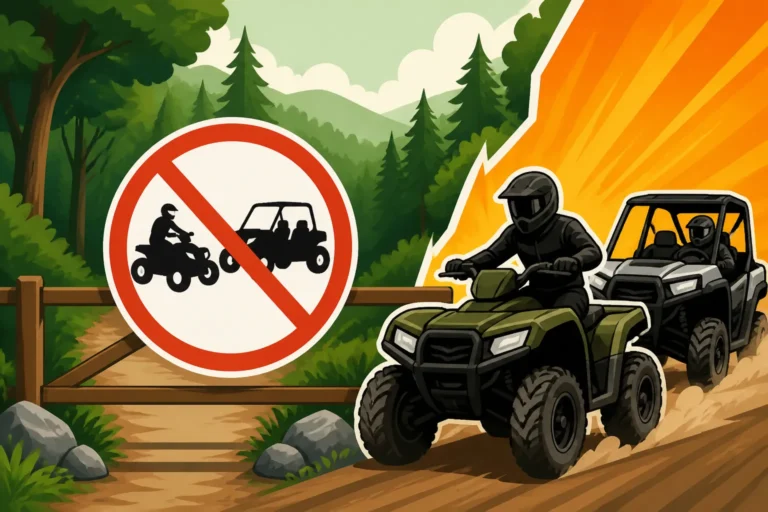
When the trail system closes, stop riding there, even if the gate appears open or you see tracks beyond it. A closing date can reflect maintenance work, seasonal agreements, landowner concerns, or conditions that are not obvious from the trailhead. Riding after closure may jeopardize access for everyone who depends on that route.
Stay on marked trails until the last day and avoid creating bypasses around puddles, barriers, or closed sections. Bypasses can widen the trail and damage surrounding land. Follow posted signs and do not assume that a route is open simply because it appears on an older paper map or digital map. [Following County Trail Markers] can help you keep your ride aligned with the system’s designated routes.
If you ride in areas with limited cell service, prepare offline navigation before leaving and tell someone your route and return plan. onX Offroad may be useful for route planning and orientation, but it should sit alongside official maps and closure updates, not replace them. For a broader look at what to verify before choosing a destination, see [New York Trail Conditions Before You Ride].
The best answer to “When is New York Trail Closing Day?” is: check the specific trail system, then confirm again before you travel. A date on a calendar is only one piece of the picture. Local notices, weather, trail conditions, and landowner access determine whether your intended route is actually open for the ride you have planned.
Disclaimer
This article is for general informational purposes only and does not constitute professional advice. Laws, prices and regulations vary by location and change over time. Consult a qualified professional for guidance on your specific situation.