Registering in June and Expiring in August
It's incredibly frustrating when you finally get your ATV registered, only to realize the expiration date is just around the corner. Many New York riders, especially those who buy or register their machines in late spring or early summer, find themselves scratching their heads, wondering why their brand-new registration is expiring in August. You just paid good money, waited for the paperwork, and now you have to do it all again in a couple of months! This guide will break down exactly why this happens, what it means for your wallet, and how you can best plan your registration to avoid this short-window conundrum.
The Unique New York ATV Registration Calendar
New York State operates on a fixed registration cycle for ATVs, which can definitely catch new riders or those new to the state off guard. Unlike car registrations that typically expire a year from your birthday or the date of purchase, ATV registrations march to a different drummer, and that drummer beats a very specific date for everyone.
Why August 31st is the Universal Expiration Date
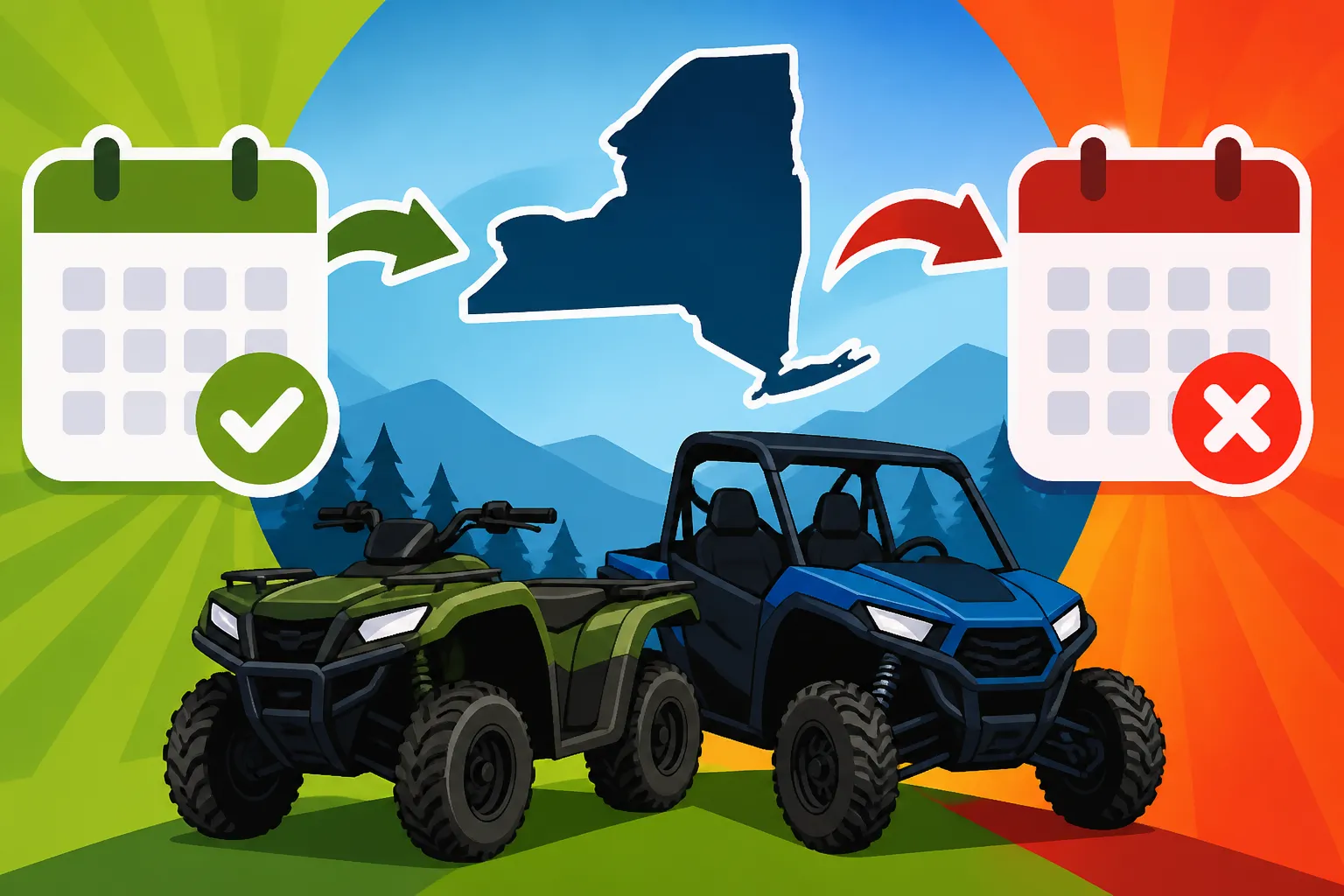
The pain point many riders experience stems from this one immutable fact: all New York ATV registrations expire on August 31st of each year. Yes, every single one, regardless of when you initially registered your machine. This isn't a random date chosen to annoy you; it's a standardized system the state uses for administrative efficiency. Imagine the DMV trying to track millions of individual expiration dates based on purchase month – it would be a logistical nightmare. By having a single, universal expiration date, the system is streamlined, making renewals more predictable for both the state and, theoretically, the riders.
This fixed date is part of [New York's Annual ATV Registration] process. It means that whether you register your ATV on September 1st, 2023, or August 30th, 2024, the registration will still expire on August 31st, 2025. This ensures that the state can process renewals in batches and allocate resources more effectively. For riders, it means you always know when your registration is due, even if the current year's duration feels incredibly short.
The State's Reasoning Behind a Fixed Date
While it might seem inconvenient, the state's choice for a fixed expiration date is rooted in simplicity and administrative practicality. A uniform date, like [New York's August 31 Expiration], simplifies renewal cycles, budget planning for trail programs, and enforcement. Instead of staggered renewals throughout the year, the DMV can focus its efforts on a concentrated period leading up to the end of August. This helps manage the flow of paperwork and ensures that funds collected from registration fees are available for trail maintenance and other ATV-related initiatives at predictable intervals.
It also means that enforcement agencies, like the New York State Police or local law enforcement, have an easier time verifying current registrations. They don't need to calculate a complex expiration based on purchase dates or other variables; they just need to check if the current year's decal is valid past August 31st. While this doesn't soften the blow of a short registration period for you, it does highlight the underlying logic from a state operations perspective.
Comparing ATV Registrations to Other Vehicle Types
This fixed expiration date is one of the distinct differences between ATV registration and other vehicle registrations in New York. For passenger cars, trucks, and motorcycles, your registration typically lasts for a full year from the date of issuance or from your birthday, giving you a complete 12 months of validity. This is why the ATV system can feel particularly unfair when you've just paid for what you assume is a year of riding.
The different approach for ATVs reflects their classification as recreational vehicles primarily used off-road, rather than for daily transportation on public roads. This distinction in how they are regulated impacts everything from titling – or lack thereof – to how their registration cycle is managed. Understanding this fundamental difference helps explain why your ATV registration behaves so uniquely compared to your car.
The Reality of Registering Your ATV in June
So, you bought that shiny new (or new-to-you) ATV in June, eagerly headed to the DMV, filled out the paperwork, and walked out with your new plate and decal. You probably paid the full annual fee, and then you looked at the expiration date: August 31st. What gives?
The Short Validity Period: June, July, August
When you register an ATV in New York State during June, you are effectively paying for just over two months of registration. Your machine will be legally registered for June, July, and August. That's it. As soon as September 1st rolls around, that registration is expired, and you'll need to renew it if you want to continue riding legally on public lands or trails. This can feel like a punch to the gut, especially after you've gone through the effort and expense of the initial registration.
Many riders mistakenly believe that if they register in June, their registration will last until the following June. Unfortunately, the universal August 31st expiration date overrides any pro-rata calculation. You're simply buying into the current registration cycle, no matter how short it is. It's a common point of confusion and frustration, and it's essential to be aware of it when planning your purchase or registration date.
The Non-Prorated Fee Dilemma
Here's the kicker: [Why New York Does Not Prorate a Late Registration]. When you register your ATV in June, you pay the full annual registration fee. New York State does not prorate the fee based on how many months are left in the registration cycle. This means you're paying the same amount for two months of riding in the late summer as someone who registered their ATV in September and got a full twelve months.
This can significantly increase your effective annual cost of riding, especially in your first year of ownership if you buy late in the season. You'll pay the initial fee, and then two months later, you'll be shelling out the same amount again for the next year's registration. It's a double hit that can be hard to swallow, but it's crucial to factor this into your budgeting if you're acquiring an ATV mid-year. Make sure you're aware of [New York ATV Registration Cost] upfront.
The Immediate Need for Renewal
Because your registration will expire on August 31st, you'll need to think about renewal almost immediately after you first register in June. The DMV typically sends out renewal notices well in advance of the expiration date, often in July or early August. This means you might receive your renewal notice even before you've fully enjoyed your initial, short registration period.
Don't ignore that renewal notice! If you plan to ride your ATV past August 31st, you must [Renewing a New York ATV Registration] promptly. Riding with an expired registration can lead to fines and legal issues, so it's far better to simply bite the bullet and get that renewal done. Even though it feels like you just paid, the state views it as a new registration cycle beginning September 1st.
Planning Your ATV Registration Strategy
Understanding New York's fixed registration cycle is key to avoiding unnecessary costs and frustrations. With a little planning, you can make sure you're getting the most bang for your buck and enjoying a full year of legal riding.
When is the "Best" Time to Register Your ATV?
If you want to maximize the length of your registration and feel like you're getting a full year's worth of value, the "best" time to register your ATV is on or after September 1st. Registering your machine on September 1st means your registration will be valid for a full twelve months, expiring on August 31st of the following year. This is the ideal scenario for new purchases, as you get an entire riding season (and more) out of your initial payment.
For example, if you register on September 1st, your registration will be valid until August 31st of the next year. This offers the longest possible validity period and ensures you're not immediately facing another renewal bill. If you're buying a new ATV in the spring or summer, it might be worth considering if you can hold off on formal registration until September 1st, especially if you only plan to ride on private land until then.
Understanding the Financial Implications of a Short Registration
Let's look at the financial side of things. If you buy and [Registering an ATV in New York] in June, you pay the full fee. Let's say, for example, the fee is around $25 for the first year (which includes the [New York ATV Plate Fee]). You'll pay that in June. Then, by late August, you'll need to pay the annual renewal fee (which is slightly less since you already have the plate), for example, $10, for the September 1st to August 31st cycle.
This means that within a span of about three months, you've spent around $35 (or whatever the current fees may be) on registration alone, just to get through your first fourteen months of ownership. Compare this to someone who buys in September and pays $25 for 12 months, then $10 a year after that. The upfront cost is higher if you register mid-cycle. It's a financial reality that often surprises people, so it's good to be prepared for it.
Tips for New Buyers or Those with Lapsed Registrations
- Plan Your Purchase Timing: If you're buying a brand new ATV, and you have flexibility, consider aiming for a purchase and registration in early September. This will give you the longest initial registration period.
- Ride Private Land Only (Temporarily): If you buy in, say, May or June, and you know you won't be using public trails until the fall, you might consider delaying registration until September 1st. Remember, New York requires registration for riding on any lands other than your own private property, so if you're only riding in your backyard, you can wait.
- Budget for the Double Hit: If you absolutely must register in late spring or summer, factor in the cost of two registration payments within a short timeframe. Don't be surprised when that renewal notice arrives!
- Stay Informed: Keep an eye on your mail for renewal notices. It's easy to forget about an August 31st expiration when you just registered a few months prior. Set a calendar reminder if you need to.
Essential New York ATV Registration Details Beyond the Date
While the expiration date is a common pain point, there are other crucial aspects of [Registering an ATV in New York] that riders should be aware of. Navigating the DMV process requires the right paperwork and understanding what constitutes proof of ownership.
Required Documents for Registration
When you head to the New York DMV to register your ATV, you'll need more than just your good intentions. The list of required documents can feel extensive, but having everything in order beforehand will save you a lot of time and a return trip. Generally, you'll need:
- Proof of Ownership: This is paramount. For a new ATV bought from a dealer, you'll typically have a Manufacturer's Certificate of Origin (MCO) or a dealer's bill of sale (Form MV-50). If you're buying a used ATV, especially one that has never been titled in New York (most ATVs aren't), you'll need a proper bill of sale from the seller. A detailed bill of sale, sometimes created with resources like LawDepot for clarity, should include the buyer's and seller's information, the ATV's VIN, make, model, year, and purchase price.
- Proof of Identity and Age: A valid New York State Driver's License or non-driver ID card is usually sufficient.
- Proof of New York Residency: This could be your driver's license, a utility bill, or other official mail.
- Proof of Insurance: You must have current New York ATV insurance coverage that meets the state's minimum requirements. You'll need to show your insurance card or a declarations page.
- Form MV-82: This is the application for vehicle registration. You'll fill this out at the DMV or download it beforehand.
- Pencil Tracing of the VIN: Yes, you read that right. New York State often requires a pencil tracing of your ATV's Vehicle Identification Number (VIN) directly from the frame. This is a crucial step to prevent fraud and verify the machine's identity.
Having these documents neatly organized will make your visit to the DMV much smoother, whether you're performing your initial [Registering an ATV in New York] or trying to figure out [New York ATV Registration Paperwork] for a used machine.
Proving Ownership Without a Title
One of the biggest sources of confusion for ATV owners in New York is the lack of a traditional title for these machines. Unlike cars, most ATVs are not issued a Certificate of Title by the state. This doesn't mean you can't prove ownership; it just means the process is different. For this reason, a comprehensive bill of sale is incredibly important for private sales. [Proving Ownership Without a Title in New York] relies heavily on a clear chain of sales documents.
When buying a used ATV, ensure you get a detailed bill of sale from the seller. This document is your primary proof of ownership. It should clearly identify the ATV by its VIN, year, make, and model, and include the names, addresses, and signatures of both the buyer and seller, along with the date of sale and purchase price. Without a title, the bill of sale acts as your legal proof that you are the rightful owner. If the seller doesn't have a formal bill of sale, you can find templates online, including from services like LawDepot, to ensure all necessary information is captured.
The ATV Plate and Validation Decal
Once your registration is successfully processed, you'll receive a physical ATV plate and a small validation decal. The plate needs to be securely mounted on the rear of your ATV, in a visible location. This is important for identification by law enforcement and trail officials. Make sure it's mounted in a way that it won't be easily damaged or lost while riding.
The validation decal is a smaller sticker that indicates the current year of your registration. This decal is usually affixed to the plate itself, or sometimes in a designated area near the VIN, as instructed by the DMV. This decal changes annually upon renewal and is the quick visual cue that your registration is current. [New York ATV Plates and Where They Mount] is a good topic to review, ensuring your plate and decal are correctly displayed to avoid any issues on the trails. Keep in mind that when [When a New York ATV Registration Expires] on August 31st, you'll need a new decal for the next registration period.
| Registration Date Range | Expiration Date | Effective Registration Period | Renewal Due Date |
|---|---|---|---|
| September 1st – August 31st (Next Year) | August 31st | Full 12 Months | Before Sept 1st |
| May 1st – August 31st | August 31st | 1 to 4 Months | Before Sept 1st |
| June 1st – August 31st | August 31st | Approx. 2-3 Months | Before Sept 1st |
| July 1st – August 31st | August 31st | Approx. 1-2 Months | Before Sept 1st |
This table clearly illustrates why registering in June can feel so short-lived. The key takeaway is that no matter when you register within a cycle, your expiration date remains fixed, and you'll pay the full fee. Therefore, strategic timing, or at least informed budgeting, is your best bet for a smooth riding season.
Disclaimer
This article is for general informational purposes only and does not constitute professional advice. Laws, prices and regulations vary by location and change over time. Consult a qualified professional for guidance on your specific situation.