Buying a Used ATV in New York
Buying a used ATV in New York can feel like navigating a maze, especially when you're excited about a great deal but unsure about the paperwork, proving ownership, or even if the machine is legitimately registrable. So many folks get stuck in limbo, having bought a quad only to discover a hurdle at the DMV. This comprehensive guide is here to clear the fog, walking you through every critical step and consideration to ensure your used ATV purchase in the Empire State is smooth, legal, and trail-ready.
Why Buying Used Can Be a Minefield in New York
It's tempting to jump on a killer deal for a used ATV you find online or through a local ad, and there are definitely gems out there. But unlike a car or even a motorcycle, ATVs in New York come with their own peculiar set of rules that can turn a sweet deal into a frustrating headache if you're not prepared. Many buyers, especially those new to the sport or to New York's specific regulations, discover these challenges only after the money has changed hands.
The "No Title" Conundrum for Many ATVs
One of the biggest head-scratchers for people buying a used ATV in New York is the fact that many machines simply don't have a traditional vehicle title. If you're coming from a state where every motorized vehicle has a title, this can feel incredibly unsettling. The New York DMV generally doesn't issue titles for ATVs, which means the ownership trail isn't as clear-cut as with your car. This isn't necessarily a red flag in itself, but it does mean you need to be extra vigilant about other forms of documentation. Understanding [Why New York Issues No ATV Title] is key to navigating this unique situation.
When there's no title, you can't just sign off on a piece of paper to transfer ownership in the way you might be used to. Instead, you're relying on a chain of other documents that prove who owned it before you. This lack of a title can make verifying the seller's legitimacy and the machine's history a little more complex, demanding a different kind of due diligence. Without a title, the bill of sale becomes paramount, transforming from a simple receipt into your primary proof of ownership.
Unregistered Machines and Ownership Proof
Many used ATVs for sale in New York might not be currently registered, or perhaps they've never been registered at all if they've only been ridden on private property or kept solely for farm use. This is where things can get tricky. If a machine hasn't been registered in a while, or ever, the seller might not have all the pristine paperwork you'd expect. Their own proof of ownership might be a stack of old registration cards, an original dealer invoice, or a bill of sale from years ago. It’s up to you, the buyer, to make sure this documentation is sufficient for your registration needs.
When a seller presents minimal paperwork, it's not an automatic deal-breaker, but it should prompt a deeper dive. You need to ensure whatever they provide will satisfy the DMV's requirements for [New York ATV Proof of Ownership Requirements]. Without a clear path to proving ownership, you could end up with a machine you can't legally ride off your own property. This is a common frustration for buyers, so always ask about the machine's registration history and documentation before you get serious about buying.
The Importance of Due Diligence
Given the complexities of ATV ownership in New York, "buyer beware" takes on a whole new meaning. It's not just about kicking the tires and checking the engine; it's about thoroughly vetting the machine's history and its legal standing. A little extra effort upfront can save you a world of grief and expense down the road, preventing you from owning a machine you can't register or that turns out to be stolen.
Due diligence extends beyond just the paperwork. It means verifying the VIN, checking for any liens, and thoroughly inspecting the machine for signs of abuse or undisclosed damage. Taking the time to do this groundwork protects your investment and ensures you're making a purchase that will bring you joy on the trails, not headaches at the DMV counter. Don't let the excitement of a new-to-you quad overshadow the critical steps of protecting yourself as a buyer.
What to Look For When Inspecting a Used ATV
Once you've found a promising used ATV, it's absolutely crucial to give it a thorough once-over. This isn't just about ensuring it runs; it's about spotting potential money pits, safety hazards, or signs of a troubled past. A visual and mechanical inspection can tell you volumes about how the machine was cared for, or neglected, by its previous owner. Bring a flashlight, dress in clothes you don't mind getting dirty, and don't be afraid to get down and look closely.
Mechanical Health: Engine, Drivetrain, Suspension
The heart of any ATV is its engine, and a used machine's engine condition is paramount. Start by checking the oil level and appearance – milky oil can indicate water contamination, while excessively dark or sludgy oil suggests poor maintenance. Listen for unusual noises when the engine is running, especially knocking or excessive smoke from the exhaust. A test ride, if possible and safe, will reveal how the engine performs under load, checking for smooth acceleration and shifting. Don't forget to examine the air filter – a dirty one points to neglect and potentially dusty riding conditions that can harm the engine.
Beyond the engine, the drivetrain and suspension are critical for a safe and enjoyable ride. Look for excessive play in the universal joints, drive shafts, or chain/belt drive system. Check the tires for uneven wear, which could signal suspension issues, and inspect the shocks for leaks or obvious damage. Bounce the machine at each corner to test the damping. Worn wheel bearings, often indicated by play when wiggling a tire, are a common repair on older machines. These components are expensive to replace, so identifying wear here can be a significant bargaining chip or a reason to walk away.
Frame Integrity and Hidden Damage
The frame is the backbone of the ATV, and any damage here can be catastrophic. Carefully inspect the entire frame, especially around welded joints, for cracks, bends, or signs of previous repair. Look under the machine for dents or scrapes on the skid plates and frame rails, which indicate hard riding or impacts. Serious frame damage can compromise the ATV's structural integrity, making it unsafe to ride, and often signals that the machine has been involved in a major incident.
Hidden damage can also manifest in bent handlebars, tweaked footpegs, or misaligned wheels. Stand back and eye the ATV from the front and rear to see if everything looks straight. Small cosmetic scuffs are expected on a used machine, but anything that looks like a major impact or structural weakness should raise a red flag. If you suspect frame damage, it's best to consult a professional mechanic or simply move on; repairing a compromised frame is often costly and complex.
The All-Important VIN: Location and Verification
The Vehicle Identification Number (VIN) is the unique identifier for your ATV, much like a fingerprint. It's absolutely critical to locate it, verify it matches any paperwork, and ensure it hasn't been tampered with. Most ATVs have the VIN stamped into the frame, usually on the front right-hand side near the steering stem, or sometimes on a frame rail near the engine. It's a series of 17 alphanumeric characters.
Compare the VIN on the machine to the VIN listed on any bill of sale, registration cards, or original dealer paperwork. If there's a discrepancy, stop the transaction immediately. Also, carefully examine the VIN stamping itself. Does it look original and uniform, or are there signs of grinding, re-stamping, or plates being attached? A tampered VIN is a huge red flag and strongly suggests the machine is stolen or has a problematic history. In New York, for some registration processes, you might even need [Why New York Wants a Pencil Tracing of the VIN] to ensure accuracy. Taking a photo of the VIN is also a good idea for your records.
Understanding New York's Ownership Proof Requirements
So, you've found a machine that looks mechanically sound and has a clean VIN. Great! Now comes the crucial step of ensuring you can actually prove you own it and get it registered. This is where New York's "no title" situation really comes into play, making your paperwork your primary defense against future headaches. Without the right documentation, your shiny new-to-you ATV is just a yard ornament.
Why a Bill of Sale Is Your Best Friend
Since many ATVs in New York don't have titles, the bill of sale isn't just a nicety; it's your absolute best friend. This document legally transfers ownership from the seller to you. It needs to be comprehensive and clearly state certain vital information. A good bill of sale should include: the full names and addresses of both the buyer and seller, the date of sale, the purchase price, the make, model, year, and most importantly, the VIN of the ATV. It should also specify that the seller is transferring all rights and interests to the buyer, and that the machine is sold "as-is" (unless otherwise specified). Both parties should sign and date it, and it's always a good idea to have it notarized if possible, though not always required by the DMV, it adds an extra layer of protection.
Having a robust bill of sale will be your primary document when you go to [Registering an ATV in New York]. It's the key piece of evidence that tells the DMV you are the new rightful owner. You can find templates for a comprehensive bill of sale online, or utilize services like LawDepot to create a legally sound document customized for your transaction. Don't skimp on this step; a hastily scrawled note on a napkin simply won't cut it. For more details on what needs to be included, check out [New York ATV Bill of Sale Requirements].
When an MV-51B Comes into Play
In cases where a machine has never been issued a title (which, again, is most ATVs in New York), the New York DMV often requires a specific form called an MV-51B, "Certificate of Sale." This form is used for transferring ownership of non-titled vehicles, and it's usually filled out by a dealer. However, if you're buying from a private party who might have purchased the ATV new from a dealer, that dealer should have provided an MV-51B to them. It essentially acts as a mini-title, showing the chain of ownership for non-titled vehicles.
The MV-51B traces the first sale of the ATV from the manufacturer to the dealer, and then from the dealer to the first retail purchaser. Subsequent private sales typically rely on a strong bill of sale between private parties. However, if the machine is relatively new and you're the second owner, the original MV-51B, combined with a bill of sale from the first owner to you, can be very helpful. It's a document that further legitimizes the chain of ownership. You can find more information on this specific form in [MV-51B and New York's Non-Titled Vehicles].
Dealing with a Seller Who Never Registered
This is a common scenario that can cause serious headaches for new buyers. You find a great quad, the seller seems legitimate, but they admit they've never registered it. Maybe it was used exclusively on their farm, or bought decades ago and ridden only on private land. The problem isn't necessarily that they never registered it, but that their proof of ownership might be weak or nonexistent. What do they have? A very old bill of sale? Just the original dealer invoice? Nothing at all?
If the seller has no registration history and minimal proof of ownership, you're going to have a hard time convincing the DMV that you legitimately own the machine. They will need something concrete. This often means tracking down older paperwork, or at the very least, ensuring the bill of sale you create is exceptionally detailed and notarized, along with a statement from the seller explaining the lack of prior registration. For guidance on navigating this specific challenge, look into [Proving Ownership Without a Title in New York]. If the seller can't provide sufficient documentation to establish a clear chain of ownership, it might be safer to walk away.
Navigating the Purchase Transaction
You've inspected the ATV, confirmed the VIN, and discussed the necessary paperwork. Now it's time to actually make the deal. This stage is where you formalize the agreement, exchange money, and truly transfer ownership. Doing this correctly protects both you and the seller and ensures there are no lingering questions or disputes after the fact.
The Role of a Written Sales Agreement
While a bill of sale is essential, a more comprehensive "sales agreement" or "purchase agreement" can offer even greater protection, especially for higher-value machines. This document can outline more than just the transfer of goods; it can detail terms like the "as-is" condition, any warranties (or lack thereof), agreed-upon repairs prior to sale, and even payment schedules if it's not a single lump sum. It's a good practice to have all terms in writing to prevent misunderstandings later.
A robust sales agreement template, perhaps found through a legal document service like LawDepot, allows you to specify that the machine is free of liens or encumbrances, and that the seller warrants they have the legal right to sell it. This adds an extra layer of legal security for you as the buyer. Both parties should review, understand, and sign this agreement. Think of it as putting every spoken agreement down on paper, leaving no room for "he said, she said."
Protecting Yourself with Payment Methods
How you pay for the ATV can also impact your security. While cash is often king in private sales, it leaves no paper trail and offers no recourse if something goes wrong. For larger sums, a cashier's check or a wire transfer is generally safer than a personal check, which can bounce. However, even with a cashier's check, verify its legitimacy with the issuing bank before handing over the ATV or signing off on the sale. Meeting at your bank or credit union to conduct the transaction can add a layer of security, as the bank can verify funds and even facilitate the transfer.
Never pay the full amount before you have the ATV, all agreed-upon paperwork (bill of sale, past registration, original invoices, etc.), and keys in hand. If you're using a third-party escrow service, ensure it's a reputable one. Be wary of sellers who insist on unusual payment methods or demand payment before you've had a chance to inspect the machine thoroughly. A legitimate seller will usually be flexible within reason to ensure a secure transaction for both parties.
Sales Tax and Registration After the Sale
Once the ATV is officially yours, your next stop (after celebrating a little!) will be the New York DMV. You'll need to pay sales tax on your purchase, which will be calculated based on the purchase price stated on your bill of sale. New York has a state sales tax, and most counties add their own local sales tax on top of that, so the total percentage can vary depending on where you reside. Be prepared for this additional cost on top of the purchase price.
You'll also need to complete the registration process. This involves submitting your proof of ownership (your bill of sale, and any other relevant forms like an MV-51B), proof of insurance, and paying the registration fees. The DMV clerk will inspect your paperwork and issue you a new registration certificate and an ATV plate. For a full breakdown of what to expect, read up on [New York ATV Registration and Sales Tax] and [New York ATV Registration Paperwork]. Make sure you have all your ducks in a row before heading to the DMV to avoid multiple trips.
Common Pitfalls and How to Avoid Them
Buying a used ATV, especially privately, comes with its share of potential traps. Being aware of these common pitfalls can help you steer clear of a bad deal and ensure your purchase is a successful one. It's not just about the condition of the machine, but also about its legal status and suitability for New York's regulations.
Beware of Machines Too Wide or Heavy for Registration
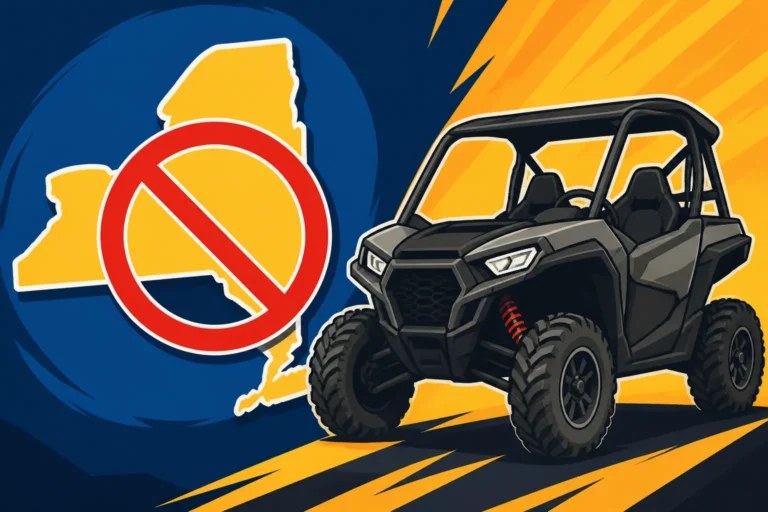
This is a huge one in New York, and it catches many buyers by surprise. New York's definition of an "ATV" for registration purposes is quite specific, including a strict width limit of 70 inches and a weight limit of 1,000 pounds. Many modern Side-by-Sides (UTVs) and even some larger, more powerful ATVs exceed these limits. If a machine is wider than 70 inches or heavier than 1,000 pounds (dry weight, typically), you will likely not be able to register it as an ATV in New York. This means you can only ride it on private property, or in specific out-of-state parks that accommodate UTVs.
Before you even fall in love with a used machine, measure its width and check its dry weight specification. A quick online search for the make and model will usually give you these specs. Imagine buying a powerful side-by-side only to find out it's [New York's 70-Inch Width Limit] means you can't ride it on any designated trail system. This is a common and incredibly frustrating scenario. Always verify these dimensions before you commit to buying, as you might end up with a machine you can't legally ride where you want to.
Avoiding Stolen ATVs
The last thing you want is to accidentally buy a stolen ATV. Not only will you lose your money, but you'll also have the hassle of dealing with law enforcement. This is why verifying the VIN is so crucial. Before you finalize any purchase, you should consider performing a VIN check. While New York doesn't have a public database for ATV theft in the same way cars do, you can contact your local law enforcement agency's non-emergency line and ask them to run the VIN through their database. Some private services also offer VIN checks, though their ATV data might be less comprehensive than for cars.
If a deal seems too good to be true, it probably is. Be wary of sellers who are cagey about providing the VIN upfront, who have no paperwork at all, or who are selling a machine for a fraction of its market value. These are all potential signs of a stolen machine. Always meet the seller in a safe, public place, and never feel pressured to make a quick decision. Your vigilance here protects your wallet and keeps you out of legal trouble.
The "Too Good to Be True" Scenario
We all love a bargain, but sometimes a price that seems unbelievably low is a major warning sign. A heavily discounted price on a seemingly perfect ATV could indicate a variety of problems: it might be stolen, have undisclosed mechanical issues, or come with a clouded ownership history. Be realistic about market values for the make, model, and year you're looking at. Research what similar machines are selling for in your area.
If a seller is rushing you, refusing to let you inspect the machine thoroughly, or avoiding questions about its history and paperwork, step away. It's far better to miss out on a potential "deal" than to end up with a money pit or a machine you can't legally register or ride. Trust your gut. If something feels off, it probably is. Take your time, ask all your questions, and be prepared to walk away if you're not completely comfortable with the purchase.
After the Purchase: Getting Your ATV Registered
Congratulations! You've successfully navigated the inspection and purchase of your used ATV. Now, before you hit the trails, there's one final, absolutely critical step: getting it registered with the New York Department of Motor Vehicles. Don't skip this, as riding an unregistered ATV on designated trails or public lands can lead to hefty fines.
Gathering Your Paperwork for the DMV
This is where all that careful due diligence pays off. When you head to the DMV, you'll need a specific set of documents to prove ownership and get your new registration. Typically, this includes:
- Your Bill of Sale: This is your primary proof of ownership. Make sure it's complete, signed by both parties, and includes all the necessary details like the VIN, purchase price, and contact information for buyer and seller.
- Proof of Identity: A valid New York driver's license or other government-issued ID.
- Proof of Insurance: New York mandates ATV insurance. You'll need an insurance card or policy declaration page showing that you have the minimum required coverage. We'll delve into this more in the next section, but it's often a prerequisite to even register.
- Payment for Fees: Be ready to pay the registration fee and sales tax.
For machines where the previous owner also had an MV-51B from a dealer, bring that along too, as it helps establish the chain of ownership. It's always a good idea to call your local DMV office beforehand or check their website for the most current list of required documents, as requirements can sometimes have slight variations.
The Registration Process Step-by-Step
Once you have all your paperwork, the registration process itself is fairly straightforward.
- Visit Your Local DMV Office: While some vehicle transactions can be done online, initial ATV registrations often require an in-person visit.
- Submit Your Documents: Hand over your bill of sale, proof of identity, and insurance information to the clerk. They will review everything for completeness and accuracy.
- Fill Out Necessary Forms: The DMV will have you complete a registration application form (often a general vehicle registration form, as there isn't a specific [Why New York Has No Form MV-82ATV]).
- Pay Fees and Sales Tax: The clerk will calculate the sales tax owed (if any, as you may have already paid a dealer) and the registration fee. Be prepared for the [New York ATV Registration Cost].
- Receive Your Registration and Plate: Once everything is processed and paid, you'll be issued a temporary registration, a permanent registration certificate, and your New York ATV plate. Make sure you understand [New York ATV Plates and Where They Mount].
Keep all your original documents, especially the bill of sale, in a safe place. The DMV will likely keep copies, but you want your own records.
Don't Forget Insurance!
This cannot be stressed enough: New York requires mandatory ATV insurance for any ATV that will be operated off private property, whether on designated trails, public land, or crossing roads. You simply cannot register an ATV without proof of insurance. This means you need to contact an insurance provider and secure a policy before you head to the DMV.
Your policy must meet New York's minimum liability coverage requirements. This typically includes coverage for bodily injury to one person, bodily injury to two or more people, and property damage. Even if you only plan to ride on your own land, having insurance is a wise choice for protection against accidents. An authorized insurer in New York must issue the policy. Make sure your insurance card is always with you when you ride, alongside your registration. For a deep dive into the specifics, check out [New York ATV Insurance Requirement] and [New York's Mandatory ATV Insurance]. It's a small annual cost compared to the potential financial devastation of an uninsured accident.
Disclaimer
This article is for general informational purposes only and does not constitute professional advice. Laws, prices and regulations vary by location and change over time. Consult a qualified professional for guidance on your specific situation.