New York’s 1,000-Pound Weight Limit
It can be incredibly frustrating to purchase an ATV, full of excitement for hitting New York's trails or even just using it around your property, only to find yourself utterly confused or outright denied when you try to register it at the DMV. One of the biggest roadblocks many riders encounter, often unexpectedly, is New York State's very specific and often outdated 1,000-pound weight limit for what it legally defines as an "all-terrain vehicle." This guide is here to unravel the complexities of this rule, help you understand why it exists, how it impacts your machine, and what your options are.
Understanding New York's ATV Definition
New York State's legal definition of an "all-terrain vehicle" is quite particular, and it's the foundation upon which all registration rules are built. Unlike many other states that have updated their regulations to encompass the newer, larger machines popular today, New York's laws largely predate the modern side-by-side and even some of the heavier utility ATVs. This can lead to a significant disconnect between what riders consider an ATV and what the state will actually allow on its designated trails.
The Legal Framework for ATVs
At its heart, New York Vehicle and Traffic Law (VTL) Section 2281 defines an all-terrain vehicle. This isn't just a casual description; it's a precise legal framework that dictates everything from registration requirements to where you can ride. The key elements of this definition involve several physical characteristics of the machine, including its width, weight, tire design, and engine size. These aren't suggestions; they are hard limits. If your machine doesn't fit neatly into this definition, it simply isn't an "ATV" in the eyes of the New York DMV, regardless of what the manufacturer or your friends call it. This legal definition is the first hurdle many riders face, often without realizing it until they're standing at the registration counter.
The implications of this legal framework are vast. For instance, if a machine exceeds these defined limits, it won't be eligible for an ATV registration, which in turn means it cannot legally be operated on any public land or designated trail system in New York. This includes county trails and club trails that require a valid New York ATV registration. [Do You Need to Register an ATV in New York?] covers more on the fundamental requirement, but the specifics of what can be registered are rooted here. It’s not about whether you want to register it; it’s about whether the state will allow you to, based on its physical characteristics. Many enthusiasts are caught off guard when their brand-new, powerful machine doesn't fit the mold, leading to confusion and disappointment.
Why Weight Matters for Registration
The 1,000-pound weight limit isn't an arbitrary number; it's a critical component of New York's ATV definition. The state's intent behind this limit, when it was initially enacted, was to differentiate between smaller, traditional single-rider ATVs and other types of off-road vehicles. The underlying assumption was that lighter machines would have a lesser impact on trails and would behave differently in terms of safety and maneuverability compared to heavier vehicles. While modern engineering has evolved significantly, making heavier machines incredibly agile and safe, the law has not kept pace.
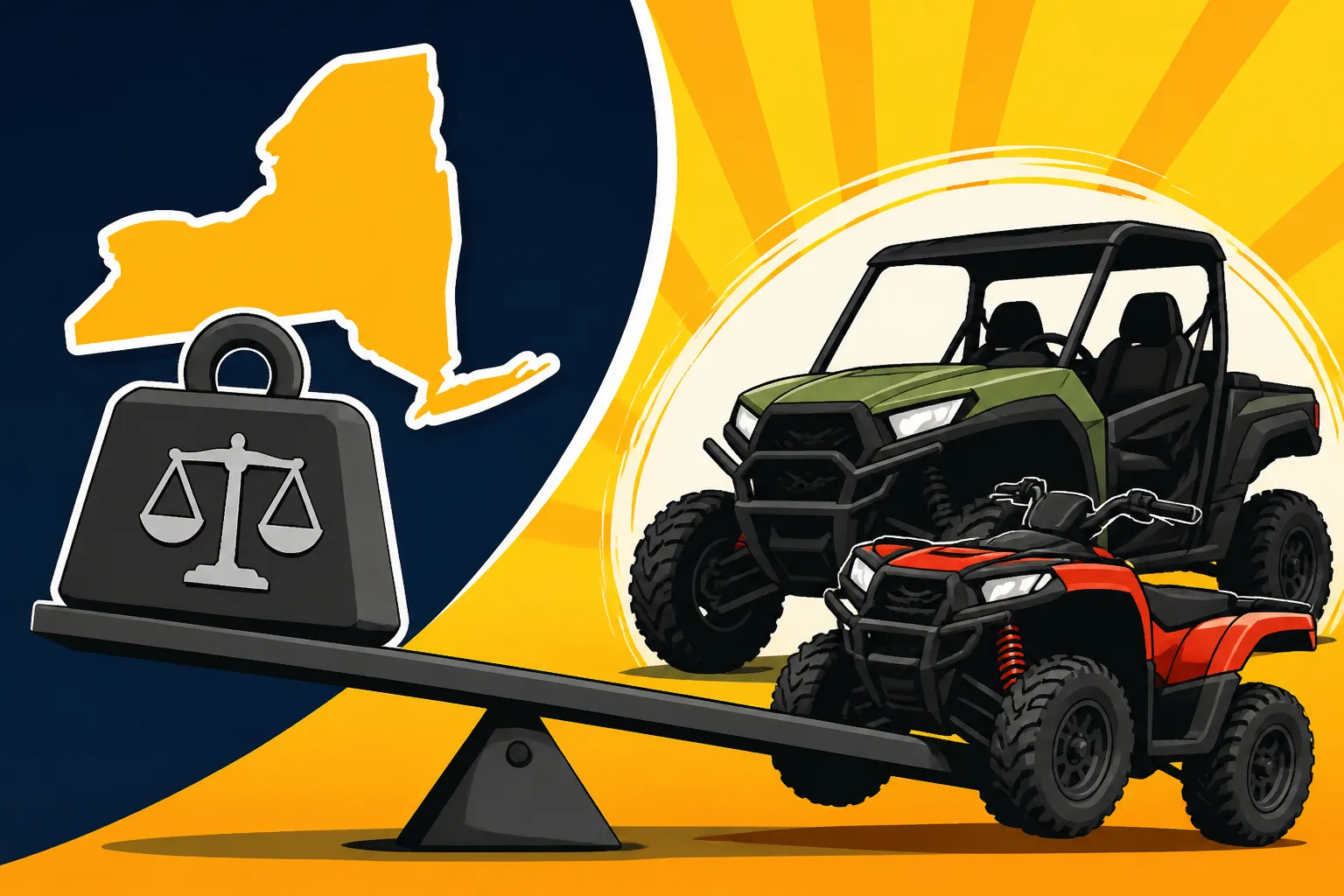
This weight stipulation directly affects whether your machine can legally receive a New York ATV registration. If your ATV, or what you perceive to be an ATV, weighs more than 1,000 pounds when empty – that’s without fuel, oil, coolant, or riders – then it falls outside the state's official definition. This means you cannot register it as an ATV, period. It’s a hard stop. This is often where prospective side-by-side owners run into trouble, as most modern UTVs easily surpass this weight threshold. It's a fundamental aspect of New York's 1,000-Pound Weight Limit that causes many headaches.
The History of the 1,000-Pound Rule
To truly understand why New York adheres to this 1,000-pound limit, it helps to look back at the history of ATV legislation. When these laws were initially crafted, the off-road vehicle market was vastly different. The typical ATV was a three- or four-wheeled machine, usually single-rider, with relatively modest engine sizes and weights. These machines were often designed for recreational use or light utility work, and their dimensions, including weight, reflected that. The 1,000-pound mark was considered a reasonable dividing line for what constituted a "lightweight" off-road vehicle.
Over the years, as manufacturers began producing larger, more powerful machines, including two-up ATVs and eventually the wildly popular side-by-sides (UTVs), the existing legislation remained largely unchanged in New York. While other states adapted their laws to create new categories for these evolving vehicles, New York did not. This legislative inertia means that a rule designed for machines from decades past is still applied rigidly to today's high-tech, often much heavier, vehicles. Efforts to modernize these laws, such as [A New York Bill to Widen the ATV Definition] or [New York's Proposed 2,000-Pound ATV Weight Limit], have been introduced in the legislature, but as of now, they have not become law, leaving the old rules firmly in place.
Measuring Your Machine Against the Limit
So, you suspect your machine might be pushing the 1,000-pound limit, or perhaps you just want to be absolutely sure before heading to the DMV. Getting an accurate weight measurement is crucial, and it’s not always as straightforward as it might seem. Many factors can influence the final number, and understanding what counts and what doesn’t can save you a lot of frustration.
How to Accurately Weigh Your ATV
Getting an accurate weight for your ATV or UTV is the first step in determining if it meets New York's registration criteria. The most reliable method is to take your machine to a certified scale. Many truck stops have public scales, often referred to as CAT scales, that can provide a precise weigh ticket. Some scrapyards or aggregate suppliers might also have scales accessible to the public. Make sure the machine is empty: no riders, no cargo, no extra fuel cans, and preferably with minimal fuel in the tank (or note the fuel capacity and subtract its weight). You're looking for the dry weight or curb weight as close as possible to the manufacturer's specification for an empty machine.
Before you go, check with the scale operator to ensure they can accommodate an ATV and provide a printout. It’s helpful to have a clear understanding of the manufacturer’s stated dry weight, which is often listed in the owner’s manual or on the manufacturer’s website. Compare this to your scale reading. Keep in mind that any aftermarket accessories you’ve added, such as winches, heavy-duty bumpers, cargo racks, or larger tires, will increase the actual weight of your machine beyond its factory specifications. If you’re purchasing a used machine, don’t just rely on the seller’s word; get an actual weight or verify the factory specs yourself.
What Counts Towards the 1,000 Pounds
New York's 1,000-pound limit refers to the unladen weight of the machine. This means the weight of the vehicle itself, without any passengers, cargo, or significant additional load. However, it does include all standard factory equipment and any permanent modifications or accessories you've added. Think of it as the weight of the machine ready to be fueled and ridden, but not yet fueled or ridden.
This is where many people get tripped up. A factory-installed winch, a sturdy brush guard, a full-size spare tire mounted on the back, or even aftermarket wheels and tires that are heavier than stock all contribute to this total. While a gallon of fuel might not seem like much, it adds roughly 6 pounds. If your machine has a 5-gallon tank, that's 30 pounds right there. While you can try to weigh it with an empty tank, the state's intent is generally for the vehicle as it sits, equipped. The key is to be realistic about what your machine weighs in its normal, ready-to-ride configuration, sans rider and cargo.
Common Mistakes in Weight Assessment
One of the most common mistakes riders make when assessing their machine's weight is simply looking up the manufacturer's "dry weight" online and assuming that's the final answer. While a good starting point, this figure rarely includes the weight of a full tank of fuel, oil, or coolant, and certainly not any accessories you or a previous owner might have added. Many riders overlook the added weight of things like storage boxes, upgraded suspension components, or even heavier-duty tires.
Another mistake is to confuse gross vehicle weight rating (GVWR) with unladen weight. GVWR is the maximum operating weight, including fuel, cargo, and riders, which is always much higher than the unladen weight. You need the unladen weight, as free of consumables and riders as possible. Always aim for an actual measurement on a scale if you are close to the limit, and if you are buying a used machine, especially one that looks heavily customized or accessorized, consider the cumulative weight of those additions. It's often the small things that push a machine over the edge.
The Impact on Different Machine Types
The 1,000-pound weight limit has a profoundly different impact depending on the type of off-road vehicle you own or are looking to purchase. What might be a non-issue for a smaller, older ATV becomes an insurmountable hurdle for many modern machines, particularly side-by-sides. This disparity highlights how New York's regulations are often out of step with the current market.
Standard ATVs and the Weight Limit
For many traditional, single-rider ATVs, especially those with smaller to mid-range engine displacements (think 300cc to 500cc), the 1,000-pound limit typically isn't a problem. Most of these machines, even with a full tank of gas and a few light accessories, will comfortably come in under the limit. Even some larger 700cc or 800cc single-rider ATVs might still qualify, depending on their specific design and how heavily they are accessorized.
However, even with standard ATVs, it's wise to check. As engines have grown and manufacturers have added more robust frames, independent suspension, and comfort features, some of the larger, more luxurious single-rider ATVs can start to creep closer to, or even exceed, the 1,000-pound mark. If you’re considering a heavy-duty utility ATV designed for significant hauling or towing, or a large two-up ATV (designed to carry a driver and one passenger), you absolutely need to verify its unladen weight. While [Two-Seaters That Still Meet New York's 1,000-Pound Limit] might exist, they are becoming increasingly rare as manufacturers prioritize comfort and capability, often leading to increased weight. Always confirm the actual weight of the machine you intend to purchase or register.
Why Modern Side-by-Sides Often Fail
This is where the 1,000-pound weight limit becomes a major point of contention and frustration for many New York riders. The vast majority of modern side-by-sides (UTVs), whether they are recreational sport models, utility workhorses, or multi-passenger vehicles, significantly exceed New York's 1,000-pound weight limit. Even the smallest, most basic two-seater UTVs frequently weigh 1,200 to 1,500 pounds or more, and larger four- or six-seater models can easily tip the scales at 1,800 to 2,500 pounds.
This means that if you own a Polaris Ranger, a Can-Am Defender, a Kawasaki Mule, a Yamaha Wolverine, or virtually any other popular side-by-side, it simply cannot be registered as an "ATV" in New York State. This isn't a loophole or a technicality; it's a direct consequence of the state's outdated legal definition. The machine might look and act like an off-road vehicle, but if it's over 1,000 pounds, it's not an ATV in New York's eyes, and thus, [Why Most Side-by-Sides Cannot Be Registered in New York] becomes a stark reality. This can be a huge disappointment for riders who have invested significant money in these versatile machines, only to find their options for legal riding on public land are severely restricted.
Electric ATVs and Their Weight Challenges
As electric ATVs and UTVs gain popularity, they introduce another layer of complexity to New York's weight rules. While electric machines offer benefits like quiet operation and instant torque, the battery packs required to power them are often quite heavy. This can push some electric ATVs, which might otherwise fit the traditional ATV mold, over the 1,000-pound limit.
For instance, an electric ATV designed to be competitive with gasoline-powered machines might require a larger, heavier battery to achieve comparable range and power. While manufacturers are constantly working on lighter, more energy-dense batteries, this technology is still evolving. Therefore, if you are considering an electric ATV, it is just as crucial, if not more so, to verify its unladen weight against New York's limit. Just like their gasoline counterparts, if an electric ATV exceeds the 1,000 pounds, it faces the same registration obstacles.
What Happens If Your Machine Exceeds the Limit
So, you've weighed your machine, consulted the manufacturer's specs, and the cold, hard truth is that your beloved quad or side-by-side tips the scales over New York's 1,000-pound limit. What now? It’s a common scenario, and it leads to some very real consequences, particularly regarding where and how you can legally operate your machine within the state.
Registration Denial and Its Consequences
The most immediate and significant consequence of owning a machine over 1,000 pounds in New York is the inability to register it as an ATV with the Department of Motor Vehicles. This isn't a matter of paying a higher fee or seeking a special permit; if it doesn't meet the definition, it simply cannot be registered under the ATV category. This lack of registration has a cascade of effects.
Without a New York ATV registration, your machine is legally prohibited from operating on any public lands, designated ATV trails, or roads that have been specifically opened to ATVs in New York State. This includes popular trail systems in Lewis County or Oswego County. You cannot even cross a public road legally without registration. Operating an unregistered machine on these lands can lead to significant fines, impoundment of your vehicle, and other legal penalties. It severely restricts your riding opportunities, essentially confining your machine to private property where you have explicit permission to ride, or to other states with more permissive registration laws. [New York Fines for an Unregistered ATV] can be quite steep, making the risk not worth taking.
Alternative Riding Options
If your machine exceeds the 1,000-pound weight limit and thus cannot be registered as an ATV in New York, your riding options become much more limited, but not entirely non-existent. The primary avenue for riding such a machine is on private land where you have explicit permission from the landowner. This means your own property, a friend's farm, or leased land. Even on private land, you still need to adhere to general safety rules, and importantly, you should still carry insurance, as accidents can happen anywhere. [Riding Your Own Property Under New York Law] clarifies that while registration isn't needed there, other laws, like insurance, still apply if you venture beyond your own property lines.
Another possibility, though often less convenient, is to transport your machine to other states that have more inclusive definitions for ATVs or specific registration categories for UTVs. States like Pennsylvania or Vermont, for instance, have different rules that might allow for the registration and legal operation of heavier machines. However, this means trailering your machine out of New York every time you want to ride, which adds significant time, effort, and expense to your hobby. It's a workaround, not a solution for riding within New York.
Proposed Changes and Future Outlook
The good news for owners of heavier machines is that there has been ongoing recognition of the outdated nature of New York's ATV laws. Various bills have been introduced in the state legislature over the years to modernize the definition of an ATV, often with provisions to allow for the registration of side-by-sides or to increase the weight and width limits. For example, there have been discussions around [A New York Bill on UTV Registration] which would create a separate category for these machines, or raising the weight limit to better accommodate current models.
These legislative efforts reflect a growing understanding that the existing laws no longer serve the needs of many New York riders or the broader recreational vehicle industry. However, passing new legislation can be a slow and complex process, with bills often stalling in committee. While there is hope for future changes that could open up more riding opportunities for owners of heavier machines, for now, the 1,000-pound weight limit remains firmly in place. Riders should stay informed about legislative developments, but operate under the current rules until new laws are officially enacted.
Documenting Ownership Without Registration
Even if your ATV or UTV can't be registered in New York due to the 1,000-pound weight limit (or the 70-inch width limit, for that matter), it's absolutely vital to have proper documentation of ownership. Just because you can't get a plate doesn't mean your machine isn't a valuable asset, and proving you own it is critical for various reasons, from insurance claims to resale.
Proving Ownership for Unregisterable Machines
When a machine doesn't qualify for state registration, you lose one of the most common and widely accepted forms of ownership proof: the registration document itself. This makes other forms of documentation even more critical. You might think, "Well, if I can't register it, who cares?" But imagine a scenario where your machine is stolen, or you want to sell it, or perhaps it's involved in an accident on private property. Without formal proof of ownership, you could face significant challenges.
Therefore, for any ATV or UTV that won't be registered in New York, you must diligently keep all purchase records. This includes the original bill of sale from a dealer, any financing paperwork, and if you bought it used, a comprehensive bill of sale from the previous owner. [Proving Ownership Without a Title in New York] outlines why such documents are indispensable, especially for machines that New York doesn't title in the first place, which includes all ATVs. This paper trail becomes your primary legal defense of ownership.
Bill of Sale Importance
The bill of sale is arguably the single most important document for proving ownership of an unregisterable ATV or UTV in New York. It acts as a legal contract between the buyer and the seller, formally transferring ownership of the machine. A robust bill of sale should include:
- The full names and addresses of both the buyer and the seller.
- A detailed description of the ATV or UTV, including its make, model, year, and crucially, its Vehicle Identification Number (VIN) or frame number.
- The purchase price and date of sale.
- A clear statement that the machine is being sold "as-is" (or any other agreed-upon conditions).
- Signatures of both parties.
Having a complete and accurate bill of sale is essential for your peace of mind. It protects you if questions arise about the machine's origin, helps your insurance company process a claim, and is absolutely necessary when you decide to sell the machine to someone else. It's the document that links you directly to the machine's legal chain of ownership.
The Role of a Valid Bill of Sale
A valid bill of sale isn't just a receipt; it's a legal instrument. For machines that don't get a title or registration, it serves as the foundational document for ownership. This is particularly relevant in situations involving disputes, theft recovery, or even just demonstrating to a potential buyer that you are the legitimate owner. Relying on a hastily scrawled note or a verbal agreement is a recipe for trouble down the line.
When creating a bill of sale for an ATV or UTV, especially a private sale, using a standardized, legally sound template can be incredibly helpful. Services like LawDepot offer templates for bills of sale that can be customized to include all the necessary information, ensuring you don't miss any critical details. While it doesn't replace legal advice, a well-drafted bill of sale from a reputable source like LawDepot provides a stronger legal foundation than a simple handwritten note. It provides clarity and protects both the buyer and the seller, making any future transactions or ownership claims much smoother. Always keep the original in a safe place.
New York ATV Weight and Width Limits: A Comparison
| Machine Type | New York Weight Limit (Unladen) | New York Width Limit | Typically Qualifies for NY ATV Registration? | Common Examples of Non-Qualifying Machines |
|---|---|---|---|---|
| Traditional ATV | Under 1,000 lbs | Under 70 inches | Often, if within limits | Most single-rider 300-800cc ATVs |
| Two-Up ATV | Under 1,000 lbs | Under 70 inches | Sometimes, check specifics | Larger touring ATVs, some utility quads |
| Sport Side-by-Side | Over 1,000 lbs | Often over 70 inches | No | Polaris RZR, Can-Am Maverick, Yamaha YXZ |
| Utility Side-by-Side | Over 1,000 lbs | Often over 70 inches | No | Polaris Ranger, Can-Am Defender, Kawasaki Mule |
| Electric ATV/UTV | Under 1,000 lbs (ATV) | Under 70 inches (ATV) | Varies, check battery weight | Some electric ATVs, most electric UTVs |
Preparing for the Registration Process
Even if you're confident your ATV meets the 1,000-pound weight limit, the registration process at the New York DMV still requires careful preparation. Knowing exactly what documents to bring and what information you’ll need can save you a frustrating trip and potential delays. The DMV can be a stickler for details, and any missing piece of paperwork can send you home empty-handed.
Required Documents for a Compliant ATV
For an ATV that does meet the New York weight and width requirements, you'll need a specific set of documents to complete your registration. This typically includes proof of ownership, such as a manufacturer's statement of origin (MSO) for a new machine or a bill of sale for a used one. Remember, New York does not issue titles for ATVs, so the MSO or bill of sale is your primary proof of ownership. You'll also need proof of New York residency and identity, typically a valid New York State driver's license or non-driver ID.
Beyond ownership and identity, you must also provide proof of insurance that meets New York’s mandatory ATV insurance requirements. [New York's Mandatory ATV Insurance] is not optional for registered machines. The DMV will want to see an insurance card or policy declaration page from an insurer authorized to do business in New York. Finally, you’ll need to complete the necessary DMV forms, often Form MV-51B for non-titled vehicles, and be prepared to pay the [New York ATV Registration Cost] and [The One-Time Plate Fee in New York]. It’s a lot to juggle, but having everything in order before you go is key.
Dealer vs. Private Sale Paperwork
The paperwork required for registration can differ slightly depending on whether you purchased your ATV from a licensed New York dealer or through a private sale. When you buy from a dealer, they typically handle much of the initial paperwork, including sales tax collection and sometimes even submitting your registration application. They will provide you with the MSO and a bill of sale, and often temporary operating papers. [What New York ATV Dealers File on Form RV-2] shows the specific form dealers use for registration.
For a private sale, the responsibility for gathering and completing all the documentation falls squarely on you, the buyer. You must ensure you receive a complete and accurate bill of sale from the seller, especially since there's no title to transfer. It's wise to be extra diligent during a private transaction. Verify the VIN on the machine matches the bill of sale, and if possible, do a lien check to ensure there are no outstanding loans against the ATV. You’ll be directly interacting with the DMV to submit all paperwork yourself. This means you will hand-carry your [New York ATV Bill of Sale Requirements] to the counter, along with proof of insurance and identification.
What to Expect at the DMV
Registering your ATV at the DMV can be an experience, to say the least. Be prepared for potential waiting times, and make sure you have every single document organized and ready. The DMV clerk will meticulously review all your paperwork, including verifying your proof of ownership, insurance, and identity. They will also confirm that your machine, based on the information provided (including the weight and width specifications you're attesting to), meets the state's definition of an ATV.
Sometimes, especially with older machines or if there's any ambiguity, the DMV might request additional verification, such as a [New York ATV VIN Tracing Requirement] where you physically trace the VIN onto a form. Don't be surprised if they ask detailed questions about your machine's specifications. It’s always best to be armed with your owner’s manual or a printout of the manufacturer's specifications to quickly answer any queries. Patience is a virtue, and thorough preparation is your best friend when navigating the DMV.
Navigating Legal Updates and Future Advocacy
The rigid nature of New York's ATV laws, particularly concerning the 1,000-pound weight limit and the 70-inch width restriction, often leads to frustration among riders. As the market for off-road vehicles evolves, so too does the call for legislative reform. Understanding these ongoing discussions and knowing how to advocate for change can empower riders to shape the future of ATV and UTV access in the state.
Current Legislative Proposals and Their Status
As mentioned earlier, there have been various attempts to update New York's ATV laws to better accommodate modern machines, including side-by-sides. These proposals typically seek to either raise the existing weight and width limits for ATVs or, more commonly, create entirely new vehicle categories with appropriate registration requirements for UTVs. For example, [A New York Bill on UTV Registration] has been a recurring theme in Albany. These bills often aim to align New York with other states that already have robust programs for registering and regulating side-by-sides.
However, the path to legislative change is often slow and complex. Bills must pass through committees, be debated in both the Assembly and the Senate, and eventually be signed by the Governor. Many factors can cause a bill to stall, including competing legislative priorities, opposition from environmental groups, or simply a lack of broad political support. [Why New York's UTV Bills Are Not Law Yet] is a common question, and the answer usually lies in the intricate legislative process and the various stakeholders involved. While these proposals offer a glimpse into a potential future with expanded riding opportunities, riders must remember that until a bill becomes law, the current regulations remain in effect.
Advocating for Change
If you're a New York ATV or UTV owner frustrated by the current weight limits, there are ways to make your voice heard and advocate for change. The most effective way is often through organized efforts by rider groups and associations. Joining a local ATV club or a statewide advocacy organization provides a collective voice that carries more weight with legislators than individual complaints. These groups actively lobby lawmakers, participate in public hearings, and educate officials about the benefits and needs of the off-road riding community.
You can also directly contact your state assemblymember and state senator. Share your personal experiences, explain how the current laws impact you, and express your support for specific bills that would modernize ATV/UTV regulations. Even a brief, respectful letter or email can make a difference. Attending local town board meetings, especially if there are discussions about creating local trails or adjusting local ordinances, can also be an opportunity to voice your perspective. The more legislators hear from their constituents, the more likely they are to prioritize these issues.
The Importance of Responsible Riding
Regardless of the current legal landscape or future changes, responsible riding is paramount. Advocating for expanded access and updated laws becomes much more challenging if the riding community is perceived as irresponsible or damaging to the environment. Adhering to existing rules, respecting private property, staying on marked trails, and practicing ethical riding habits reinforces a positive image of ATV and UTV enthusiasts.
This includes always riding with proper safety gear, never riding impaired, and understanding that even if your machine can't be registered, you're still liable for your actions and any damage you cause. For instance, [New York's 70-Inch Width Limit] is still enforced on designated trails, so even if a weight bill passes, your width might still be an issue. By being a good steward of the land and a responsible rider, you not only ensure your own safety but also strengthen the argument for greater access and more appropriate regulations for all off-road vehicles in New York State.
Disclaimer
This article is for general informational purposes only and does not constitute professional advice. Laws, prices and regulations vary by location and change over time. Consult a qualified professional for guidance on your specific situation.