Why New York Wants a Pencil Tracing of the VIN
Trying to register your ATV in New York can feel like navigating a maze, especially when the Department of Motor Vehicles (DMV) asks for something that seems a little old-school: a pencil tracing of your machine's Vehicle Identification Number (VIN). This peculiar requirement often leaves new owners scratching their heads, wondering why a simple photo or a written number isn't sufficient. This guide will demystify New York's VIN tracing requirement, explain its purpose, and walk you through the process step-by-step to ensure your ATV registration goes as smoothly as possible.
The Curious Case of the Pencil Tracing: Why New York Asks for It
It's natural to feel a bit confused when the DMV asks you to get out a pencil and paper to rub over your ATV's frame. In an age of digital everything, it feels like a throwback. But there's a very good reason behind this seemingly archaic request, especially concerning ATVs in New York. The state has a unique approach to how it handles ownership for these off-road vehicles, and the VIN tracing plays a crucial role in maintaining integrity and combating fraud within that system.
Combating Fraud and Ensuring Accuracy
At its core, the pencil tracing requirement is about irrefutable proof. When you present a tracing, you're not just providing a number; you're providing physical evidence that the VIN exists on the machine you're trying to register, and that the number hasn't been tampered with. Think about it: a written number could be copied incorrectly, or even fabricated. A photograph, while helpful, can be edited or might not clearly show the physical stamping of the VIN on the frame, making it harder for the DMV to verify its authenticity.
The DMV deals with countless vehicles, and unfortunately, vehicle identification fraud is a real concern. ATVs, particularly those sold without traditional titles, can be targets for theft and resale with altered identification. The physical act of creating a tracing makes it much more difficult for someone to register a stolen machine or one with a "VIN swap," where the identification from one machine is applied to another. It ensures that the number you're registering is the actual, physically present, stamped VIN on that specific vehicle. This tangible evidence helps the DMV confidently link the registration to a legitimate machine, protecting both you as the owner and the state from illicit activities.
New York's Unique Approach to ATV Ownership Proof
One of the biggest reasons New York requires this hands-on approach to VIN verification is directly tied to the fact that the state does not issue titles for ATVs. Unlike cars or trucks, which have a Certificate of Title that serves as the ultimate proof of ownership, ATVs in New York rely on other documents. Without a title, the state needs alternative, robust methods to confirm who rightfully owns a machine and that the machine itself is legitimate. This is where the VIN tracing steps up to the plate.
In many states, a title certificate acts as the linchpin of ownership, detailing the VIN, owner, and any liens. New York has opted for a different path, which means owners have to gather several pieces of documentation to prove their claim. The VIN tracing, alongside a bill of sale, sales tax forms, and previous registration documents, forms a complete picture. It's an essential component because it directly verifies the physical identity of the ATV. It confirms that the machine's unique identifier is indeed present on its frame, solidifying the chain of custody. Without a formal title, the tracing becomes a cornerstone of establishing ownership and ensuring that when you register your ATV, you're registering your ATV, and not one that's been misrepresented. You can learn more about this system in articles like [Why New York Issues No ATV Title] and [New York ATV Registration Without a Title].
The Step-by-Step Guide to a Perfect VIN Tracing
Don't let the idea of a VIN tracing intimidate you. It's a straightforward process that anyone can do with a little patience and the right materials. The key is to be meticulous and ensure the tracing is clear and complete, as the DMV will be scrutinizing it for accuracy.
Locating Your ATV's VIN
Before you can trace anything, you need to find the VIN on your ATV. This 17-character alpha-numeric code is usually stamped directly onto the frame of the machine, not on a removable sticker or plate. While the exact location can vary slightly between manufacturers and models, here are the most common places to look:
- Steering Head/Neck: This is one of the most frequent spots. Look on the frame directly behind the handlebars, often on the right side. You might need to turn the handlebars to one side to get a clear view.
- Front Frame Rail: Sometimes, the VIN is stamped on a frame rail near the front tires, often on the right side.
- Under the Seat: Less common for ATVs, but occasionally you'll find it stamped on a cross-member of the frame under the seat.
- Engine Block: While the engine will have its own serial number, the frame VIN is what the DMV is interested in. Make sure you're tracing the frame VIN, not the engine number.
Once you've located the VIN, take a moment to clean the area thoroughly. Years of mud, grime, and rust can obscure the numbers. Use a wire brush, sandpaper, or even just a rag with some degreaser to get rid of any buildup. A clean surface is paramount for getting a clear tracing. If the VIN is heavily rusted or damaged, you might need to use a very fine wire brush or even a rust-removing gel to gently expose the characters without damaging them further. Remember, the goal is a legible impression.
Gathering Your Materials and Executing the Tracing
You don't need fancy equipment for this task. The beauty of the pencil tracing is its simplicity. Here’s what you’ll need and how to do it:
- Paper: The thinner the paper, the better. Regular printer paper works, but if you have actual tracing paper or even a sheet of newsprint, that will give you the clearest results. The key is for the paper to be able to pick up the texture of the stamped numbers.
- Pencil: A soft-lead pencil is ideal (think a #2 pencil or softer, like a 2B or 4B art pencil). The softer lead will transfer more easily and create a darker, clearer impression. Avoid hard-lead pencils, as they won't pick up the details as well.
- Something to Lean On: A clipboard or a small, flat piece of cardboard can be helpful if the area around the VIN isn't perfectly flat, giving you a firm surface to press against.
Now, for the tracing itself:
- Position the Paper: Carefully place the paper over the VIN, ensuring it completely covers all 17 characters. Hold it firmly in place with one hand, making sure it doesn't slip.
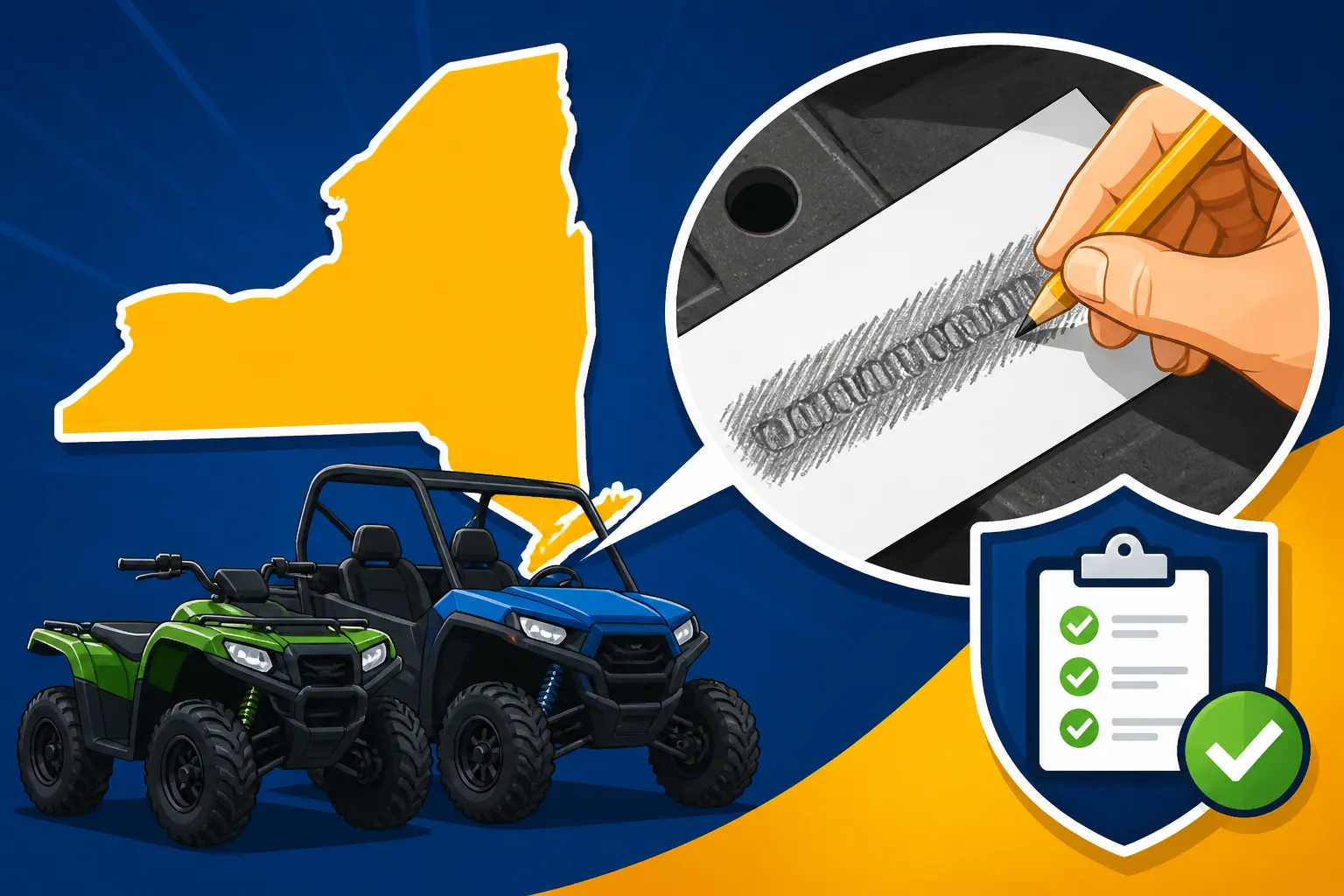
- The Rubbing Technique: With your soft-lead pencil, gently rub it flat against the paper over the VIN area. Don't press too hard with the tip, but rather use the side of the lead to "shade" over the raised numbers. You should see the VIN characters begin to appear on the paper as the graphite fills in the depressions around the raised stamps.
- Even Pressure: Apply even pressure as you rub, moving the pencil back and forth until all characters are clearly visible. Make sure every single character is legible from beginning to end.
- Inspect Your Work: Once you think you have it, lift the paper carefully and inspect the tracing. Are all 17 characters distinct and readable? Is the entire VIN present? If not, try again. It's better to do it several times until you get a perfect tracing than to have the DMV reject your application.
Common mistakes include pressing too hard with the pencil tip (which can tear the paper or make the tracing uneven), allowing the paper to slip (which will blur the numbers), or simply not rubbing thoroughly enough to capture all the characters. Take your time, and if the first attempt isn't perfect, just grab a new piece of paper and try again. It's a small step that prevents big headaches down the line.
What to Do If a Tracing Isn't Possible (Or Doesn't Work)
Sometimes, despite your best efforts, a perfect VIN tracing just isn't achievable. Maybe your ATV is an older machine with significant rust, or perhaps the VIN is located in an incredibly awkward spot that makes getting paper flat against it nearly impossible. Don't despair! The New York DMV understands that these situations arise and has alternative methods for verifying the VIN.
When the VIN is Unreadable or Inaccessible
There are legitimate reasons why a VIN tracing might not work. For instance, if your ATV has seen a lot of harsh winters and salty trails, the VIN stamping might be corroded to the point of being unreadable. Accidents or previous repairs might have also damaged or obscured the VIN area. In these cases, the DMV will require a physical verification by an authorized party.
Typically, this means one of two things:
- Law Enforcement Verification: You can request that a law enforcement officer (State Trooper, County Sheriff, or local police officer) inspect your ATV and verify the VIN. They will typically complete a specific form (often related to vehicle identification verification) that confirms the VIN exists and matches your documentation. This provides an official, impartial verification when a tracing isn't practical.
- Licensed Dealer Verification: A licensed ATV dealer in New York can also perform a VIN verification. They are familiar with ATV identification and can certify the VIN's authenticity. This might be a convenient option if you're already taking your ATV to a dealer for service or if you purchased it from them.
It's always a good idea to call your local DMV office beforehand to confirm which specific form they require for these alternative verifications and what the exact process entails. Having all your paperwork in order, even if you can't get a tracing, is key to a smooth registration process. While this article focuses on Why New York Wants a Pencil Tracing of the VIN, knowing these alternatives is crucial for unusual circumstances.
Beyond the Tracing: Other Proofs of Ownership
Even with a perfect VIN tracing or an official verification, the tracing alone isn't enough to register your ATV. It's one piece of a larger puzzle of ownership documentation that New York requires, especially given the lack of titles for these machines. You'll need to gather several other documents to prove you are the rightful owner.
The most critical document is a clear and complete bill of sale. This is your primary proof of ownership when purchasing an ATV, especially from a private seller. A good bill of sale should include:
- The full names and addresses of both the buyer and seller.
- The date of the sale.
- A detailed description of the ATV, including its make, model, year, and crucially, the complete 17-character VIN.
- The purchase price.
- The signatures of both buyer and seller.
Many people overlook the importance of a well-drafted bill of sale for private transactions, but it's absolutely vital for registration and future transactions. Resources like LawDepot offer templates for bills of sale that can help ensure you cover all the necessary details. You might want to refer to [New York ATV Bill of Sale Requirements] for specific guidance.
In addition to the bill of sale, you'll also need proof of sales tax payment (or an exemption) and possibly previous registration documents. If you bought the ATV from a dealer, they would have handled the sales tax and provided you with the necessary forms, often including [New York's Form MV-51B Explained]. If you bought it privately, you'll generally need to fill out a sales tax form yourself when registering. For machines purchased out-of-state, your previous state's registration documentation can also be helpful to establish a clear ownership history, as detailed in [Registering an Out-of-State Machine in New York].
Here’s a quick overview of essential ownership documents:
| Document Type | Purpose | When It's Needed |
|---|---|---|
| VIN Tracing | Physical verification of the ATV's identification number. | Mandatory for all non-titled ATV registrations in NY, unless otherwise authorized. |
| Bill of Sale | Primary proof of ownership, especially for private sales. | Essential for any ATV purchase, new or used, private or dealer. |
| Previous Registration | Establishes ownership history for used or out-of-state machines. | Useful if you don't have a robust bill of sale or for proving prior ownership. |
| Sales Tax Form | Proof of sales tax payment or exemption. | Required to pay sales tax (or prove exemption) on the purchase. |
| Law Enforcement/Dealer Verification | Official certification of VIN when tracing is not possible. | If VIN is unreadable, inaccessible, or a tracing is deemed insufficient by the DMV. |
By preparing all these documents diligently, you'll be well-equipped to handle the New York ATV registration process, even without a traditional title.
Common Pitfalls and How to Avoid Them
Even with all the right intentions and materials, it's easy to stumble over some common hurdles when trying to get your ATV registered. The DMV has specific standards, and a small oversight can lead to frustrating delays. Knowing what to watch out for can save you a lot of time and a return trip.
Incomplete or Illegible Tracings
This is perhaps the most frequent reason for a registration application to be rejected when it comes to the VIN tracing. The New York DMV is very particular about the clarity and completeness of the tracing. They need to be able to read every single one of those 17 characters without any ambiguity.
Imagine the DMV clerk sifting through hundreds of applications. If your tracing is faint, smudged, missing a character, or if a number looks like a "B" but could also be an "8," they simply won't be able to process it. Their job is to ensure accuracy and prevent fraud, and an unclear tracing creates doubt.
To avoid this, treat the tracing like a critical document. Don't rush it. As mentioned before, ensure the area around the VIN is spotless. Use good quality paper and a soft pencil. After you've done the tracing, hold it up to the light and ask yourself, "Can someone who has never seen my ATV read this perfectly?" If there's any hesitation, redo it. It's better to use a few extra sheets of paper at home than to drive all the way to the DMV, wait in line, and be told to go back and try again. A crisp, dark, and perfectly legible tracing is your ticket to smooth processing.
Missing or Incorrect Supporting Documents
Beyond the VIN tracing, inconsistencies or omissions in your supporting documentation can also bring your registration process to a grinding halt. All the information across your forms—the VIN, your name, the seller's name, the purchase price—must match perfectly. Even a single typo in the VIN on your bill of sale compared to your tracing can flag your application for review or rejection.
A common issue is an inadequate bill of sale, especially for machines bought in private sales. Sometimes, people write a quick note on a scrap of paper that only includes the price and a signature. This isn't sufficient. The DMV needs a comprehensive bill of sale that includes all the details outlined in the previous section. If you don't have one, or if yours is incomplete, it's worth creating a proper one, even after the sale. Again, online resources like LawDepot can provide excellent, legally sound templates for these documents. Using a template ensures you don't miss any critical information.
Another frequent snag involves sales tax forms. If you bought your ATV from a private individual, you're responsible for paying the sales tax directly to the DMV when you register. You'll need to complete the appropriate sales tax form (often a DTF-802 or similar, depending on your county's requirements) and sometimes the MV-82. Failing to bring these forms, or completing them incorrectly, means another trip back. Always double-check the DMV's website for the most current forms required for ATV registration in New York, and review them carefully before your visit. Having everything in order, from your [New York ATV Bill of Sale Requirements] to your tax forms, streamlines the entire process.
The Importance of Accurate Registration for New York ATV Owners
While the process of getting that pencil tracing and all your paperwork in order might seem like a bit of a hassle, it's truly a foundational step for any responsible ATV owner in New York. Proper and accurate registration isn't just about avoiding fines; it's about being a legal, safe, and protected rider, and contributing to the overall ATV community in the state.
Riding Legally and Safely on New York Trails
First and foremost, having a properly registered ATV is a legal requirement for riding on most designated trails, public lands, and even crossing certain roads in New York. Riding an unregistered ATV can lead to significant fines and penalties. Imagine gearing up for a fantastic day on the [Lewis County ATV Trail System in New York] or exploring the [New York's Tug Hill Riding] areas, only to be stopped by a law enforcement officer who issues you a citation because your machine isn't properly registered. That quickly turns a fun day into a costly headache. You can find more details about potential repercussions in [New York Fines for an Unregistered ATV].
Beyond just avoiding tickets, the registration system plays a vital role in maintaining the trail systems we all enjoy. A portion of the registration fees often goes towards funding trail maintenance, improvements, and enforcement efforts, ensuring that there are safe and enjoyable places for ATVs to ride. When you properly register your ATV, you're not just complying with the law; you're actively contributing to the sustainability and future of ATV riding in New York. It's a way to be a good steward of the sport and the environment.
Protecting Your Investment and Ensuring Smooth Transactions
Your ATV is an investment, and like any investment, you want to protect it. Accurate registration with a properly verified VIN creates an official record of your ownership. This record becomes incredibly valuable in several scenarios:
- Theft Recovery: If your ATV is ever stolen, having it properly registered with the DMV provides law enforcement with a clear, verifiable VIN to track and recover your machine. Without that official link, proving ownership of a recovered but untagged ATV can be incredibly difficult, especially since New York doesn't issue titles.
- Resale Value: When it comes time to sell your ATV, a complete and accurate registration history makes the process much smoother for both you and the buyer. A buyer will have much more confidence purchasing a machine with clear documentation and a verified VIN. This can even increase the resale value, as it removes doubt about the machine's origins and legality. Conversely, trying to sell a machine that was never properly registered, or has incomplete paperwork, can be a major challenge and significantly reduce its market appeal. Read up on [Selling an ATV in New York] for more insight.
- Insurance Claims: In the unfortunate event of an accident or damage, your insurance company will rely heavily on your official registration to process claims. A lack of proper registration can complicate or even jeopardize your ability to receive compensation.
Taking the time to ensure your VIN tracing is perfect and all your registration documents are in order is a small effort with significant long-term benefits. It's about securing your peace of mind, protecting your asset, and being a responsible member of the New York ATV community.
Disclaimer
This article is for general informational purposes only and does not constitute professional advice. Laws, prices and regulations vary by location and change over time. Consult a qualified professional for guidance on your specific situation.