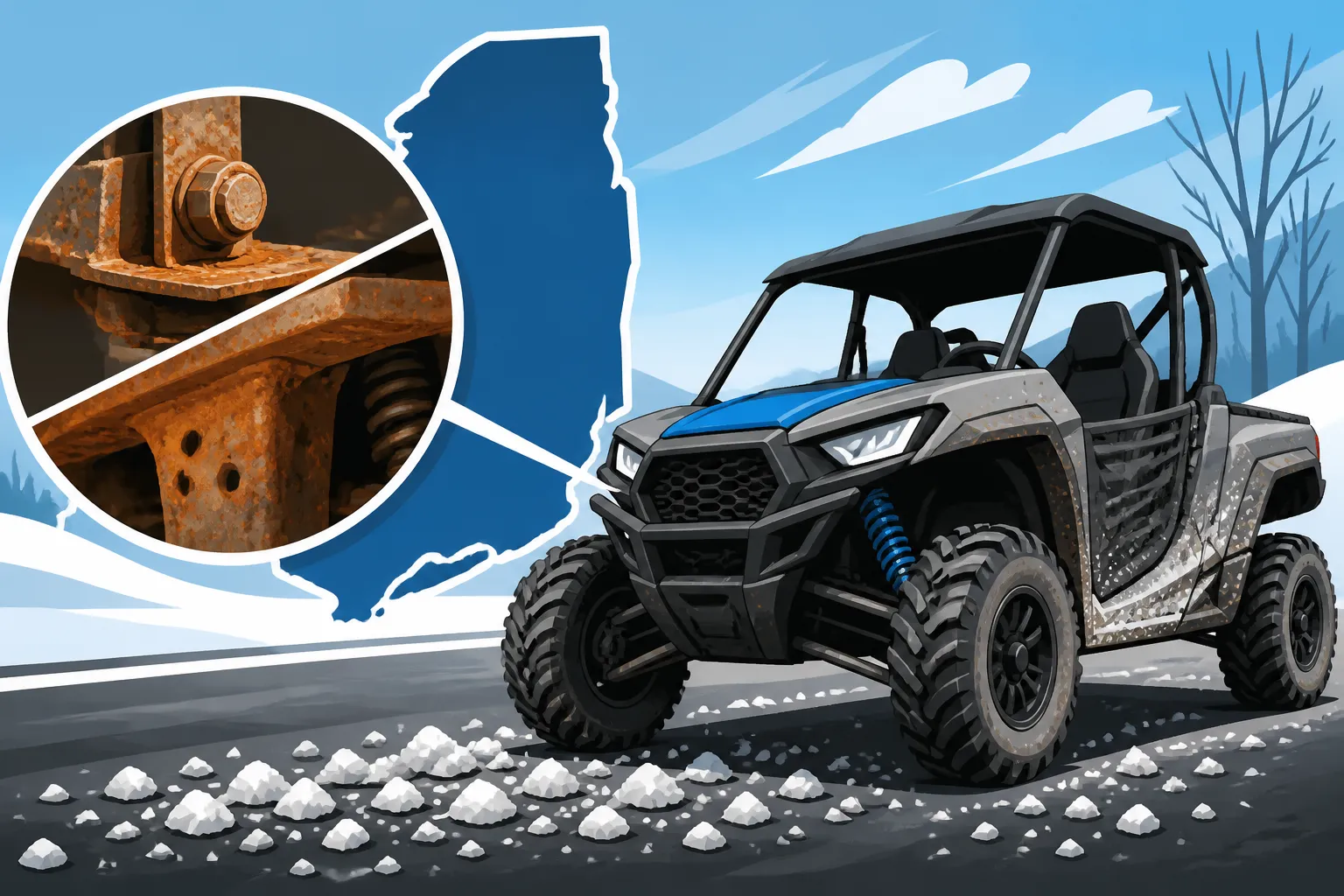
Road Salt and Rust on a New York Machine
A New York ATV can collect road salt without ever being ridden on a public road: a tow vehicle can spray it onto the machine, and plowing a driveway can expose the undercarriage to salty slush. Left in seams and around fasteners, salt speeds corrosion. A simple rinse helps, but careful cleaning, drying and inspection are what keep a small maintenance job from becoming a costly repair.
Why road salt is hard on an ATV or UTV
Salt and moisture create conditions that encourage metal to corrode. On an ATV or UTV, the vulnerable areas are not limited to the visible frame. Saltwater can collect around bolts, welds, brackets, suspension parts, electrical connections and other tight spaces where it is hard to see or dry.
A machine can pick up salt in several ways. It may be driven through slush while clearing a driveway, exposed to a salted access road, or coated by spray from the tow vehicle or trailer. Even a ride on a road where ATVs are permitted can leave residue underneath the machine. A vehicle used only on private property may still encounter treated areas if it crosses a driveway or parking area.
Salt can remain after the surface looks clean. A rinse that removes mud from the fenders may not reach the underside of a skid plate or the backs of brackets. Once the machine dries, residue may still be present in seams or crevices. Repeated exposure matters: each wetting can reactivate residue and keep vulnerable surfaces damp.
Different materials show the effects differently. Painted or coated steel may develop chips and rust spots where the protective finish is damaged. Bare steel can rust more readily. Aluminum does not rust in the same way as steel, but it can corrode, and nearby steel fasteners may still be affected. Electrical connectors and battery terminals can develop corrosion that interferes with a connection. Rubber seals and plastic panels are not likely to rust, but they can hide salty buildup on the parts behind them.
Salt damage is not always obvious from a quick look at the bodywork. The machine may have clean plastics while the frame, fasteners or suspension components beneath them are deteriorating. That is why checking the underside belongs in the cleaning routine, especially after a winter ride or a season of plowing.
For more on reducing exposure and protecting vulnerable areas, see New York ATV Corrosion Protection. If the machine is stored through the cold season, Storing a Machine Through a New York Winter covers the broader storage decisions that help limit moisture and corrosion.
Where to look for salt and early rust
Inspect the machine when it is clean enough to see its surfaces. A layer of mud can hide corrosion, while a wet machine can make a rusty area hard to distinguish from ordinary grime. Let it dry, use a bright light, and check the underside as well as the visible bodywork. A small mirror can help with areas that are awkward to view.
Start with the frame and the points where parts attach to it. Look around welds, brackets, mounting tabs and seams. Check for damaged paint, rough patches, bubbling finish, reddish-brown stains or flakes. A little surface discoloration is not automatically a structural problem, but rust that spreads, sheds flakes or appears around a crack deserves closer attention.
Then check the areas that collect spray or trap debris:
- The underside of the frame and skid plates
- Suspension arms, shock mounts and nearby fasteners
- Wheel wells and the inner faces of fenders
- Axle areas, hubs and exposed brackets
- The underside of racks, bumpers and plow mounts
- Electrical connectors, wiring clips and battery terminals
- Seams where panels or guards meet the frame
Pay attention to places where mud and salt can pack together. A machine used for plowing may carry wet debris onto its frame and attachments, while a machine transported on a trailer can receive spray around the lower body. A guard can protect components from impact but may also make a section harder to inspect or clean. Follow the owner’s manual when removing panels or guards; do not dismantle parts unnecessarily if you are unsure how they fit.
A light film of dirt is not the same as corrosion. Rust is more concerning when the finish has lifted, the metal is pitted, or corrosion is concentrated around a weld or structural joint. Look for movement where a bracket should be solid, cracked paint that follows a seam, or a fastener that appears swollen or heavily deteriorated. These signs do not prove a part is unsafe, but they are reasons to investigate rather than cover the area with a coating.
Use the same inspection points each time. A phone photo of a suspicious spot, taken after cleaning and drying, can make it easier to tell whether the area is changing. It can also help a repair shop assess the issue. Avoid scraping aggressively to “test” a frame, since that can damage protective coatings or make the problem worse.
When buying a used machine, inspect the frame and attachments before focusing on cosmetic condition. Fresh undercoating, heavy dirt or recently applied paint can make the metal harder to assess. Ask what the machine was used for and how it was stored, then check the areas where salt and moisture are likely to collect. Buying a Used ATV in New York and Checking a Used Quad in New York offer additional purchase checks. For examples of how corrosion can develop over time, see Rust on a Frame After Five Winters.
How to wash salt off without causing new problems
Rinsing soon after salt exposure is a sensible first step. The aim is to carry residue away, not force water into every opening. Start by checking the owner’s manual for cleaning instructions and warnings about sensitive areas. If the machine has been used heavily, let hot components cool before washing.
A garden hose with a gentle flow is often enough for routine rinsing. Work from the top down, then spend time underneath, around the wheel wells and behind exposed brackets. Move loose mud carefully rather than blasting it deeper into seams. If the machine has skid plates or other guards that hide buildup, clean the accessible edges and follow the manual’s instructions for any removal.
High-pressure washers can save time on broad, muddy surfaces, but they can also force water past seals, into electrical connectors or behind protective components. They may damage decals, coatings, bearings or other sensitive areas if used too close or at the wrong angle. If you use one, follow the machine manufacturer’s guidance, keep the nozzle moving and avoid directing concentrated spray at bearings, seals, electrical connections, switches, vents and joints. A pressure washer is not a substitute for checking hidden areas afterward.
For stuck-on grime, use a cleaning product that the manufacturer allows for the machine’s materials and finishes. Test an unfamiliar product on a discreet area first. Avoid using a harsh chemical simply because it cuts through mud quickly; it may harm paint, plastics, rubber or protective coatings. Do not mix cleaners or apply them to hot parts.
After rinsing, allow the machine to drain and dry. Move it to a well-ventilated place if possible. Wipe accessible surfaces, and check for water trapped around panels, guards or accessories. If the machine has had heavy salt exposure, a second clean-water rinse may help remove residue left by the first wash. The important point is to remove the salt rather than just move it around.
Do not leave a freshly washed machine sitting wet in a closed space. Airflow helps it dry; an enclosed, damp storage area can prolong moisture exposure. Avoid using compressed air in a way that pushes dirt or water into seals and connectors. If you use air to dry a component, follow the manufacturer’s recommendations and keep the pressure controlled.
Give the underside a final look after cleaning. If a spot still looks crusted or discolored, clean it more carefully and reassess once it dries. For a step-by-step focus on the rinse itself, see Rinsing Salt Off a Machine. That process is especially useful after winter use, but the same basic habit applies after any salty spray exposure.
Protecting vulnerable parts and setting a winter routine
Protection works best after cleaning, not instead of cleaning. Applying a coating over salt, mud or dampness can trap contamination against a surface and make later inspection harder. Clean the machine, let it dry, and then decide whether a protective product is appropriate for the materials and parts involved.
Choose a corrosion inhibitor or protective coating intended for the application, and check the product directions and ATV or UTV manual before using it. Different formulations are meant for different surfaces. A product suitable for exposed metal may not be suitable for painted plastics, rubber, belts, brakes or electrical components. Keep coatings away from brake discs, pads, tires, handgrips, foot controls and other surfaces where reduced grip or braking can create a hazard.
Apply only where directed. A thin, even layer is generally easier to manage than a heavy coating that runs into connectors or collects dirt. Do not assume that spraying the entire underside is harmless. Some parts need to remain clean, and some coatings can complicate service work or hide developing damage. If you are unsure whether a component should be coated, check the owner’s manual or ask a qualified repair shop.
Paint chips and exposed steel deserve attention because they interrupt the protective finish. Clean and dry the area, then use a repair product intended for the surface, following its preparation and curing directions. A touch-up can help protect a small chip, but it will not repair metal that is badly pitted, cracked or weakened. Get a professional assessment if the damage affects a frame, suspension mount or other load-bearing part.
A practical winter routine can be simple:
- After a salty ride or plowing session, rinse the machine when conditions allow.
- Remove packed mud and salt from accessible parts, especially underneath.
- Let the machine drain and dry before covering or storing it.
- Inspect the frame, fasteners, suspension and electrical areas for new damage.
- Repair small finish chips before they collect more moisture and grime.
- Repeat the inspection after another significant exposure rather than waiting until spring.
The routine does not need to become a full teardown after every use. Focus on how the machine was used. A brief trip through slush may call for an underside rinse and a quick check. A long plowing session with salty spray may justify more careful cleaning and inspection. Consistency is more useful than an occasional deep clean after residue has sat for a long time.
When the season ends, clean the machine before storing it. Do not assume that a tarp alone protects it: a cover can keep dust off, but a damp machine under a cover may dry slowly. Store it in a place with reasonable ventilation and avoid letting water pool beneath it. For broader cold-weather preparation, see New York ATV Winterizing Costs and Keeping a Battery Tender On All Winter. Those topics cover related storage needs, but a charged battery does not prevent corrosion on the frame or attachments.
Repair decisions and the cost of neglect
The cost of dealing with corrosion depends on where it is, how far it has progressed and what needs to be removed to reach it. Cleaning and early finish repair are usually less complicated than replacing a corroded fastener or repairing a damaged structural component. The exact work varies by machine, so a shop’s inspection is more useful than trying to judge a repair from the amount of visible rust alone.
A simple comparison can help decide what to do next:
| What you find | Practical next step | Why it matters |
|---|---|---|
| Loose salt or mud on accessible surfaces | Rinse, dry and inspect | Residue left behind can keep attracting moisture |
| Small chip in paint with no visible pitting | Clean, dry and touch up with a compatible product | A damaged finish can expose metal to moisture |
| Surface rust on a non-structural fastener | Clean and assess; replace if badly deteriorated | A weakened fastener can make an attached part loose |
| Flaking, deep pitting or corrosion near a weld | Have a qualified shop assess it | The area may be structural or difficult to evaluate |
| Corroded electrical connection or intermittent electrical fault | Have the connection inspected and repaired correctly | Coating over a bad connection will not restore reliable contact |
| Rust hidden behind a guard or accessory | Inspect the area before applying more coating | Hidden buildup can continue unnoticed |
Do not treat every orange mark as an emergency, but do not cover serious corrosion with a new layer of paint or undercoating. If a frame, suspension mount, steering component or braking-related part appears compromised, avoid using the machine until it has been assessed. A repair shop can determine whether cleaning, replacement or more substantial repair is appropriate.
A coating may make an older machine look tidy without addressing the underlying metal. That matters when buying, selling or evaluating a machine after winter use. Ask whether any coating was applied recently and whether the seller has photos from before the work. Look for overspray on bolts, rubber parts or wiring, and inspect accessible edges where a coating ends. These clues do not prove concealment, but they can prompt better questions.
Maintenance records help show whether the owner has cleaned the machine after salty use and addressed small damage. They do not guarantee a rust-free frame, so inspect the machine directly. If you are comparing two used machines, do not let a cleaner appearance outweigh signs of structural corrosion or poor upkeep. A machine with ordinary cosmetic wear and a sound, inspectable frame may be a safer prospect than one that has been freshly coated with an unknown product.
Budget for cleaning supplies, occasional finish repairs and professional inspection as part of ownership. How often those costs arise depends on use, storage, exposure and the condition of the machine. A utility ATV that plows a driveway may face more repeated salt exposure than one stored indoors and used only on dry trails. There is no single maintenance schedule that fits every machine; use the manufacturer’s recommendations and adjust the routine to what the machine actually encounters.
If you notice corrosion returning quickly after cleaning, investigate the source. A machine may be repeatedly exposed to salted spray during transport, or water may be collecting behind a guard. A damaged coating may also leave the same spot vulnerable. Removing the cause is more effective than repeatedly applying products over it.
Frequently Asked Questions
Can I ride an ATV after it has been exposed to road salt?
Salt exposure by itself does not automatically mean the machine cannot be used. Rinse and inspect it when practical, and pay attention to brakes, electrical connections, tires and steering components. If you find a loose part, a brake concern or corrosion that could affect a structural component, have it assessed before riding.
Is rinsing enough to prevent rust?
Rinsing removes much of the loose salt, but it may not reach residue trapped behind guards, around fasteners or in seams. Dry the machine and inspect it after washing. Repair exposed or damaged finishes rather than assuming a quick rinse has protected every surface.
Can a pressure washer be used on an ATV?
It can be useful for cleaning, but concentrated spray may damage seals, bearings, electrical connectors, decals or coatings. Check the owner’s manual, keep the spray moving and avoid directing it at sensitive areas. A hose and careful cleaning may be safer for parts that are difficult to protect.
Should I coat the entire underside with rust inhibitor?
Not without checking the product directions and the machine’s manual. Some coatings are unsuitable for brakes, rubber, plastics, belts or electrical components, and a heavy coating can hide developing damage. Clean and dry the machine first, then apply a compatible product only where directed.
Is surface rust on the frame always dangerous?
Not always. The seriousness depends on its location and depth. A small spot on a non-structural surface differs from flaking or deep pitting near a weld, frame joint or suspension mount. Have a qualified shop assess corrosion that may affect strength or safe operation.
Disclaimer
This article is for general informational purposes only and does not constitute professional advice. Laws, prices and regulations vary by location and change over time. Consult a qualified professional for guidance on your specific situation.